Remember when certain people were called Witty. To have Wit is to have a certain intelligence about yourself. Other Forms of wit include the quip, repartee, and wisecrack. To have Wit is to have a natural aptitude for using words and ideas in a quick and inventive way to create humor. Being Witty has an edge to it, its sarcasm at its best. You can be insulting without being nasty about it. Then I got to thinking about the Algonquin Round Table of the 1920s and 1930s when wit ruled.I was watching an old television show last night called, "What's My Line" and I thought to myself that's what's wrong nobody today has any wit. To have "Wit" is to have a natural aptitude for using words and ideas in a quick and inventive way to create humor. Being "Witty" has an edge to it, its sarcasm at its best. You can be insulting without being nasty about it. Then I got to thinking about the Algonquin Round Table of the 1920's and 1930's when wit ruled the world.
The Algonquin Hotel is New York’s most prestigious literary hotel. Except for perhaps the Chelsea Hotel, the Algonquin has more connections to literature and the arts than any other hotel in the city. The Algonquin Hotel was designed by architect Goldwin Starrett and opened on Nov. 22, 1902. It has a Renaissance limestone and red brick facade, its 12 stories high and has 174 guestrooms.
On a June afternoon in the spring of 1919, a group of writers and theatrical folk got together at the Algonquin Hotel to roast the inimitable Alexander Woollcott, the trenchant theater critic for the New York Times who had just returned from World War I, brimming with dramatically over-baked stories. John Peter Toohey, a theater publicist, and Murdock Pemberton, a press agent, decided to throw a mock "welcome home from the war" celebration for the egotistical, sharp-tongued columnist the idea was really for theater journalists to roast Woollcott in revenge for his continual self-promotion and his refusal to boost the careers of potential rising stars on Broadway. On the designated day, the Algonquin dining room was festooned with banners. On each table was a program which misspelled Woollcott's name and poked fun at the fact that he and fellow writers Franklin Pierce Adams and Harold Ross had sat out the war in Paris as staff members of the army's weekly newspaper, the Stars and Stripes, which Bob had read in the trenches. But it is difficult to embarrass someone who thinks well of himself and Woollcott beamed at all the attention he received. The guests enjoyed themselves so much that John Toohey suggested they meet again, and so the custom was born that a group of regulars would lunch together every day at the Algonquin Hotel. At first they usually met in the Pergola Room (today called the Oak Room) until the group grew too large and owner Frank Case moved them to the main dining room. He then gave them a round table. They would meet here in the Rose Room (today the Round Table Restaurant) for long luncheons, six days a week. At the time the Round Table began meeting, Dorothy Parker was 25 and starting to make a name for herself.
Though the group always preferred to call their clique the Vicious Circle. Many full-time or part-time wits drifted in and out of the circle, but there were a few stalwarts who could be counted on for servings of poison with lunch until the group dispersed at the end of the 1920's. The Algonquin was the first of many restaurants to gain attention through the efforts of press agents." Murdock Pemberton later recalled that the owner of the hotel, Frank Case, did what he could to encourage this gathering. The First World War was partly responsible for the creation of the Algonquin Round Table: Alice Duer Miller, the eldest member of the Round Table set, noted, when the war ended it broke up the old social crowds in New York and allowed new ones to form, like younger groups of writers and wits. New kinds of elites were forming: often less rich and less grand than the older elites, but also more numerous and more varied.
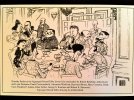
The people who attended these lunches included Robert E. Sherwood, Dorothy Parker, Robert Benchley, Alexander Woollcott, Heywood Broun, Harold Ross, Donald Ogden Stewart, Edna Ferber, Ruth Hale, Franklin Pierce Adams, Jane Grant, Neysa McMein, Alice Duer Miller, Charles MacArthur, Marc Connelly, George S. Kaufman, Beatrice Kaufman , Frank Crowninshield, Ben Hecht, Frank Sullivan, Jack Baragwanath, John Peter Toohey, Lynn Fontanne, Alfred Lunt and Ina Claire.
The group played games while they were at the hotel. One of the most popular was "I can give you a sentence". This involved each member taking a multi syllabic word and turning it into a pun within ten seconds. Dorothy Parker was a wiz at this game. For the word "horticulture" she came up with, "You can lead a whore to culture, but you can't make her think." Another of Parker's contribution was "The penis is mightier than the sword." They also played other guessing games such as "Murder" and "Twenty Questions". A fellow member, Alexander Woollcott, called Parker "a combination of Little Nell and Lady Macbeth." One of Dorothy Parker's best theater reviews was her reaction to Katharine Hepburn's stage debut in The Lake (1927). Dorothy was quoted as "Katharine Hepburn ran the gamut of emotions from A to B." When Edmund Duffy, artist on the Brooklyn Eagle, caricaturized them in shining knight's armor, the Round Table legend was born. Arthur Krock, who worked for the New York Times, commented that "their wit was on perpetual display.
Edna Ferber wrote about her membership in her book, A Peculiar Treasure (1939): "The contention was that they gave one another good notices, praise-filled reviews and the like. I can't imagine how any belief so erroneous ever was born. Far from boosting one another they actually were merciless if they disapproved. I never have encountered a more hard-bitten crew. But if they liked what you had done they did say so, publicly and wholeheartedly. Their standards were high, their vocabulary fluent, fresh, astringent and very, very tough. The kind of people they could not abide and would not stand for were the bores, hypocrites, sentimentalists, and the socially pretentious. They were ruthless towards charlatans, towards the pompous and the mentally and artistically dishonest. Casual, incisive, they had a terrible integrity about their work and a boundless ambition."
Marc Connelly stated that they all shared a love for bright talk, contempt for banality, and the dedication to the use of whatever talents we had to their best employment." Another regular member was George S. Kaufman. Connelly and Kaufman wrote five successful comedies, Dulcy (1921), To the Ladies (1922), Merton of the Movies (1922), The Deep Tangled Wildwood (1923) and Beggar on Horseback (1924).
Dorothy Parker, was asked at a Halloween party to join in "ducking for apples": "Change one letter in that phrase and you have the story of my life." Woollcott's note to Harold Ross, founder of The New Yorker: "I think your slogan 'Liberty or Death' is splendid and whichever one you decide on will be all right with me." Kaufman, when a play of his trying out of town got better notices than it deserved: "What I suggest is that we leave the show in Philadelphia and bring the notices to New York." And actress Ina Claire, seeing Harold Ross's bouffant hairstyle: "I'd like to take off my shoes and wade in Ross's hair." according to legend, Claire Booth Luce said to Parker, as the two prepared to enter a doorway, "age before beauty." As she swept by, Parker was supposed to have replied, "Pearls before swine." Dorothy Parker believed that she did not make that remark but she did agreed that the zinger, like other trademark Round Table jokes, probably originated well outside the confines of the Algonquin Hotel and became attached to a member of the group because it seemed like the sort of thing that a Round Tabler might say.
There was one subject, however, that did inspire something like real humor, with malice aforethought, among the members of the circle, and that was the Round Table itself. When Marc Connelly, was interviewed about the Round Table he got off a couple of good lines He was asked if he remembered when the Round Table finally ended, and he said it would be like remembering falling asleep." As the Roaring Twenties became the Great Depression the emotional lives of many of them had grown so complex as to interfere with their gags... Perhaps it was politics, and a broadening sense of public issues, that helped to break up the Round Table... As the small, independent worlds we all used to live in gradually expanded and fused into One World with its one vast headache, there was no longer any room for cozy little sheltered cliques of specialists... The day of the purely literary or artistic group was over, and so was the small, perfect democracy of the Algonquin Round Table."
The Algonquin Hotel is New York’s most prestigious literary hotel. Except for perhaps the Chelsea Hotel, the Algonquin has more connections to literature and the arts than any other hotel in the city. The Algonquin Hotel was designed by architect Goldwin Starrett and opened on Nov. 22, 1902. It has a Renaissance limestone and red brick facade, its 12 stories high and has 174 guestrooms.
On a June afternoon in the spring of 1919, a group of writers and theatrical folk got together at the Algonquin Hotel to roast the inimitable Alexander Woollcott, the trenchant theater critic for the New York Times who had just returned from World War I, brimming with dramatically over-baked stories. John Peter Toohey, a theater publicist, and Murdock Pemberton, a press agent, decided to throw a mock "welcome home from the war" celebration for the egotistical, sharp-tongued columnist the idea was really for theater journalists to roast Woollcott in revenge for his continual self-promotion and his refusal to boost the careers of potential rising stars on Broadway. On the designated day, the Algonquin dining room was festooned with banners. On each table was a program which misspelled Woollcott's name and poked fun at the fact that he and fellow writers Franklin Pierce Adams and Harold Ross had sat out the war in Paris as staff members of the army's weekly newspaper, the Stars and Stripes, which Bob had read in the trenches. But it is difficult to embarrass someone who thinks well of himself and Woollcott beamed at all the attention he received. The guests enjoyed themselves so much that John Toohey suggested they meet again, and so the custom was born that a group of regulars would lunch together every day at the Algonquin Hotel. At first they usually met in the Pergola Room (today called the Oak Room) until the group grew too large and owner Frank Case moved them to the main dining room. He then gave them a round table. They would meet here in the Rose Room (today the Round Table Restaurant) for long luncheons, six days a week. At the time the Round Table began meeting, Dorothy Parker was 25 and starting to make a name for herself.
Though the group always preferred to call their clique the Vicious Circle. Many full-time or part-time wits drifted in and out of the circle, but there were a few stalwarts who could be counted on for servings of poison with lunch until the group dispersed at the end of the 1920's. The Algonquin was the first of many restaurants to gain attention through the efforts of press agents." Murdock Pemberton later recalled that the owner of the hotel, Frank Case, did what he could to encourage this gathering. The First World War was partly responsible for the creation of the Algonquin Round Table: Alice Duer Miller, the eldest member of the Round Table set, noted, when the war ended it broke up the old social crowds in New York and allowed new ones to form, like younger groups of writers and wits. New kinds of elites were forming: often less rich and less grand than the older elites, but also more numerous and more varied.
The people who attended these lunches included Robert E. Sherwood, Dorothy Parker, Robert Benchley, Alexander Woollcott, Heywood Broun, Harold Ross, Donald Ogden Stewart, Edna Ferber, Ruth Hale, Franklin Pierce Adams, Jane Grant, Neysa McMein, Alice Duer Miller, Charles MacArthur, Marc Connelly, George S. Kaufman, Beatrice Kaufman , Frank Crowninshield, Ben Hecht, Frank Sullivan, Jack Baragwanath, John Peter Toohey, Lynn Fontanne, Alfred Lunt and Ina Claire.
The group played games while they were at the hotel. One of the most popular was "I can give you a sentence". This involved each member taking a multi syllabic word and turning it into a pun within ten seconds. Dorothy Parker was a wiz at this game. For the word "horticulture" she came up with, "You can lead a whore to culture, but you can't make her think." Another of Parker's contribution was "The penis is mightier than the sword." They also played other guessing games such as "Murder" and "Twenty Questions". A fellow member, Alexander Woollcott, called Parker "a combination of Little Nell and Lady Macbeth." One of Dorothy Parker's best theater reviews was her reaction to Katharine Hepburn's stage debut in The Lake (1927). Dorothy was quoted as "Katharine Hepburn ran the gamut of emotions from A to B." When Edmund Duffy, artist on the Brooklyn Eagle, caricaturized them in shining knight's armor, the Round Table legend was born. Arthur Krock, who worked for the New York Times, commented that "their wit was on perpetual display.
Edna Ferber wrote about her membership in her book, A Peculiar Treasure (1939): "The contention was that they gave one another good notices, praise-filled reviews and the like. I can't imagine how any belief so erroneous ever was born. Far from boosting one another they actually were merciless if they disapproved. I never have encountered a more hard-bitten crew. But if they liked what you had done they did say so, publicly and wholeheartedly. Their standards were high, their vocabulary fluent, fresh, astringent and very, very tough. The kind of people they could not abide and would not stand for were the bores, hypocrites, sentimentalists, and the socially pretentious. They were ruthless towards charlatans, towards the pompous and the mentally and artistically dishonest. Casual, incisive, they had a terrible integrity about their work and a boundless ambition."
Marc Connelly stated that they all shared a love for bright talk, contempt for banality, and the dedication to the use of whatever talents we had to their best employment." Another regular member was George S. Kaufman. Connelly and Kaufman wrote five successful comedies, Dulcy (1921), To the Ladies (1922), Merton of the Movies (1922), The Deep Tangled Wildwood (1923) and Beggar on Horseback (1924).
Dorothy Parker, was asked at a Halloween party to join in "ducking for apples": "Change one letter in that phrase and you have the story of my life." Woollcott's note to Harold Ross, founder of The New Yorker: "I think your slogan 'Liberty or Death' is splendid and whichever one you decide on will be all right with me." Kaufman, when a play of his trying out of town got better notices than it deserved: "What I suggest is that we leave the show in Philadelphia and bring the notices to New York." And actress Ina Claire, seeing Harold Ross's bouffant hairstyle: "I'd like to take off my shoes and wade in Ross's hair." according to legend, Claire Booth Luce said to Parker, as the two prepared to enter a doorway, "age before beauty." As she swept by, Parker was supposed to have replied, "Pearls before swine." Dorothy Parker believed that she did not make that remark but she did agreed that the zinger, like other trademark Round Table jokes, probably originated well outside the confines of the Algonquin Hotel and became attached to a member of the group because it seemed like the sort of thing that a Round Tabler might say.
There was one subject, however, that did inspire something like real humor, with malice aforethought, among the members of the circle, and that was the Round Table itself. When Marc Connelly, was interviewed about the Round Table he got off a couple of good lines He was asked if he remembered when the Round Table finally ended, and he said it would be like remembering falling asleep." As the Roaring Twenties became the Great Depression the emotional lives of many of them had grown so complex as to interfere with their gags... Perhaps it was politics, and a broadening sense of public issues, that helped to break up the Round Table... As the small, independent worlds we all used to live in gradually expanded and fused into One World with its one vast headache, there was no longer any room for cozy little sheltered cliques of specialists... The day of the purely literary or artistic group was over, and so was the small, perfect democracy of the Algonquin Round Table."