What was the last film you watched?

James from London

International Treasure
LV
6
 
Awards
18
sometimes I find it more challenging and interesting to delve into the dark psyche of humanity.
Not to find a way to agree with it, but to understand it. Sometimes, knowledge can be just as rewarding and useful as thinking "I'm right and the other person is wrong".
Then I think you'd really like Cracker - '90s TV show written by the same man as Priest - which does that sort of thing all the time, within the format of a detective series.
 

James from London

International Treasure
LV
6
 
Awards
18
And I think that's also what made CRIMINAL:UK so fascinating. (are they still making new episodes?)
Oh I don't know. I'm Notflix these days so I'm a bit out of the loop.
 

Toni

Maximum Member
LV
11
 
Awards
24
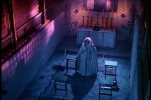
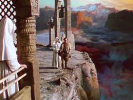
Have you seen Black Narcissus?

That one is great, it influenced film photography so much that it´s perceptible even today. The remake miniseries was quite faithful to the movie and the acting was good (there was too much blue-screen footage, though the movie also had most of it shot in studio with fake exteriors).

1723417583900.png

1723417624298.png 1723417697907.png
1723417595595.png
And then there was Jean Simmons...
1723417778808.png
:fp: :NI: :eck:
 

Willie Oleson

Telly Talk Schemer
LV
9
 
Awards
27
THE FLY (1986)

1723490932819.png

So...this is basically a story about three characters: super scientist Seth Brundle, ambitious journalist Ronnie and her publisher/ex-boyfriend Stathis Borans (at least it's a fabulous name).
The story has little introduction (you wanna see my teleporter?) and yet it all unfolds very slowly. That's a good opportunity to create characters and the world they live in - but that doesn't happen.
All three actors sleepwalk through the script although Stathis becomes a different character in every scene he's in.
Sometimes the ruthless editor, sometimes the hilarious stalker and sometimes a knight in shining armour, all we know is that they're played by the same actor.
The only reason I continued to (re)watch was because of a morbid fascination to see how bad it would get.

Science fiction doesn't have to be believable but Brundle's computer that controls the telepods reminded me of the Batcomputer.
For something that is supposed to be such a big discovery it all looks terribly stupid and boring.
I wonder if Geena Davis' scenes were filmed seperately and later edited into the film because none of her actions or reactions make any sense.

Seth Brundle's character gets a boost when he starts to transform, first as a superman and then later as a monster.
There's a lot of goo and gore but because it's so obviously done to repulse the audience it becomes unintentionally funny. However, this is when the film becomes a lot better because Seth hasn't only become a fly, he has also developed a sense of humour which makes him much more characteristic.
I find the last scene after the accidental SethFly/telepod hybrid surprisingly gloomy and endearing.

I think it's a very problematic and uninspired film with only a few good bits in it, exactly how I feel about most David Cronenberg films (except for THE BROOD which I really like).
 

Mel O'Drama

Admin
LV
16
 
Awards
44
Beautiful Thing (1996)

iu


Another bit of future Top Ten research that's been on my viewing bucket list for many years.

What did I know about this ahead of time? Well, very little, as it turns out. I knew it was a gay coming-of-age film. I knew it features the music of Mama Cass, of course (I owned the soundtrack on CD many years ago and it was heavily-played. The CD was later cleared out, but most songs remain in iTunes. All the same, I spontaneously re-ordered the CD immediately after watching). And I read (perhaps in the CD leaflet) the intriguing titbit that the film features an "ingenious use of peppermint foot lotion", which sounded rather kinky. And that was where all my knowledge ended.

I had it in my head that this was set in Liverpool. Perhaps I was subliminally aware that writer Jonathan Harvey is from Liverpool. Or perhaps, between Brookside, Priest, Hillsborough, etc., I just have that city on the brain. But nope, it's set in Thamesmead, South East London (on some of the same locations as A Clockwork Orange). The actors whose faces were known to me mostly had EastEnders in common, and it does indeed feel like it has that gritty British soap thing going on (among lots of other things).

From posters and the very premise, it's apparent the two lead characters are young, and I wasn't sure how I'd feel about it watching for the first time as a cynical middle aged viewer. Happily, this film perfectly captured the world of the teenager, from its rules, threats and insecurities to its freedom, magic and fun, and it helped that it was made and set at a time where some of my own experiences aligned with those of the characters (Jamie even has the same Home and Away annual I had, which raised him even further in my estimation).

The performances of the two lead actors are unforgettable. Like all the characters in the film, the place and time in which they live informs how they behave. Most characters behave in ways that are hard, unpleasant or anti-social, but just underneath it all there's a fragility and tenderness. I imagine it's not easy to write and perform in a way that's both truthful and accessible, but this story nails it (I'd thought the film was later adapted into a stage show but actually it's the other way round and the stage version came first).

Linda Henry (Enders' hard-faced Shirley. And before that, Mandy Salter's hard-faced mum) is the hard-faced mum here. She's one of several important supporting characters who made me feel I had their number on first sight, but went on to surprise me with their complexities and vulnerability. The other key example of this was her boyfriend Tony who I was convinced was a wrong 'un but turned out to be anything but.

Tameka Empson was a knockout as the Cass-loving neighbour. As I watched, I found myself seeing similarities with early Sixties Barbara Windsor. A special call out goes to Jeillo Edwards, playing Tameka's mother, who kept stealing the show with every little look. There's also Olive from On The Buses who alternates between scowling at her neighbours, caterwauling renditions of Big Spender during karaoke night at the social club where Sandra works and parading on the balcony outside the flat with swimsuit, bling jewellery and cocktails, nibbling cheese and pineapple on sticks. Meera Syal also did wonders with a very small role, with two lines in particular making me laugh out loud. Her cry of "Balls, Mr Bennett!" is the most easily-remembered line from the film.

On this subject, the dialogue is brilliant. I'm sure it's highly quotable, which is a reason to watch again and again. There's a nice selection of them here, but really almost every line is golden and some also very nostalgic. Like Sandra ordering Jamie to get crying Ste a tissue by saying "there's a box of autumnal shades by me bed". And there's lots of prosaic greatness, like the discussion about Sally from Coronation Street also being called Sally in real life, or everyday put-downs that mix pop culture references ("when you can keep up with the questions on Bob's Full House, you get back to me"). But there's also a lot of deeper stuff that reaches the heart. Some of it's like poetry. Some like rap. Frequently it's both. Even the dialogue is lyrical and makes this feel like a borderline musical.

Then there's the soundtrack. You could say this film is to Cass Elliot what Muriel's Wedding is to ABBA. I've long enjoyed the music of Cass and The Mamas & The Papas, but this film has done something incredible by creating new associations and deepening that love. Before watching I'd hoped this might happen, but I didn't count on the degree to which it would do this. There are a few tracks that will now give me chills thinking about the related scene in this film.

What I love about the choice of music is that it's plays against the sometimes bleak realism seen throughout. It's like the voice of hope, but also a joyful expression of youthful energy and optimism. The whole film feels like a mass of contradictory things, which is why the "urban fairytale" tagline fits so well. Characters are rude and foul-mouthed.... and all the more hilarious with it. They're aggressive or even violent, and somehow that creates more sympathy for them because it's clear they want to be more but don't know how. This makes the moments of vulnerability hit harder, especially when it's an unexpectedly sweet line.

And (spoiler) the film lives up to its name. It takes the ordinary and makes it beautiful. It's gorgeously shot and looks like art come to life, from the grey, brutalist landscape surrounding them (which, seen through the prism of this film feels inviting and warm and larger than life) to the twilight dance through the woods which in this romantic haze look very much like the backdrop to a Disney film.

I suppose in the most literal sense the titular beautiful thing is love or connection or truth. Or all the above. That "sweet contentment deep inside" which Cass sings about over the opening titles in It's Getting Better. And it delivers. Dancing happily between stark reality and sweet fantasy, the film lives its message.

With this film, it's difficult to decide if it was everything I would have wanted and more. Or if it was not at all what I might have expected while still speaking to me in a most unexpected way. But I came away from the film feeling both surprised and satisfied. And a whole lot more besides.

Something that almost never happens: I actually found myself rewatching this in full again today, which is the highest form of praise I can lavish on any film.


And an almost-bang-up-to-date review of the film:

 
Last edited:

Seaviewer

Telly Talk Warrior
LV
9
 
Awards
20
The Borrowers (1997)
I've never really grown out of the big fantasy films like Mary Poppins and Chitty Chitty Bang Bang. This is not on that scale - literally, being about a of four-inch-high people who live secretly in the house of a normal sized family borrowing (not stealing) what they need.
I haven't read the books it's based on so I don't know how faithful it is, but the story is fun and the effects excellent. All it needs is a score by the Sherman brothers.
 

Mel O'Drama

Admin
LV
16
 
Awards
44
Prick Up Your Ears (1987)

iu

It's probably the better part of two decades since I last watched this, but with it being mentioned in the Eighties thread (and possibly fitting into another round in the near future), I felt it was time for a revisit.

While I'm familiar with the story, I'd forgotten a lot of the detail, even down to the people involved in producing it. This time round it struck me as interesting firstly that an actor played John Lahr in a film adapted from the biopic written by Lahr (it serves both as an adaption of the biopic and as a film about the writing of it), and secondly that the screenplay to the adaption was done not by Lahr but by Alan Bennett. There are wonderful little Bennettisms scattered throughout that make the wry dialogue so memorable. One of my favourites was a woman marvelling about the gentrification of her locality: "there are two antiques shops and the pub serves salad".

Also of note, since I watched it just days ago, the director is Stephen Frears who had previously directed My Beautiful Laundrette.

I'm not especially well-versed with Joe Orton's life, knowing him primarily from the numerous references to him in Kenneth Williams's diaries and letters, and - of course - from the tragic murder-suicide which ended the lives of Joe and his partner Kenneth Halliwell. Because of this it's difficult to say how accurate the minutiae in this film is. It does come across as fairly balanced, though. It's certainly not a rose-coloured glasses approach and leans into being more salacious than sanitised. Joe doesn't always come across in a flattering light, and it's even heavily implied his celebrated career was built by taking credit for someone else's work. All the same, Gary Oldman's portrayal gets past the cruelty, self-promotion and hedonism to show someone who is also engaging, charismatic and funny. He certainly captures an overconfident, satyr-like sexualised energy that I suspect Orton had by the bucketload. Watching this, it's easy to believe he deserved his success and reputation no matter where the truth lies.

This time round I really felt sympathy for Kenneth Halliwell, who seems to have been treated very poorly and had his partner's promiscuity flaunted while he's thrown very little. And adding insult to injury, he feels he receives no credit for his part in Joe's success, and seems to be barely tolerated -and often openly disliked - by Joe's coterie of friends and hangers on. Alfred Molina brings a vulnerability and sadness to Halliwell, but the writing also shows a wit and fast mind that would have make him attractive to Orton. If this is to believed, he thrives when delivering bitchy repartee, frequently turning it on himself.

Vanessa Redgrave does great things with the part Maggie Smith turned down, hiding Joe's diaries from publishers and providing a lurid, detailed of Joe's first sexual encounter in a public toilet over dinner before complimenting the melon to the hostess in the same breath. Shamefully, I don't believe I've even seen many of her performances, so that might have to be rectified at some point before death.

Julie Walters has a small-but-memorable part as Orton's mother, forever losing her dentures, while Joan Sanderson has tiny-but-sporting turn as John Lahr's mother-in-law who is asked to decipher Joe's shorthand accounts and read them aloud in crisp received pronunciation:
Anthea's Mother said:
...And had a lovely long, slow wink.
Anthea said:
Wink? Are you sure that's an 'i'?
Anthea said:
No dear. I'm not sure at all.


Overall, it's a much more entertaining film than I remember. It's also a reminder to me to check out the film adaptions of Entertaining Mr Sloane and Loot.
 

Willie Oleson

Telly Talk Schemer
LV
9
 
Awards
27
The pornography looks too much out of context and I believe it was filmed seperately from the story scenes, so there's already the idea of two films edited together.
It also got hours of alternative and deleted scenes and one of those scenes was filmed in Charlie Chaplin style (maybe it was simply the wrong speed) and I thought, hey that works!

I am very excited about the news of the CALIGULA remake....that has remade itself from tons of unused material.
This isn't only unique for Caligula, but also for the history of filmmaking.
The trailer of this ultimate-definitive-platinum-deluxe cut looks great, like the story I had wanted to see.
 

Willie Oleson

Telly Talk Schemer
LV
9
 
Awards
27
The Shawshank Redemption (1994)

It’s always been one of my favorites and today I watched it for the first time in quite a few years. As is often the case with these things, I was wondering if I would feel differently about it now.

I was pleasantly surprised that I still enjoy this movie just as much as I did 30 years ago. It is an amazing story to watch from the time we see Andy arrive at Shawshank in the late 40’s until his escape almost 20 years later.
I'm not sure if it deserves to be rated as one of the greatest films ever made (as the 9.3 score on IMDB would suggest) but I can definitely see what makes it a "favourite".
Very likeable characters vs. very hateful villains, their victories and comeuppances. Even by 1990s film standards it already feels slighty old-fashioned but in a very pleasant way, and the passing of time (decades) made me think of the epicness of the 1980s mini-series (or older films like GIANT, I guess).

After the film had ended, Prime's autoplay continued with The Green Mile, which seems like a very reasonable choice if only to see how it compares.
But after checking some clips on youtube I suspect I'm going to hate myself for watching a big black man blubbering like a child for three hours, so I've decided to steer clear of it.
 

James from London

International Treasure
LV
6
 
Awards
18
The Shawshank Redemption and The Green Mile have kind of merged into one for me. Lots of green prison uniforms and Oscars.
 

Willie Oleson

Telly Talk Schemer
LV
9
 
Awards
27
And then there's Tim Robbins vs. Tom Hanks, which is like Al Pacino vs. Robert De Niro or Harrison Ford vs. Kevin Costner (and sometimes I even have the nerve to confuse Clark Gable with Gary Grant, because they're both considered to be the most famous Classic Hollywood actor).

A little mnemonic device that could help us to distinguish between the two prison dramas:
The prison guard bully in Shawshank is TALL and the prison guard bully in Green Mile is SMALL. Naturally, if you insist on confusing "tall" and "small" then there's simply nothing I can do for you.
But at least I can say "I've tried".
 

DallasFanForever

Telly Talk Supreme
LV
5
 
Awards
17
I'm not sure if it deserves to be rated as one of the greatest films ever made (as the 9.3 score on IMDB would suggest) but I can definitely see what makes it a "favourite".
I can definitely see why it gets such a high rating. Even after 30 years its a movie I can’t really find anything to criticize. For me it still holds up quite well.


The Green Mile,
It’s never had the impact of Shawshank for me. To be honest when I saw it for the first time I was actually very disappointed. Considering all I had heard about it I expected to love but I just didn’t care for it very much. I found it a little far fetched and hokey at times but of course that’s nothing new in Hollywood. It has its powerful moments but overall I don’t put it on the same level as Shawshank.
 

Seaviewer

Telly Talk Warrior
LV
9
 
Awards
20
Die Hard (1988)
I've been avoiding watching this for the past 25 years because it just didn't seem like something I would like, but it happened to be on TV on Saturday night in an easy timeslot so I broke down - and was pleasantly suprised.
Simply put, it has a lot more "heart" than I expected. The characters are sharply drawn; Bruce Willis is not quite the oaf he appears to be in the clips I've seen over and over, and there are some nice turns by Bonnie Bedelia as the wife, and Reginald VelJohnson as the only local cop with any nous.
It's kind of like Ocean's 11 if they were the villains with Alan Rickman the charming leader.
I'm actually curious, now, to learn the answer to the question posed in the trailer for Die Hard 2 - how the same man gets caught in the same situation again - although I won't be suprised if there isn't one.
 

Mel O'Drama

Admin
LV
16
 
Awards
44
Victim (1961)

iu


Context of the time and place makes a huge difference to appreciating this one.

Watching Victim now, it feels at times like the kind of film that I feel I might have stumbled upon one rainy Sunday afternoon in the Eighties. It's dramatic and most certainly dark at times, but also accessible with lots of charming period footage of London (mostly central and West/SW, I think) to hold the interest. But it captures much more than just the physical world of the time. It goes far deeper in its exploration of Britain in the early-Sixties.

How this film is received could depend on the starting point. Certainly I was born into a generation where homosexuality had been partially decriminalised, but was also acutely aware of the inequity when it came to the age of consent or relationship privileges. We now have a generation who have only ever known a world where acceptance and inclusivity is the standard (the listing on ITV provides a helpful warning for the oversensitive: "Contains outdated language and attitudes which some viewers may find offensive"). Gay men and women can - and increasingly do - get married, produce biological children, get in over their heads with joint mortgages, and buy into any area of status-related crap society says they need to be complete. These First World problems are a world away from a short time ago when sex between consenting men was a criminal act and committed couples, if they were found out, faced imprisonment or blackmail. In a literal sense, being gay was still "the love that dare not speak its name", with homosexuality only spoken about in euphemistic terms. But this was the world in which Victim was made. And it is the film's raison d'être. This is exactly why Victim is so important. The facts it exposed were very real, and the much-needed discourse coming from putting it into the mainstream public consciousness would certainly have been an important stepping stone towards the initial reforms which would come in 1967.

There's no doubt this is a film with a message, and an important one. There are moments when the dialogue is a tad preachy. That is to say, it necessarily gives voice to facts that would have been implicitly understood by gay men at the time. As a result, occasional moments of exposition - such as earnestly decrying "the blackmail charter" - have an unintentional whiff of Meg Richardson's "I never should have swerved to avoid that cat". As said, it was necessary to do this for the story to make sense to those who weren't aware of the politics, so it's all for the greater good. It was certainly a big help watching the film six decades down the line.

Overall, the film's voice is a strong one. What is not said feels as though it comes from a place of understanding audience intelligence rather than censorship. And what is says is powerful. There's no hiding behind euphemisms or mistaking what this film is saying. The word "homosexual" is openly used, along with slurs like "queer", "invert" and "perversion". And there's also Melville Farr's candid admission to his wife "(b)ecause I wanted him". Do you understand? Because I WANTED HIM!" (a line said to be written by Dirk Bogarde himself to avoid any danger of the film skirting the issue of his character's involvement).

And this brings me to a key strength of the film: the performances. Ugly truths are brought out in to the open, but it's extremely disarming to find numerous examples of gay men which mostly avoids stereotyping. Some are more pleasant than others (which is fine. I'll take nuance over saccharine any day) but the film invites a great deal of empathy from the audience. It seems to have been much-said that Dirk Bogarde was courageous to take on this role which in many ways echoed his own life as a closeted gay man, and this is true - particularly when it's considered that he pushed to make the film's subject matter truthful and for his character to openly express his feelings for another man. But many of the actors were heterosexual and at this time that, too, to play these parts would have taken a great degree of bravery. With this in mind, it's heartening to see almost all of them are sensitively and truthfully played.

The film presents several different ways in which characters respond to the blackmail, all of them horrifying prospects: We see the man who commits suicide to avoid harming others with exposure. We see the man who sells out and gives the blackmailers the names of his friends in exchange for the promised return of the material which gives them a hold over him. And we see the man who has everything to lose decide it's still worth what might be gained from being transparent and speaking the truth out loud and in public. In each of these I found myself feeling sympathy.

In among the persecution, there are moments of unexpected compassion that take the viewer by surprise. John Barrie as the Detective Inspector and Noel Howlett as Farr's assistant William are two that stuck with me, leaving a sense of hope in humanity to balance things out.

One of those rare films that feels equally important as both a work of art and an important social document.​
 

Willie Oleson

Telly Talk Schemer
LV
9
 
Awards
27
I find the collector (on the motorbike) a very creepy character.

the listing on ITV provides a helpful warning for the oversensitive: "Contains outdated language and attitudes which some viewers may find offensive"
I think there's something spoiler-ish about that.

These First World problems are a world away from a short time ago when sex between consenting men was a criminal act and committed couples, if they were found out, faced imprisonment or blackmail
Thankfully, we were saved by the French laws, so while gay emancipation still had a long way to go in the 1960s at least it wasn't as grim as the situation in the UK.
 

Mel O'Drama

Admin
LV
16
 
Awards
44
I find the collector (on the motorbike) a very creepy character.

Yes. And those goggles only add to the creepiness.


I think there's something spoiler-ish about that.

I know what you mean. At the same time I find it quite tantalising.

I'm currently re-watching episodes of a British soap from the Eighties and every episode comes with the caveat: "Contains language and attitudes of the time*". It's kind of funny to try and get my head round my teenage years being some distant point in time that's so ancient it's considered period.


* Every so often there'll be the additional warning: "Contains scenes which viewers may find distressing", which makes an episode even more inviting. At the same time I remember repeats used to air at 5pm on a Saturday and nobody batted an eye, much less warned anyone. Yet we lived through it unscathed.


Thankfully, we were saved by the French laws, so while gay emancipation still had a long way to go in the 1960s at least it wasn't as grim as the situation in the UK.

Interesting. I'm reasonably familiar with LGBT history of this era in Britain. Perhaps I should expand and read up on neighbouring countries. Out of interest, are there any films you'd recommend which are set during this time in the Netherlands?
 

James from London

International Treasure
LV
6
 
Awards
18
Every so often there'll be the additional warning: "Contains scenes which viewers may find distressing", which makes an episode even more inviting. At the same time I remember repeats used to air at 5pm on a Saturday and nobody batted an eye, much less warned anyone. Yet we lived through it unscathed.

I seem to remember that the end of episode shot of Sheila being dragged into the bushes was cut from that week's omnibus. You heard it, but didn't see it.
 

Willie Oleson

Telly Talk Schemer
LV
9
 
Awards
27
Out of interest, are there any films you'd recommend which are set during this time in the Netherlands?
Pff, I'm rather uneducated when it comes to Dutch cinema. The way I remember it, nobody liked those films unless there was something saucy or controversial in it.
Perhaps the biggest fame was Dutch actress Sylvia Kristel in the French film Emanuelle (1974) which, incidentally, was the first film in what would become the first - and to this day, most extensive - movie franchise.
 
Top