1.
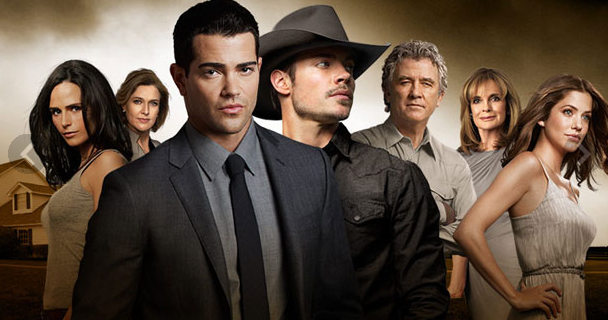
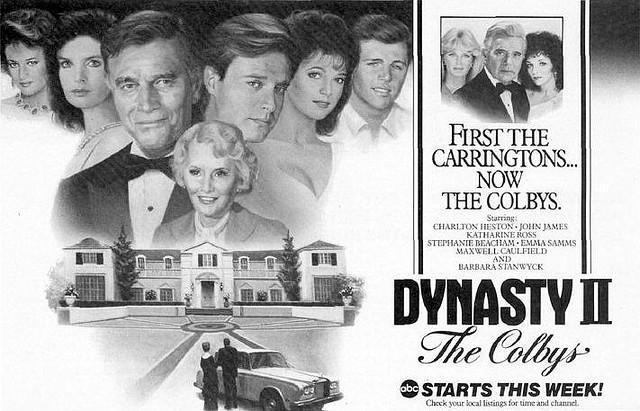
Dynasty: Season One
Filmed with autumnal, natural richness of cinematic proportions. Opulent and lavish but balanced with an undercurrent of darkness and brutality. The writing throws out the sharpest one liners and breaks your heart the next, and the structure of the season is perfect, taking its time and building to a satisfyingly intense finale. All the usuals are here: infidelity; betrayal; blackmail; rape; an epic trial. All held together by a series of intricate threads that weave together as the season plods along and then fray and unravel in slow motion as we reach the finale.
Dynasty as a whole is a curate’s egg. Season One is the delicious yolk into which you’ll want to repeatedly dip your buttered soldier.
2.
Knots Landing: Season Six
Prioritising the
Knots seasons is not an easy task. Any from Season Four to Six feel like obvious choices. A bit too obvious, perhaps. But I have to vote honestly and the fact is they’re well-remembered for good reasons. The excesses of the mid-Eighties gave us the best and the worst of Soapland. Much of the worst came from the sheer number of episodes that were produced. Twenty two episode seasons were stretched out to thirty plus in a cynical moneymaking move, resulting in dilution, filler and fatigue. Season Six is one of the few that took advantage of the extra time to build on character and to make their storytelling more expansive than ever. Season Five was in many ways the most flawless season, and certainly the most confident. But the pace of events was incredibly quick. By the S5 finale a new viewer - and many existing ones - would need a programme in order to keep up. Season Six is as ballsy and eventful as its predecessor - perhaps more so. But the extra four hours or so give breathing space, making it feel a little softer at the edges and recapturing the character-driven sensibilities of earlier seasons. It’s for this reason that I can happily get past terminally ill Karen’s mid-season miracle.
In Season Six, fragmented pieces of the puzzle played out seemingly in isolation at times: from cul de sac to Empire Valley to Shula, Tennessee. It’s only when the viewer takes a step back and sees the big picture that the craftsmanship can truly be appreciated. “Val’s Babies” is perhaps the best-known
Knots story. It seems to have been referenced a lot by casual
Knots fans (along with Gary and Abby’s affair and Ciji). But what’s most telling about the genius of the writing is just how many threads that “single” story involved over the course of the season, beginning as a very conventional soap illegitimacy storyline but going on to tread ground that would have been unthinkable up to that point. Even more remarkably,
Knots broke ground by throwing more and more soap tropes into the mix: miscarriage; kidnapping; collusion; breakdowns; multiple personalities; shrinks; detective work; more kidnapping; even an amnesiac bride for crying out loud. And it got away with it one hundred and ten percent because everyone - viewers, writers and actors - were completely invested in characters that had been crafted from the inside out over half a decade and more than a hundred episodes.
3.
Knots Landing: Season Three
Having previously commented that Season Five is perhaps the most flawless season, you may well boggle at this choice. I am a little. But Season Three - for all its patchiness, poor ratings and almost cancellation* - is as exciting, innovative, emotional and dark as
Knots got. And for that it deserves proper respect.
Without Season Three would the more celebrated and mainstream seasons have been so twisty and unpredictable? It’s a bit like asking if early
EastEnders would be so gritty had
Brookside not paved the way.
For a start, it had one of the strongest openings to any soap season. The “resolution” to Season Two’s finale in the first couple of episodes was as brave and shocking as any. It’s all relative, of course, but the wrap up to every future cliffhanger would play it safe by comparison. Any power that later season finales had (in all shows) came from the ghost of Saint Sid hanging over them, planting the suggestion that the powers that be may just decide to surprise us again by going dark (and to be fair,
Dynasty would pull a similar stunt with fairly major characters over the following two new seasons - albeit with far less impact than
Knots). The resonance of Sid’s death and the ensuing grief gave
Knots some of its all-time strongest moments as it was revisited throughout the season (
Letting Go features one of the most powerful combinations of music and visual ever put on screen. Michele Lee not getting the Emmy for this scene is a poor show. But for the music to not even be
nominated is beyond criminal). The grieving process, as it turned out, also yielded some nice lighthearted moments. “Bert in a dixie cup”, anyone?
Then there were those latter episodes: Gary and Abby’s torrid, steamy affair counterbalanced by the moody, atmospheric thunderstorms that showed us new facets of the otherwise sunny cul de sac. The betrayal, secrecy and salaciousness took
Knots to new heights of soapy greatness - especially when things got blown wide open.
The risks taken this year are just mind-blowing. Where else would you see a lead character holding his pregnant wife at gunpoint before putting the gun to his temple and pulling the trigger. And from this, Richard emerged an even more tragic and sympathetic character.
And then there’s the bit in the middle: haunted houses; fashion shows; silent movie stars; Crickets. These episodes take quite a knocking but the more I’ve watched the more “experimental” episodes, the more I applaud everyone involved for their audacity. The series is still somewhat episodic at this point. Season Three feels at times like a rebellion coming from highly creative individuals working with the frustration of needing to tell a different story that’s more or less wrapped up each week. The traditional episodic approach (as in early
Dallas) is to tell the same story from a slightly different perspective each week. Season Three of
Knots turns this on its head and dares to tell a dramatically different story each week through the prism of characters whose responses we know to come from their truth. Valene and Lilimae’s interactions in
The Three Sisters are as poignant and fragile as those already seen in Season One’s
Will The Circle... And those still to come, such as Season Six’s
Rough Edges, are more meaningful because of what’s shared between them here
. Likewise,
Silver Shadows flies because Abby’s responses to the situation ring true with, and even build on, all we know about her.
We could skip these episodes and the story would still make sense. But we’d then miss vital information about Knots’s raison d’être: character.
On the face of it, a lot that went down in Season Three feels like the writers taking huge gambles because they have nothing to lose (or don’t give a crap - take your pick). But scratching the surface it seems like they knew
exactly where they wanted to take us. And all they asked in return was the viewer’s trust and open-mindedness.
* Knots actually did get pulled off the air in the UK during the latter part of Season Three. It would return several years later but would never see prime time again. Somehow, the fact that Season Three began in 1983 and ended in 1987 endears it to me even more.
4.
Dallas: Season “Three”
Dusty Farlow’s arrival, departure, return and “death”. Ellie’s mastectomy. Southfork getting mortgaged. Gary and Val’s remarriage (leading to Knots Landing). Donna threatening to destroy JR. Jock’s trial. Jenna’s return. Kristin stirring the pot. Sue Ellen and JR’s divorce.
Oh - and JR getting shot.
5.
Knots Landing: Season Four
The great crowd-pleaser. A recognisable, likeable cast (of the originals just one had left by this point, but there had been some significant additions to complement the existing crowd. S4 newcomers Mack, Ciji, Chip and Janet Baines all fitted well and kept things green). The series was still based primarily in the cul de sac, and the tentative broadening of the canvas (Gary and Abby’s beach house; Daniel) was gentle and organic. The storylines were simple enough to keep up with but with enough emotional complexity to give a rewarding experience.
Continuing to explore and defy genres, Knots explored some more, dabbling in the worlds of pop music, nouvelle cuisine and homicide investigation (Richard even had a brief encounter with the world of midwifery). Above all, this is the year that took the disparate ensemble and plonked them all together so that they were sharing not just space but also storylines. The murder-mystery in which the vast majority of the cast were suspects was so well plotted it truly captivated.