The Lana Turner Thread

ClassyCo

Telly Talk Warrior
LV
5
 
Awards
11
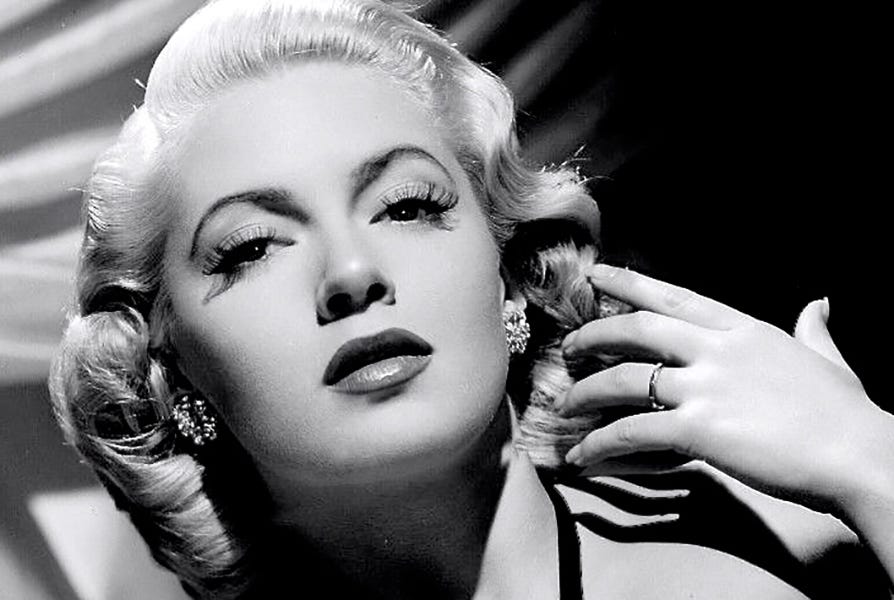
After Harlow. Before Monroe. There was Lana Turner.

Lana Turner typically gets sandwiched between Jean Harlow and Marilyn Monroe as the defining blonde sex symbol of the 1940s. She was a contract star for MGM for nearly two decades, who discovered her in 1937, shortly after Harlow suddenly passed. She earned the nickname "the sweater girl" for her debut in They Won't Forget, before having roles in many B-films and even playing Mickey Rooney's girlfriend in Love Finds Andy Hardy. She became one of the biggest film stars during World War II, starring in movies like Honky Tonk and Slightly Dangerous. Her dramatic star-turn in The Postman Always Rings Twice won rave reviews for her, but MGM generally assigned her roles she found unrewarding of her talents. She did get good reviews for her roles in Green Dolphin Street and Cass Timberlane.

As her career dipped in the early 1950s, she allowed MGM to try to re-brand her as a musical star. The first film, Mr. Imperium, was a flop, while the big-budget remake of The Merry Widow was more successful. Her career sidelined as the decade drew on, although she did have success when she went brunette for Betrayed, co-starring Clark Gable. She starred in the epic failure which was The Prodigal, before she finally left MGM in 1956. She later became well-known for starring soap opera-type melodramas, namely Peyton Place and Imitation of Life. Both films were insanely popular with Cold War-era audiences, and rank among her highest-earning pictures.

Her career entered its steepest decline in the 1960s. She starred in a few romantic comedies at the start of the decade, before gradually fading away from the screen. She did have a top role in Madame X, her first and only picture ever opening with a world premiere, and the exploitation film The Big Cube. In the late 1960s, she was one of the many well-known names recruited for the prime time soap opera called The Survivors, which was canceled after a single season. She practically retired from film acting thereafter, although she would have success as Jacqueline Perrault on Falcon Crest from 1982─83. Her first appearance on the show gave the series it highest-rated episode to date.

Lana Turner died of cancer in 1995 at the age of seventy-four.
1*oTGpy9m2Z8bpMrf2gNbWCQ.jpeg
 
Last edited:

Snarky Oracle!

Telly Talk Supreme
LV
8
 
Awards
21
I think she was decent star material, as those things go. I've got THE POSTMAN ALWAYS RINGS TWICE and THE BAD & THE BEAUTIFUL and PEYTON PLACE on DVD -- even trashy PORTRAIT IN BLACK and MADAME X in a combo package.

She was stunning to look at, not a bad actress, and just enough of a there's-something-strange-about-her vibe to make her almost interesting... She showed some self-awareness during her 1982 book tour saying, "I'm not that weird, creepy woman people think I am" (and that was how my mama always described Turner: "creepy").

And some of that pre-dated the Stompanato stabbing, but it certainly intensified after. Her daughter swears her mother didn't kill him and then dump the blame on her, saying "Whose mother would do that? Not my mother -- not Lana Turner!"

But it caused a lot of whispers over the years, and every diva needs a "but did she kill him??" kind of scandal to ever truly be an A-list legend (like Bette and Joan).

The sole issue I have with L. A. CONFIDENTIAL is that they didn't hire an actress who looked like Lana to play Lana. Just some pinch-faced "pretty" girl they probably found at some modeling agency somewhere in town.
she would have success as Jacqueline Perrault on Falcon Crest from 1982─83. Her first appearance on the show gave the series it highest-rated episode to date.
Yes, it was. Just as "Whodunit?" was DALLAS' highest rated episode, the cabin fire was DYNASTY's highest rated, and Val getting her babies back was KNOTS'.

lana+turner++18.jpg
 
Last edited by a moderator:

Crimson

Telly Talk Enthusiast
LV
2
 
Awards
9
I'm rather middle-of-the-road in Turner. Compared to her fellow MGM goddesses of the 40s and 50s, I like her a bit less than Ava and a bit more than Liz. As an actress, the best thing I can say about Lana is that she actually improved; many of her contemporaries didn't bother. In some of her earliest films, she's woefully inadequate and awkward. By the middle 40s, she was capable of giving some downright good performances although I think that was less improved technique than an increased confidence. She's pretty darn good in POSTMAN ALWAYS RINGS TWICE and THE BAD AND THE BEAUTIFUL, even if she was upstaged in the later by Gloria Grahame, a much better actress capable of creating a character rather than just inhabiting one.

I'm not too keen on her "women's films" from the 50s and 60s. PEYTON PLACE is okay-ish and so is her performance. IMITATION OF LIFE is kind of glossy and vapid; I prefer the Claudette Colbert version even if its handling of race is even more dated.
 
Last edited:

Snarky Oracle!

Telly Talk Supreme
LV
8
 
Awards
21
Fairly superficial doc which still pushes the Schwab's Drug Store myth (and even refers to "Joan Collins in The Colbys")...

But it's funny how we like symmetrical faces --- at 01:04 she looks like Marilyn, and when Lana dyed her hair black in the '50s she looked like Elizabeth Taylor:


ClassyCo

Telly Talk Warrior
LV
5
 
Awards
11
I think she was decent star material, as those things go. I've got THE POSTMAN ALWAYS RINGS TWICE and THE BAD & THE BEAUTIFUL and PEYTON PLACE on DVD -- even trashy PORTRAIT IN BLACK and MADAME X in a combo package.

She was stunning to look at, not a bad actress, and just enough of a there's-something-strange-about-her vibe to make her almost interesting... She showed some self-awareness during her 1982 book tour saying, "I'm not that weird, creepy woman people think I am" (and that was how my mama always described Turner: "creepy").

And some of that pre-dated the Stompanato stabbing, but it certainly intensified after. Her daughter swears her mother didn't kill him and then dump the blame on her, saying "Whose mother would do that? Not my mother -- not Lana Turner!"

But it caused a lot of whispers over the years, and every diva needs a "but did she kill him??" kind of scandal to ever truly be an A-list legend (like Bette and Joan).

The sole issue I have with L. A. CONFIDENTIAL is that they didn't hired an actress who looked like Lana to play Lana. Just some pinch-faced "pretty" girl they probably found at some modeling agency somewhere in town.

Yes, it was. Just as "Whodunit?" was DALLAS' highest rated episode, the cabin fire was DYNASTY's highest rated, and Val getting her babies back was KNOTS'.

lana+turner++18.jpg
Lana Turner was always a star I just knew about once I got into the old movies. She was always familiar to me, even if I wasn't terribly familiar with a lot of her work. The Postman Always Rings Twice was, for quite sometime, one of my favorite classic movies, but I haven't seen it in years. I had an old VHS copy of it, but it's been tossed in the trashcan for probably five years or so now. Maybe I'll get around to getting it on DVD or Blu-ray one of these days.

I'm not too knowledgeable when it comes to the Stompanato killing fiasco. All I really know is that many commentators mocked Lana's testimony as her greatest acting achievement, and that it blurred her public reputation. That part was next to unavoidable, I'm sure. It does add a different slant to her memory, however, and gives us something a littler juicier to discuss on threads like these. Was a blonde-haired movie beauty capable of murder? It's all deliciously disturbing, and quite unfair too to Miss Turner if the entirety of her legacy is filed under this specific period of her life.


ClassyCo

Telly Talk Warrior
LV
5
 
Awards
11
I'm rather middle-of-the-road in Turner. Compared to her fellow MGM goddesses of the 40s and 50s, I like her a bit less than Ava and a bit more than Liz. As an actress, the best thing I can say about Lana is that she actually improved; many of her contemporaries didn't bother. In some of her earliest films, she's woefully inadequate and awkward. By the middle 40s, she was capable of giving some downright good performances although I think that was less improved technique than an increased confidence. She's pretty darn good in POSTMAN ALWAYS RINGS TWICE and THE BAD AND THE BEAUTIFUL, even if she was upstaged in the later by Gloria Grahame, a much better actress capable of creating a character rather than just inhabiting one.

I'm not too keen on her "women's films" from the 50s and 60s. PEYTON PLACE is okay-ish and so is her performance. IMITATION OF LIFE is kind of glossy and vapid; I prefer the Claudette Colbert version even if its handling of race is even more dated.
I'd adjust my list a little differently than yours. Of the three MGM actresses you mentioned, Elizabeth Taylor would be first for me, then Lana Turner, and finally Ava Gardner. I've only seen the latter in two pictures ─ Mogambo and The Barefoot Contessa ─ and I love both those movies, but I haven't seen enough of her work to rank her any higher.

I think Lana improved as an actress, or at least she learned how to act like she was acting, as she aged. She was very amateurish at the beginning of her career, but most actresses were at the time. She was basically the run-of-the-mill glamour puss throughout WWII, even though she was earning MGM some mega-bucks because her pictures were so popular. I'd say she finally matured when she did The Postman Always Rings Twice, which she generally regarded as the first film that required her to act. She said she got the role after turning down several "pretty" pictures. Apparently, she wasn't keen on the casting of John Garfield, and famously asked, "Goodness, couldn't they at least hire someone attractive?" Her work in the film is good, and I recall reading somewhere that some critics were baffled that her performance here didn't get more accolades than it did at the time.

She had a lot of slow spots in her career, however. MGM ushered into those musicals at the start of the fifties trying to rebrand her, but it didn't really work. She made a good number of stinkers, but so did the likes of Davis and Crawford. She was always interesting in her roles, and she did take some chances. She went back brunette in the mid-fifties, which was considerably shaking for her fan-base, who were use to seeing her in a certain image. I honestly really like Peyton Place and Imitation of Life because of their campy soap opera vibe. This is Soap Chat, right? Yeah, I love soap operas, so I like old-fashioned movies like that, too.


Crimson

Telly Talk Enthusiast
LV
2
 
Awards
9
Elizabeth Taylor would be first for me

I can now think of three people on this forum who won't like this opinion, but I'm not too fond of Liz. I think she was the most beautiful woman ever in movies and seemed to be a generous broad who lived a remarkable life; but I find her totally uninteresting on film. Her voice was kind of shrill, her acting topped out at adequate, and I don't think she was any better at 40 than she was at 14.

If there's one single movie that I would recast, it's CAT ON A HOT TIN ROOF -- and I would sub in Marilyn in a heartbeat.
 

ClassyCo

Telly Talk Warrior
LV
5
 
Awards
11
I can now think of three people on this forum who won't like this opinion, but I'm not too fond of Liz. I think she was the most beautiful woman ever in movies and seemed to be a generous broad who lived a remarkable life; but I find her totally uninteresting on film. Her voice was kind of shrill, her acting topped out at adequate, and I don't think she was any better at 40 than she was at 14.

If there's one single movie that I would recast, it's CAT ON A HOT TIN ROOF -- and I would sub in Marilyn in a heartbeat.
While I've always been a fairly big Elizabeth Taylor fan, I can agree with you on a few points here. Her voice was kind of shrill and limiting, which why people were skeptical when she tried her hand at Broadway later in her career. Her performances range from really good to really bad. When she was on her A-game, I think she was really one of the best by far, but when she was bad, it was next to unbelievable just how drab she could be. Her career starting tapering off in the late 1960s, and after nearly a decade of starring in pictures together, she and hubby Richard Burton's professional success had hit the rocks. In all honesty, there was a lot of movies where she looked like she phoned it in, but there were just as many ─ in my theory ─ where she acted the rest of them off the screen.

It's absurd for me to think that anyone would want to recast Cat on a Hot Tin Roof, which is easily one of my favorite movies. Anytime anyone asks me what my favorite old Hollywood movies are, it's guaranteed that it'll be mentioned in the top five. It's almost too hard for me to explain exactly why I love that movie, but I do, and I wouldn't recast it with anyone. Not another soul could've made it any better. It was letter-perfect.

@Crimson, I take it you're a Jane Russell fan by your profile picture. What's your favorite of hers?
 

Crimson

Telly Talk Enthusiast
LV
2
 
Awards
9
It's absurd for me to think that anyone would want to recast Cat on a Hot Tin Roof,

As a drama, I think CAT is one of the best works of the 20th century and it's a toss-up as to whether I think it or STREETCAR is Tennessee Williams' best work. It's a comparison between those two films, practically book-ending the 1950s, is where I think CAT suffers. Kazan directed STREETCAR into a stylish, evocative film that emphasized and enhanced Williams' work. CAT looks like a TV-movie; it's kind of flat, it's kind of stagy. A brilliant screenplay made into a competent movie. And I think Taylor's performance is competent, even if it's possibly her best; or, I agree with Kathleen Turner's assessment of Liz's work in CAT (and VIRGINA WOLF). She's fine in the movie, but I don't think she had the technique or soul to bring a Tennessee Williams' heroine to life.


I take it you're a Jane Russell fan by your profile picture. What's your favorite of hers?

Jane would rank among my Top 10 favorite Old Hollywood actresses, although perhaps not as high as indicated by my use of her image. Mostly, I just like that photo. She looks wryly skeptical and detached, which seems like a good approach to an online forum.

GENTLEMEN PREFER BLONDES is, predictably I suppose, my favorite of her films. Marilyn elevates the movie, but Jane anchors it. I also enjoyed her two PALEFACE films with Bob Hope, THE TALL MEN with Clark Gable, her two noir-ish films with Robert Mitchum (HIS KIND OF WOMAN; MACAO), and THE REVOLT OF MAMIE STOVER which is her only good solo starring film.

Since I've dragged a few actresses talents, I should point out the obvious: Jane wasn't much of an actress. I like her screen persona; kind of laid back and sarcastic. I think her persona has aged better than most of her contemporaries from the 40s and 50s. She didn't play tramps or vamps, fallen women or golddiggers -- she played women who were independent, intelligent, skeptical and sometimes horny. Almost any of her characters could be transplanted to 2020 and feel like a modern woman. Marilyn, a far more dynamic and accomplished actress, will always be an anachronism rooted in the 1950s.
 

ClassyCo

Telly Talk Warrior
LV
5
 
Awards
11
As a drama, I think CAT is one of the best works of the 20th century and it's a toss-up as to whether I think it or STREETCAR is Tennessee Williams' best work. It's a comparison between those two films, practically book-ending the 1950s, is where I think CAT suffers. Kazan directed STREETCAR into a stylish, evocative film that emphasized and enhanced Williams' work. CAT looks like a TV-movie; it's kind of flat, it's kind of stagy. A brilliant screenplay made into a competent movie. And I think Taylor's performance is competent, even if it's possibly her best; or, I agree with Kathleen Turner's assessment of Liz's work in CAT (and VIRGINA WOLF). She's fine in the movie, but I don't think she had the technique or soul to bring a Tennessee Williams' heroine to life.
Cat on a Hot Tin Roof just embodies that old Hollywood style of filmmaking. It signifies an end of an era for the studio system, as it was rapidly loosing its power, and a new dawn of method-trained actors bringing us their own manufactured brand of realism to the screen.

Now, I haven't seen a whole of other adaptations outside of A Streetcar Named Desire, which is easily one of my favorite pictures. Vivien Leigh and Marlon Brando are outstanding in their roles, and the execution is so utterly realistic that I can almost feel the sweat from their run-down love shack.
Jane would rank among my Top 10 favorite Old Hollywood actresses, although perhaps not as high as indicated by my use of her image. Mostly, I just like that photo. She looks wryly skeptical and detached, which seems like a good approach to an online forum.

GENTLEMEN PREFER BLONDES is, predictably I suppose, my favorite of her films. Marilyn elevates the movie, but Jane anchors it. I also enjoyed her two PALEFACE films with Bob Hope, THE TALL MEN with Clark Gable, her two noir-ish films with Robert Mitchum (HIS KIND OF WOMAN; MACAO), and THE REVOLT OF MAMIE STOVER which is her only good solo starring film.

Since I've dragged a few actresses talents, I should point out the obvious: Jane wasn't much of an actress. I like her screen persona; kind of laid back and sarcastic. I think her persona has aged better than most of her contemporaries from the 40s and 50s. She didn't play tramps or vamps, fallen women or golddiggers -- she played women who were independent, intelligent, skeptical and sometimes horny. Almost any of her characters could be transplanted to 2020 and feel like a modern woman. Marilyn, a far more dynamic and accomplished actress, will always be an anachronism rooted in the 1950s.
Immediately after I asked you about Jane Russell, I just knew you were going to say some variation of I just like the picture. I've done that myself many times with profile pictures here, just spicing things up to give my little box a different "look" occasionally. I must say that Russell is very beautiful in the picture you've chosen. She was ravishing, anyway.

I've seen several of her pictures. When I think of Jane Russell, it's hard for me not to think of her career-starting role in The Outlaw for Howard Hughes, and Gentlemen Prefer Blondes, which just happens to be one of ─ if not my favorite ─ classic Hollywood musical comedy. She and Marilyn had great chemistry together, all their giggles and sarcastic quips making them seem quite believable as friends in real-life. They were reportedly fairly close at one point, and Russell always spoke fondly of her and how she tried to encourage Marilyn towards Christianity.

I would have to agree that Jane wasn't too credible in the acting department. She had that saucy sharp-tongued wit that was good for roles like Dorothy Shaw, but it was also kind of limiting. Her filmography is relatively small when compared to her peers, but it's also cluttered with a whole lot of junk. I think the majority of her issue was she was under a contract with Howard Hughes (which was apparently still getting renewed well into the 1970s for $1,000-a-week), and he controlled what he'd let her do. It's a common Hollywood legend, but I think it wounded Jane's possibilities fairly early on. The Outlaw itself took like three years to film, and when it was finally released in 1943, it wasn't a very broad release. It was three years later when she did Young Widow, and another two years before she did The Paleface. There were gaps in her film work early on, which encouraged her to seek a singing career.

Hughes seemed to hold a hand over Jane that she never really shook from. She had some really good roles at the start of the 1950s, like in His Kind of Woman and Macao, as you previously mentioned, but there were also some duds too, like Double Dynamite. She could have easily been ushered into a film noir femme fatale, but that genre was on it's way out; she too could have succeeded in musical comedy, but those films were becoming more costly to produce and were generating less profits as a result. Had 20th Century-Fox, Metro, or Warner's been able to lure her away from Hughes, I think she could have achieved greater things. I've seen pieces of The Revolt of Mamie Stover, which was actually a vehicle slated for Marilyn, who quickly rebuffed the offer as she was studying the method with Lee Strasberg at the Actors Studio.

Her film career was all but over in the late 1950s. She later said that "you couldn't go on making movies in those days if you were an actress over thirty", and she just walked away. I'm not too sure it was her preference to stop making films, but she decided to move on to something else because the offers just weren't there anymore. She did a few films thereafter, and even showed for a few episodes of The Yellow Rose in the 1980s.

She does seem easier to transplant into modern times than someone like Marilyn, whose old Hollywood style of glamour has her cemented as the definitive embodiment of classical womanhood.


Crimson

Telly Talk Enthusiast
LV
2
 
Awards
9
Hughes seemed to hold a hand over Jane that she never really shook from.

Hughes was a blessing and a curse to Jane. He promoted her to being on the most famous stars and biggest sex symbols of the mid-40s to mid-50s, but he squandered her prime years and utilized her in bad films. His taste was puerile and vulgar; the best of his films with her (HIS KIND OF WOMAN and MACAO) are interesting rather than good. During the years THE OUTLAW was battling censorship, Hughes prevented Jane from appearing in other films fearing they would undercut the interest in THE OUTLAW. She lost out on the Rita Hayworth role in BLOOD & SAND due to this.

I find their relationship interesting; he sexualized and exploited her image in a way that rankled her conservative Christian values, but she never expressed any resentment and remained loyal to him. She was under personal contract to him throughout her entire film career. She was ostensibly the queen of the RKO lot during the Hughes years, but her contract remained with him, not the studio. When Hughes sold RKO and ended his involvement with Hollywood, he did indeed sign her to an additional 20 year, million dollar contract despite never again utilizing her services as an actress.

All of which might suggest some hanky-panky, but Jane said in her autobiography that Howard only hit on her once. She turned him down and, sheepishly, he never tried again. (She was also married to a professional football player, which may have been a deterrent for Hughes.)

Yet he appeared to harbor some deep sexual obsession with her. The book, "Seduction: Sex, Lies, and Stardom in Howard Hughes's Hollywood" makes an interesting observation. In the 30s, Hughes had a wide range of taste in women, romantically (Hepburn, Davis, Fontaine) and professionally (Harlow). Yet from his discovery of Jane in 1940, his taste shifted almost exclusively to busty brunettes (Ava Gardner, Yvonne De Carlo, Linda Darnell, Faith Domergue, Hedy Lamarr). Plus, in his reclusive Vegas years, her films were among those he would watch on endless loop.

The financial independence Hughes gave Jane with that last contract is why, I suspect, she was indifferent about continuing her career. Unlike some of her contemporaries, she didn't have to work. She said she tried to establish herself as a character actress in the 60s -- even seeking advice from Shelly Winters -- but said she had a hard time getting filmmakers to forget her sexy image.
 

Crimson

Telly Talk Enthusiast
LV
2
 
Awards
9
Poor Lana, getting crowded out by Liz and Jane in her own thread!

So here's my third favorite Lana role, after THE POSTMAN ALWAYS RINGS TWICE and THE BAD & THE BEAUTIFUL -- THE THREE MUSKETEERS.

To me, this is everything right and wrong with Lana Turner. She looks ravishing. It's a good performance of a screen villain; maybe even very good. But's it's not great. And then you shift your gaze and realize Angela Lansbury is right there and wanted the part; Lansbury, an infinitely better actress capable of creating some of the screen's best villains. And then suddenly Lana's work seems pallid.

pic191.jpg

Plus, the movie is kind of weird. It feels less like an Errol Flynn / Tyrone Power swashbuckler than a musical where all of the singing and dancing has been cut out.
 
Last edited:

ClassyCo

Telly Talk Warrior
LV
5
 
Awards
11
Hughes was a blessing and a curse to Jane. He promoted her to being on the most famous stars and biggest sex symbols of the mid-40s to mid-50s, but he squandered her prime years and utilized her in bad films. His taste was puerile and vulgar; the best of his films with her (HIS KIND OF WOMAN and MACAO) are interesting rather than good. During the years THE OUTLAW was battling censorship, Hughes prevented Jane from appearing in other films fearing they would undercut the interest in THE OUTLAW. She lost out on the Rita Hayworth role in BLOOD & SAND due to this.

I find their relationship interesting; he sexualized and exploited her image in a way that rankled her conservative Christian values, but she never expressed any resentment and remained loyal to him. She was under personal contract to him throughout her entire film career. She was ostensibly the queen of the RKO lot during the Hughes years, but her contract remained with him, not the studio. When Hughes sold RKO and ended his involvement with Hollywood, he did indeed sign her to an additional 20 year, million dollar contract despite never again utilizing her services as an actress.

All of which might suggest some hanky-panky, but Jane said in her autobiography that Howard only hit on her once. She turned him down and, sheepishly, he never tried again. (She was also married to a professional football player, which may have been a deterrent for Hughes.)

Yet he appeared to harbor some deep sexual obsession with her. The book, "Seduction: Sex, Lies, and Stardom in Howard Hughes's Hollywood" makes an interesting observation. In the 30s, Hughes had a wide range of taste in women, romantically (Hepburn, Davis, Fontaine) and professionally (Harlow). Yet from his discovery of Jane in 1940, his taste shifted almost exclusively to busty brunettes (Ava Gardner, Yvonne De Carlo, Linda Darnell, Faith Domergue, Hedy Lamarr). Plus, in his reclusive Vegas years, her films were among those he would watch on endless loop.

The financial independence Hughes gave Jane with that last contract is why, I suspect, she was indifferent about continuing her career. Unlike some of her contemporaries, she didn't have to work. She said she tried to establish herself as a character actress in the 60s -- even seeking advice from Shelly Winters -- but said she had a hard time getting filmmakers to forget her sexy image.
Her filmography is short, with maybe only ten films during her prime, and the majority of them are stinkers. She wasn't really a big box office draw, either, and that can be deemed to the poor quality of her work. I'd agree that Hughes was bittersweet for Russell; they were apparently loyal to one another, even if his taste for her pictures was way off.

She did do two westerns in the late 1960s, Johnny Reno and Waco, which is when she tried going for a character actress career, but her image had been set. The producers, even then, weren't keen on shaking what she had sold a decade earlier. She was a sex symbol in their minds, and an aging one at that. Sex symbols don't generally get to age graciously and still get steady employment, that's why the likes of Harlow and Monroe, both suffering premature deaths, have become immortalized. They're forever young and beautiful.
 
Last edited:

ClassyCo

Telly Talk Warrior
LV
5
 
Awards
11
Poor Lana, getting crowded out by Liz and Jane in her own thread!

So here's my third favorite Lana role, after THE POSTMAN ALWAYS RINGS TWICE and THE BAD & THE BEAUTIFUL -- THE THREE MUSKETEERS.

To me, this is everything right and wrong with Lana Turner. She looks ravishing. It's a good performance of a screen villain; maybe even very good. But's it's not great. And then you shift your gaze and realize Angela Lansbury is right there and wanted the part; Lansbury, an infinitely better actress capable of creating some of the screen's best villains. And then suddenly Lana's work seems pallid.

View attachment 21571

Plus, the movie is kind of weird. It feels less like an Errol Flynn / Tyrone Power swashbuckler than a musical where all of the singing and dancing has been cut out.
I was actually just think how I could direct this thread back to Lana. :D

The thing is I'm so rusty in my Turner knowledge, that I had really hit a dry spell in my discussion. Wasn't The Three Musketeers her first Technicolor movie? Apparently there was some buzz surrounding it being her first, but I've never personally seen it. It seems Lana was chosen for a few different roles mainly because of her popularity and looks, even if the role had been envisioned for another actress. I just learned here recently that her part in Green Dolphin Street was originally meant for Katharine Hepburn, although MGM wanted Turner because of her youth and box office power.
 

Crimson

Telly Talk Enthusiast
LV
2
 
Awards
9
The thing is I'm so rusty in my Turner knowledge

I'm probably at the limits of my Lana knowledge as well; truth is, I don't think I've seen more than maybe six or seven of her films.

She had a surprisingly durable career; she was a leading lady as late as 1966, far out lasting her contemporaries. I said in another thread that Hedy Lamarr was more interesting off screen than on; the opposite strikes me as being the case with Lana. She's the quintessential Movie Star -- more than Liz, more than Joan -- and hits all the beats. Career ups & downs? Check. Numerous marriages? Check. Scandals? Check. Tell-all book by child? Check. Yet through it all, Lana seemed kind of ... vacuous. A glamorous, empty vessel. Maybe there was more depth to her than I give credit for, but her life and image seem uninteresting to me. Even the Stompanato killing isn't really that interesting. Minus the murder, Liz was a similar stereotypical Movie Star, but also seemed to be a genuinely interesting, warm woman.
 

ClassyCo

Telly Talk Warrior
LV
5
 
Awards
11
I'm probably at the limits of my Lana knowledge as well; truth is, I don't think I've seen more than maybe six or seven of her films.

She had a surprisingly durable career; she was a leading lady as late as 1966, far out lasting her contemporaries. I said in another thread that Hedy Lamarr was more interesting off screen than on; the opposite strikes me as being the case with Lana. She's the quintessential Movie Star -- more than Liz, more than Joan -- and hits all the beats. Career ups & downs? Check. Numerous marriages? Check. Scandals? Check. Tell-all book by child? Check. Yet through it all, Lana seemed kind of ... vacuous. A glamorous, empty vessel. Maybe there was more depth to her than I give credit for, but her life and image seem uninteresting to me. Even the Stompanato killing isn't really that interesting. Minus the murder, Liz was a similar stereotypical Movie Star, but also seemed to be a genuinely interesting, warm woman.
Discussing her makes me want to revisit her work, as in those I've enjoyed in the past, and especially those I've not been privileged to see as of yet. I'd also agree that she is more interesting on screen than she is off. Her personal life is cluttered and not terribly memorable, and yet it's hits nearly all the major notes required for stardom. In her interviews, she's always came across as a caricature to me, typically vapid and not void of any depth.
 

ginnyfan

Telly Talk Active Member
LV
0
 
Awards
6
I guess I qualify as a Lana fan since by my count, I've seen around 20 of her movies. Since MGM is my favorite studio, of course I have to be familiar with one of its leading, most successful ladies. As already established, Lana was never among the best actresses but was able to produce ok performances, with a few outstanding ones like The Postman and even later in her career with Madame X. There was a certain unemotional, calculated coldness to her, which seems to always be present on screen and was probably something she had in her and couldn't shake off.

In the 1940s, Lana was, along with Greer Garson and Katharine Hepburn, MGM-s female holy trinity and as the decade progressed Lana indeed outperformed both at the box office and was MGM's No1 female star, with hits like Postman, Green Dolphin Street, Cass Timberlane and Homecoming. I guess all of this led to her getting the role in The Three Musketeers, a movie dominated by MGM musical stars where Lana felt out of place. By this point she was tired and overworked plus her turbulent private life and pregnancy interfered with her professional life so she finally got some time off from the studio, not appearing on screen during 1949. When she came back in September of 1950 it was with an uneven vehicle, A Life of Her Own, which did nothing special at the box office. I've seen this movie several times and always enjoyed the first half, before it becomes a bit of a romance borefest in the second half. After this, as mentioned before, MGM's bizarre decision to rebrand her as a star of musicals, latin romances and historic epics failed and Lana's career was in a rot by the mid 50s. The only bright moment during this period was of course The Bad and the Beautiful which gave her a meaty role, quality script and great cast, but this wasn't truly a Lana Turner movie tbh. Not surprisingly, MGM did not recognize Lana's potential in juicy soaps and melodramas and wasted a chance to earn some big bucks again. But Lana recognized this and with the help of Universal and Ross Hunter rebranded herself, with a little help from FOX and Peyton Place which again was helped by Lana's dramatic private life events. Lets not forget that Payton Place became a huge hit only after the Stompanato murder happened, so in a way, Lana relunched her career in the most disturbing way possible. After this came an array of glossy, technicolor soaps, with Imitation of Life as another career highpoint. Even in the 1960s Lana managed to ride this wave for quite some time, but everything comes to an end, especially when you have such a big shift happening as it did in late 60s. That said, I really want to see The Big Cube which, according to Wikipedia, is notable for its aggressive portrayal of LSD use and the 1960s youth counterculture as vicious evils.:D

One of her later movies I discovered recently is Another Time, Another Place , from 1958 which I really enjoyed and would recommend. Lana is surrounded by a very British cast and it was filmed there, in black and white, so it makes for a change in tone and feels a bit different than her typical lavish American stuff from this period.

 
Last edited:

ClassyCo

Telly Talk Warrior
LV
5
 
Awards
11
I guess I qualify as a Lana fan since by my count, I've seen around 20 of her movies. Since MGM is my favorite studio, of course I have to be familiar with one of its leading, most successful ladies. As already established, Lana was never among the best actresses but was able to produce ok performances, with a few outstanding ones like The Postman and even later in her career with Madame X. There was a certain unemotional, calculated coldness to her, which seems to always be present on screen and was probably something she had in her and couldn't shake off.

In the 1940s, Lana was, along with Greer Garson and Katharine Hepburn, MGM-s female holy trinity and as the decade progressed Lana indeed outperformed both at the box office and was MGM's No1 female star, with hits like Postman, Green Dolphin Street, Cass Timberlane and Homecoming. I guess all of this led to her getting the role in The Three Musketeers, a movie dominated by MGM musical stars where Lana felt out of place. By this point she was tired and overworked plus her turbulent private life and pregnancy interfered with her professional life so she finally got some time off from the studio, not appearing on screen during 1949. When she came back in September of 1950 it was with an uneven vehicle, A Life of Her Own, which did nothing special at the box office. I've seen this movie several times and always enjoyed the first half, before it becomes a bit of a romance borefest in the second half. After this, as mentioned before, MGM's bizarre decision to rebrand her as a star of musicals, latin romances and historic epics failed and Lana's career was in a rot by the mid 50s. The only bright moment during this period was of course The Bad and the Beautiful which gave her a meaty role, quality script and great cast, but this wasn't truly a Lana Turner movie tbh. Not surprisingly, MGM did not recognize Lana's potential in juicy soaps and melodramas and wasted a chance to earn some big bucks again. But Lana recognized this and with the help of Universal and Ross Hunter rebranded herself, with a little help from FOX and Peyton Place which again was helped by Lana's dramatic private life events. Lets not forget that Payton Place became a huge hit only after the Stompanato murder happened, so in a way, Lana relunched her career in the most disturbing way possible. After this came an array of glossy, technicolor soaps, with Imitation of Life as another career highpoint. Even in the 1960s Lana managed to ride this wave for quite some time, but everything comes to an end, especially when you have such a big shift happening as it did in late 60s. That said, I really want to see The Big Cube which, according to Wikipedia, is notable for its aggressive portrayal of LSD use and the 1960s youth counterculture as vicious evils.:D

One of her later movies I discovered recently is Another Time, Another Place , from 1958 which I really enjoyed and would recommend. Lana is surrounded by a very British cast and it was filmed there, in black and white, so it makes for a change in tone and feels a bit different than her typical lavish American stuff from this period.

Lana Turner is one of the definitive movie stars. Her box office popularity was unquestioned, but her performances range from credible to great. I don't think I've ever seen her where she was bad, but I do know when she was on her A-game, she was really good.
 
Top