I've seen bits and pieces of soap operas - the daytime ones - and it was my impression that they were aimed primarily at a female audience. That makes sense because they aired at time of day when most men were at work and in an era when there were more stay-at-home mothers than now.
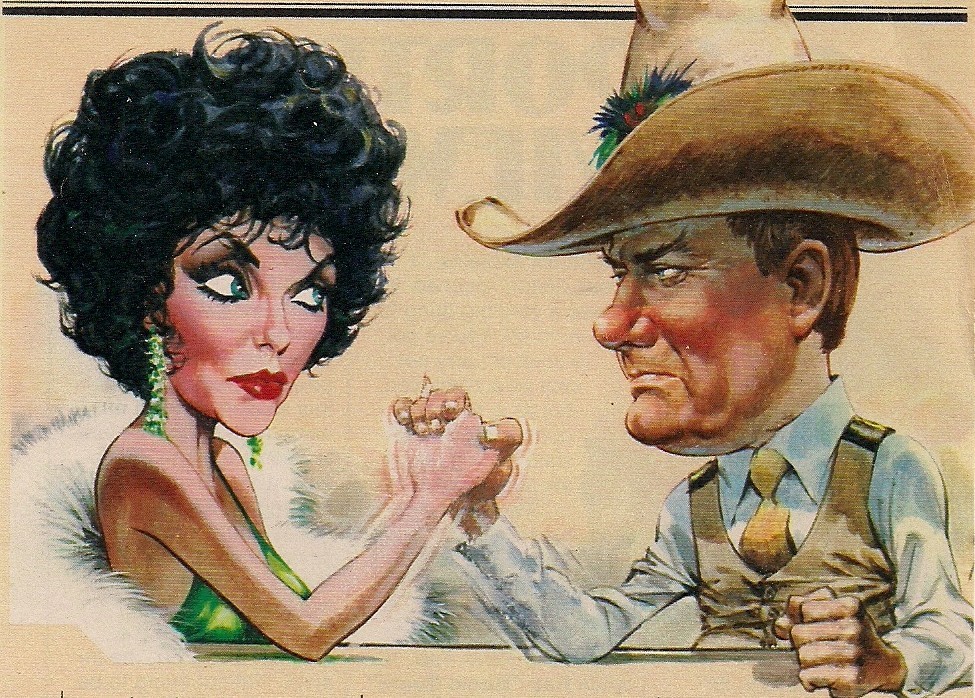
Was Dallas the only primetime 80s soap that appealed equally to men and women? If it was, it helps explain why Dallas attracted such a huge audience.
Most soaps seem to be directed at women's supposed fantasies. DYNASTY's producers openly admitted to it, which was both a strength and a weakness of that show.
DALLAS was unusual in that it was more male-driven -- but I'd argue that the women were just as interesting (as the underkitten's story usually is) even if they were sometimes a wee bit too oppressed at times even by the show …. and I don't mean Sue Ellen, whose self-destructiveness and alcoolism were simply who the character was, but Pam (when she was living at Southfork) and Miss Ellie (most of the time).
But DALLAS' best years saw a healthy balance in power between the genders without getting too self-consciously feministicky about it. And that gave the show a life globally, placing it above most silly woman-flattering soap operas.
Yes, KNOTS LANDING was women-dominated, but the writing didn't diminish either sex. So it, too, struck a balance.
Not surprisingly, DYNASTY's best years (S1, S2 and S9) also struck a healthy gender balance. But its increasingly dumbest years, (S3 thru S8) saw, instead of cogent plotting, endless scenes of jealousy, vanity, pointless cattiness, and gushing compliments for the women --- and sometimes the feminized men (but not much) in billowy shirts (yet somehow not enough) like some video Harlequin Romance wannabe that doesn't quite come off.
There are bad writers both male and female, naturally, but I have to wonder if DYNASTY had too many women running it. I mean, there are things women tend to be focused on (eg, social status) while men somewhat less so. (Yes, yes, I know there are plenty of men who are status-driven, too, but it doesn't always get in the way of their spinning a competent narrative yarn).