Faye Dunaway on Film

Snarky Oracle!

Telly Talk Supreme
LV
7
 
Awards
19
There's much to like about LAURA MARS, particularly its atmosphere. I'm not sure if any film of the era did a better job of capturing the duality of NYC of the time: cocaine chic and downtrodden seediness. This film is the end of Dunaway's' hot streak that started in '67. Curiously, it's virtually the only film during those years that she carried solo, as she was almost always paired with a major male star. She gave a surprisingly restrained performance, all things considered, holding back of histrionics to key moments. But there's the problem with the film: it's curiously reticent. If any movie warranted going off-the-wall bonkers, it's this. Maybe the film needed DePalma as a director.

DePalma couldn't have pulled it off as well; Kirshner's approach to the film is what made it almost work, frankly. Give me LAURA MARS any day before DRESSED TO KILL (although somebody gave me both on visual vinyl) but then Kirschner wasn't saddled with a hapless leading lady (not Angie's stunt beaver, but DePalma's wife, Nancy Allen -- who, unironically, couldn't abide the artistic sensibilities of Kirschner when she worked with him later on something like ROBOCOP LXVIX).

To me, LAURA MARS' main flaw was the fact that we could figure out who the killer was pretty quickly. Too quickly.

The then-sordid atmosphere was a source of criticism, even from me, at the time of EYES' release. But I wouldn't change a thing: it's a late-'70s urban period piece, like those other fetish-shockers of the era (which can still feel rather startling, despite subsequent decades of ostensibly greater excess and explicitness) an era so enticingly breezy and yet so serial-killerish repugnant. But I think EYES is my favorite of the bunch.

Perhaps more ironically, the movie is based on a John Carpenter script, which was initially to be entitled "EYES" -- the same title of Joan Crawford's segment in Rod Serling's NIGHT GALLERY pilot (which Serling originally wrote for Bette Davis). And Joan was buried six months before in the same mausoleum crypt in which they're filming Lulu & Michele's funeral in LAURA MARS.

Coinkidink?? Or grande dame karmic clusterfrick?

And, speaking of grande dames, at least LAURA MARS give those of us who once pined for a Garbo-Dietrich vehicle a sense of what that might have been like (obscure reference, lost in absurd folds of mystery and likely best ignored and forgotten).

The film was originally intended for Streisand (who warbles the love ballad, "Prisoner," which I like) but she found the kinky subject matter not right for herself, and she was probably correct. I sometimes wonder how Elizabeth Taylor (and her expanding girth) would have done in the role of Laura, but somehow Faye Dunaway is inextricable from the thing.

It's actually one of the roles Faye was born to play, although the picture remains largely ignored by critics.

R.2ee7a8321ab3c1a992e5280ca592f1c7


I had also never seen CONDOR, although for no particular reason. I liked this one a lot too -- a tense and exciting espionage thriller. Dunaway played a role with a great deal more vulnerability than I associate with her; I may have underestimated her range. The leap from kidnap victim to lover was a bit implausible, but I guess when a kidnapper looks like Robert Redford those things happen.

Oh, CONDOR's great -- a kind of companion piece to Warren Beatty/Alan Pakula's THE PARALLAX VIEW (which never co-starred Suzanne Pleshette) a year earlier. Is the CIA hitman the same guy in both films? If not, Redford's doomed agency cohort is the same actor who plays Beatty's remote Permindex-esque contractor handler who decides he might be ripe material for 'asset' status.

And, yes, Faye is very good here in a less-is-more kind of way. She even manages to sheepishly pull off the "spy-phukcer" reference without a problem.

Also, that "love making" montage in CONDOR, far more tasteful than those shoehorned into most concurrent films of the era, benefits immensely not only from comparative restraint, but also its forlorn, stark, heartbroken early-'70s vibe --- in construction and musical score reminiscent of TV commercials from those years --- which makes the segment memorable and evocative as opposed to smutty and disposable.

8805fe0ca22d3690f4d804c11d7cdb58.jpg


I sometimes wonder fantastically if my largely innocent wanderings on 'The Internets' could inadvertently generate agency interest and pushback the likes Redford experienced in CONDOR.. That's silly, of course -- until I remember my nearly-solo cyber-wide ramblings almost a decade ago about the car "accident" of crusading reporter Michael Ha stings may indeed have done just that. Fortunately, my house has too many trees around it to permit black helicopters hovering outside my windows. I mean, aren't I good enough to be shot on the toilet?

hastings131111_2_560.jpg
 
Last edited by a moderator:

Crimson

Telly Talk Enthusiast
LV
1
 
Awards
8
Kirshner's approach to the film is what made it almost work, frankly

The "almost" here suggests our opinions of the film aren't that far off. I find the film as frustrating as effective; all of the pieces of a great, lurid thriller are there but it never quite gels for me.

Which, now that I think about it, I could say about every John Carpenter movie I've ever seen.


The film was originally intended for Streisand (who warbles the love ballad, "Prisoner," which I like)

I almost turned the movie off during its opening credits due to Streisand's caterwauling; and then I remembered I have a fast forward button.

Also, that "love making" montage in CONDOR, far more tasteful than those shoehorned into most concurrent films of the era, benefits immensely not only from comparative restraint

I had no objection to the scene's execution, which was a about as tasteful and organic as such a scene is likely to be. I did find it questionable that a woman being held hostage would, so quickly, jump into bed with someone. And that's where casting is key -- not just Redford's handsomeness, but his sheer likeability. I spent the first half of the movie thinking he was miscast, being too handsome and athletic to be convincing as a passive bookworm and that, perhaps, Hoffman would have been a more likely casting choice. But, then, that pivotal moment of trust and attraction wouldn't have worked.
 

Snarky Oracle!

Telly Talk Supreme
LV
7
 
Awards
19
The "almost" here suggests our opinions of the film aren't that far off. I find the film as frustrating as effective; all of the pieces of a great, lurid thriller are there but it never quite gels for me.

Which, now that I think about it, I could say about every John Carpenter movie I've ever seen.

Apparently, Carpenter's original script was crap, and Kirshner required a major re-write.

I was originally ambivalent about LAURA MARS but it soon won me over. I doubt a DePalma movie would have grabbed me and stuck an ice pick in my eye.

I almost turned the movie off during its opening credits due to Streisand's caterwauling; and then I remembered I have a fast forward button.

I probably like Streisand, despite her personal and creative quirks, more than you do. For me, the song isn't a problem at all -- they don't even play most of it in the opening.

I had no objection to the scene's execution, which was a about as tasteful and organic as such a scene is likely to be. I did find it questionable that a woman being held hostage would, so quickly, jump into bed with someone. And that's where casting is key -- not just Redford's handsomeness, but his sheer likeability. I spent the first half of the movie thinking he was miscast, being too handsome and athletic to be convincing as a passive bookworm and that, perhaps, Hoffman would have been a more likely casting choice. But, then, that pivotal moment of trust and attraction wouldn't have worked

Of course, in the '70s, we all slept with our hostage takers... just as long as Barbra wasn't singing in the background. It was a different time.

s-l400.jpg
 
Last edited by a moderator:

Crimson

Telly Talk Enthusiast
LV
1
 
Awards
8
Last night, two more Dunaway films: BONNIE AND CLYDE (1967) and NETWORK (1976).

There aren't many films that are clearly key moments in cinema history, but BONNIE & CLYDE is such a one: it's the final nail in the coffin of Old Hollywood. Nothing that B&C did was particularly revolutionary; creators had been chipping away at the old system for as long as the old system existed. With B&C, all of the old confines of the Hayes-enforced, Studio System-back movie morality were dead. Little wonder Bosley Crowther, preeminent of the old guard critics, was so hostile to the film: he may have instinctively understood his era was over.

Faye, not yet a star, only landed the part because more established actresses turned it down. Lucky for the film, as I find it unlikely that Fonda or Wood could have brought to the role everything Faye did: vulnerability, eroticism and a neurotic energy. Plus, those cheekbones!

72e847dfc4b49f4e6420496d55cdf9f7.jpg

Dunaway's peak years were appallingly brief -- a decade-ish -- but she those years are dense with truly great films. It's remarkable how prescient NETWORK has turned out to be; if anything, its satiric take on the dangerous mixture of news and entertainment may have been understated in comparison on what was to come. Four and half decades later and Howard Beal's jeremiad is still depressingly truthful.

Dunaway's Diana seems to have been written as some sort of feminist nightmare, but her performance was too canny to be boxed in by misogyny; she outflanked the film at every turn, creating the most engaging character in the movie.

7dd4548a260cd750a675352123f7eeddd81c9afcd09941b7aedcf58a85394f55._SX1080_.jpg
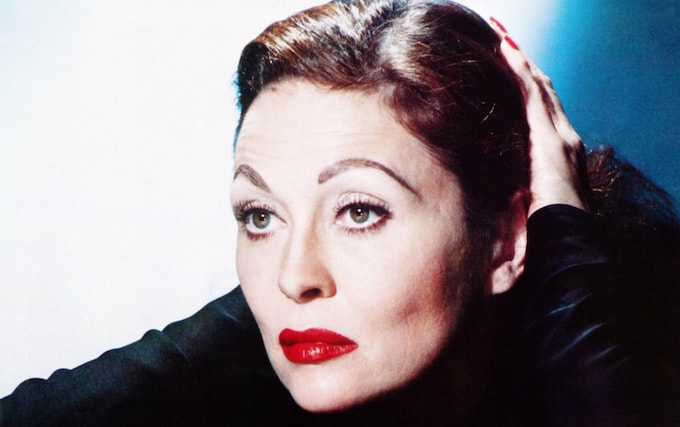
(I just realized the photo I posted of Faye for CONDOR was, in fact, from NETWORK. Weird -- it turned up in the Google search for CONDOR.)

I found myself irked when Dunaway's character kept referring to William Holden's character as "middle-aged". Well, damn, turns out Holden was only 58. He looked like he was well into his 70s. I've said it before, but that generation aged hard.
 
Last edited:

Snarky Oracle!

Telly Talk Supreme
LV
7
 
Awards
19
Yes, BONNIE & CLYDE and NETWORK are very good, and both still totally work.

Beatty mistook Dunaway for Catherine Deneuve (well, both women are Virgo Rising/Moon in Leo, for those keeping a record) before she was cast in BONNIE & CLYDE.

It's often credited, I think rightly, for reflecting or marking (or even causing) that shift in Hollywood from which it never un-shifted (although they say we've returned to silent movies in the 21st century). Much like the culture at large at the time.

Apparently, Arthur Penn wanted to do something similar with THE CHASE (1966) with Marlon Brando -- a frenetic, quick-cuts editing extravaganza, while screenwriter Lillian Hellman (basing her script on a Horton Foote play) wanted to bring in timely issues of oil law and allusions to the Kennedy assassination; the studio just wanted a straightforward drama they could release like any other picture, and Brando had his own desires -- probably unlimited burgers on the set. The result is an all-star mess, despite its Hallowe'en color scheme and hopelessly forlorn John Barry score so resonant of the mid-'60s somehow... But it's no BONNIE & CLYDE, for damn sure. And while it doesn't have Dunaway, it does have Jane Fonda and Redford (he's laugh-out-loud terrible, by the way, but everybody else is great -- despite the movie mostly sucking).

And yet Redford turned down WHO'S AFRAID OF VIRGINIA WOLFE and never regretted the choice. (He did regret THE CHASE, however).

Little wonder Bosley Crowther, preeminent of the old guard critics, was so hostile to the film: he may have instinctively understood his era was over.

Oh, he was the worst. You'd finish reading one of his caustic reviews, and while you'd learn some new ad-hominem adjectives, you'd still have no sense of the picture he was critiquing -- only that anyone with any taste or class or self-respect would deign to even considering going to the movie in question.

With some reviewers, you suspect they lack the insight -- or interest -- to know what to say. So they just make stuff up -- only in Crowther's case, with a pointed adamancy to cover up the hollowness of his perspective.

He's like a bitcher Addison DeWitt without the wit.

Then there's Pauline Kael, as evil a critic as I've ever read. Even when she was right about a film being good/bad, it was always for meticulously obtuse reasons so her logic would be extra-renown. And that seemed to work... I saw her in a couple of TV interviews where she didn't come off so badly, but that just made her seem more despicable... I once had an effeminate fan of Kael explain to me that I didn't like Kael and found her intentionally pretentious because "I didn't understand her," and then he pursed his lips into something akin to a smile, proud of his observation.


Joan Crawford playing a pre-conception Faye Dunaway in GRAND HOTEL:
3cefefc67dcd1fc65572cb4f34e00163.gif

R.e848f994b75f9bb68f678021fde4718a
 
Last edited by a moderator:

Crimson

Telly Talk Enthusiast
LV
1
 
Awards
8
Oh, he was the worst.

The irony of Crowther's review, and that he chose to professionally die on that particular hill, is that he wasn't technically wrong but came at it from the incorrect -- and, probably, out-of-date -- perspective. Consider ...

"It is a cheap piece of bald-faced slapstick comedy that treats the hideous depredations of that sleazy, moronic pair as though they were as full of fun and frolic as the jazz-age cutups in Thoroughly Modern Millie."

I mean, he's not really wrong in his assessment. The movie is a glamorization of two murderous lowlifes; the film even flirts with -- but, fortunately, pulls back from -- the notion that B&C were Robin Hood-esque bandits sticking it to The Man. If BONNIE AND CLYDE was meant to be a realistic (even in that fake Hollywood concept of realism) portrayal of the pair, it's pretty terrible. But the movie is film-as-folklore, one of the better examples of the American love of mythologizing rebels and outlaws. Even the look the characters plays into that. Neither Beatty nor Dunaway look plausibly 1930s but, notably, do they look too anachronistically 1960s. They both look sleekly timeless.

One notable thing about BONNIE AND CLYDE and THE THOMAS CROWNE AFFAIR -- they were gorgeous films with lush cinematography and vibrant colors. The films of the 1970s are just so visually drab and blah in comparison.
 

Willie Oleson

Telly Talk Schemer
LV
9
 
Awards
27
1670766490943.png

Watching old movies as a 21st century person can be a tricky thing to do if you intend to rate these old movies based on originality and various artistic values.
But art isn't science, I think the only thing that really matters is what it does for/to you, the spectator (or, in the case of my recent watch of The Godfather Part II, the person on the receiving end of a creation).
Some movies and TV productions were good (or bad) for the time it was released, while other movies simply never lose their magic, or even increase that very magic retrospectively.

Somehow I knew that THE ARRANGEMENT was going to be my cup of tea and considering the various aspects used to create this film it certainly doesn't disappoint.
The iffy part of it is that it often comes across as a checklist for making a very 1969 film, as if the idea of what the film should be is more important than what the film is.
And even if it turns out that this film was groundbreaking in its quasi-anti-Hollywood sort of way - with shades of European cinema - it still doesn't feel that way because the chaos is being hammered home so relentlessly.
Things do slow down a bit in the second part of the film, at least for Kirk Douglas' character, but that's because the story starts to explore the main character's troubled past, going back as far as immigrants arriving at Ellis Island.
I can only assume that the theme of the American Dream ties in with building a capitalist/consumerist identity only to lose another kind of identity in the process.
Somehow I feel that THE ARRANGEMENT wasn't the first film to use this cynical approach - but again, I can't say for sure.

I think the best part of this film isn't the crisis of the main character, but all the other characters being caught up in the chaos of it all. I had not expected to see Deborah Kerr in a film like this and perhaps she herself had not expected to feature in a film like this, and this parallels the journey of her character in a fascinating way.
Despite primarly catching up with her husband's latest antics she holds up surprisingly well throughout the entire movie.
I'm sensing an attitude of "I'm not sure if this movie was the right choice for me, but I'm going to make it work even if it kills me".

Faye Dunaway plays the feminist type who thinks she can control her own narrative and for the most part she does, but the theme of the story almost requires that that attitude is going to backfire and naturally she ends up being just as miserable as everybody else.
She's got some meaty scenes that already showed Dunaway's lack of acting-restraint, it's really not that different from Mommie Dearest.
Deborah Kerr has equally powerful scenes but it never comes across as DARK SHADOWS-type of histrionics.
I'm not saying that the lack of restraint is a problem per se, and it still looks quite good in this movie. I wonder if it could be as simple as being a physical aspect of the actor, in Faye Dunaway's case her voice.
Laura Linney has the perfect voice to pull out all the stops but it never ever sounds as if she's going to crack under the pressure of doing that kind of performance.
When Faye does it I can't help but bracing myself, especially because she's so good in everything else she does.
 

Crimson

Telly Talk Enthusiast
LV
1
 
Awards
8
Tonight, THE THREE MUSKETEERS (1973) and THE FOUR MUSKETEERS (1974).

I disliked the first one immensely. Grubby, slapsticky, and very noisy, its thin plot and disjointed structure was a struggle to get through. The movie's sole redeeming feature is Dunaway, terrific as the villainess but with far too little screentime.

I almost didn't watch the second one, but I pushed through; and I'm glad I did. It's much better! Almost everything I disliked about the first one is rectified in the second. Its style is still rowdy, but less obnoxiously so. Better still, the film is basically Dunaway's. She dominates the film, and creates one of the screen's best villainesses.

1672629334003.png
 

Snarky Oracle!

Telly Talk Supreme
LV
7
 
Awards
19
Is this the right time for Faye to do a grand dame guignol picture -- I mean, one that's more macabre than her usual grand dame guignol pictures... Y'know, like, HUSH... HUSH, SWEET BABY JANE ?

dunawat_dynastier.JPG
 

James from London

International Treasure
LV
6
 
Awards
18

Crimson

Telly Talk Enthusiast
LV
1
 
Awards
8
I guess it goes well with the whole ''disaster that ruined Faye's career'' narrative

Which Faye herself seems to embrace. Of course her career was already floundering. After winning an Oscar for NETWORK and having a modest hit with LAURA MARS, the best films she could seemingly land were THE CHAMP and THE FIRST DEADLY SIN; movies that should have been beneath her at that stage of her career.

The real bomb of the era for her was THE WICKED LADY (1983), which I watched this evening; perhaps a cheeky way to acknowledge her birthday. I saw this one years ago, but barely recalled it. Despite its dire reputation, I didn't hate it! The movie has an odd tone, not quite serious but not quite campy. The film's vibe is not dissimilar to the TV soaps of the era. In fact, it feels (and looks) like a TV-movie.

As with all of her lesser films, Dunaway carries this one. She seemed to be having fun in the role, while toeing the line of ridiculousness. It's a pretty good performance in a pretty mediocre-ish film. Among the rest of the cast, only Geilgud seemed to be on the same wavelength, and matched her energy. The rest of the actors ranged from odd to amatuerish.

THE WICKED LADY effectively marked the end of Dunaway's years as a Hollywood leading lady. It's a far drop from her peak films, but it's not that bad.

wicked lady.jpg
 

Willie Oleson

Telly Talk Schemer
LV
9
 
Awards
27
Well that's basically Milady De Winter's twin sister and it has "for all my gay fans" written all over it. A very bad choice to do something so predictable.
Add to that that the eighties decade was a shitty decade for Hollywood (thank god for the nineties renaissance and that goes for both film and music) and add to that that the eighties decade may not have been as good to the leading ladies of 1960s cinema as the sixties decade was to the leading ladies of 1930/1940s cinema.
How many of them were still around and at the peak of their respective careers? Candice Bergen, Ann-Margret, Lee Remick - the success was in prime time television, soap operas and glossy mini-series (or indie or European films, which is probably what Dunaway should have done to survive that soulless decade and then reactivate her Hollywood career in the 90s and regain the crown that rightfully belonged to her).

There was a time when The Wicked Lady was my cup of tea but now I can't stand it anymore. You can see that the actors know that they're dressing up and play bitchy, and that's not how it should be.
But Milady was the real thing, she was scary. So, even if one can overlook the unfortunate type-casting then the real problem was that Dunaway stopped being scary - and again, I think eighties cinema has a LOT to answer for.
 

Crimson

Telly Talk Enthusiast
LV
1
 
Awards
8
VOYAGE OF THE DAMNED (1976)

All the components of a great film are here, but it never amounts to much. This should have been a psychologically taut melodrama of people facing an uncertain future, but it plays out more like a 70s disaster movie minus the actual disaster. There's not much here other than a great cast of actors, with a distracting mishmash of accents.

I'm not sure why Dunaway accepted this role. She got top billing, but it's her most thankless part since THE TOWERING INFERNO. She wasn't given much to do in the film, aside from wear some great clothes and cut Lee Grant's hair (in a practice run for MOMMIE DEAREST!) Both Grant and Julie Harris had more compelling characters to play. Dunaway looked smashing though, as with CHINATOWN, in the 1930s fashions.

MV5BNzhjNzE5ZjEtMTQ4OC00MzM1LWFjMWEtNDE3NjA2YjRkNDRkXkEyXkFqcGdeQXVyNTE5NDYzNzc@._V1_.jpg
 

Crimson

Telly Talk Enthusiast
LV
1
 
Awards
8
I thought that I would be winding down my Dunaway retrospective, with just four movies left in my collection. I haven't been too enthusiastic about tackling these: two westerns and Deborah Kerr (the mere thought of who makes me clench my jaw).

THE ARRANGEMENT (1969)
HURRY SUNDOWN (1967)
LITTLE BIG MAN (1970)
OKLAHOMA CRUDE (1973)

Through some, ahem, creative avenues I've added a few more productions to my collection; a few of which I am quite eager to get to!

A PLACE FOR LOVERS (1968)
DOC (1971)
THE DISAPPEARANCE OF AIMEE (1976 TV movie)
EVITA PERON (1981 TV mini)
ELLIS ISLAND (1984 TV mini)

Sadly, THE WOMAN I LOVE (1972) and AFTER THE FALL (1974) seem to be completely elusive.
 

ginnyfan

Telly Talk Active Member
LV
0
 
Awards
5
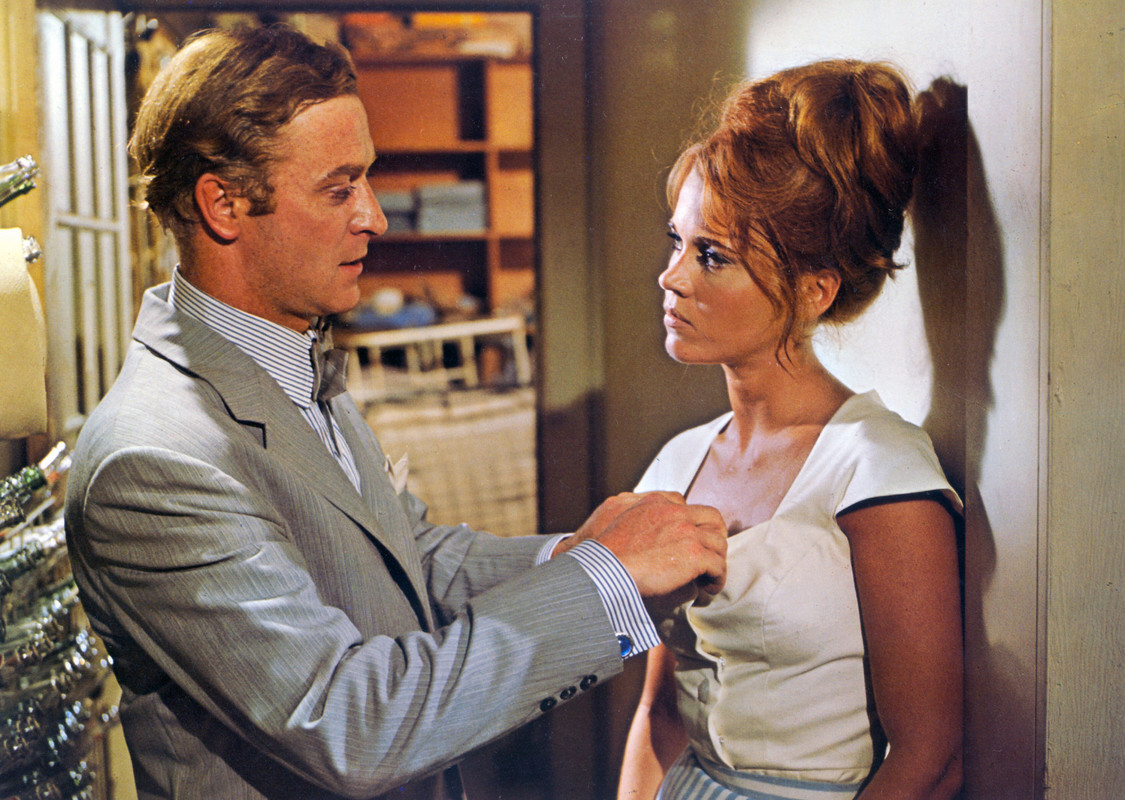
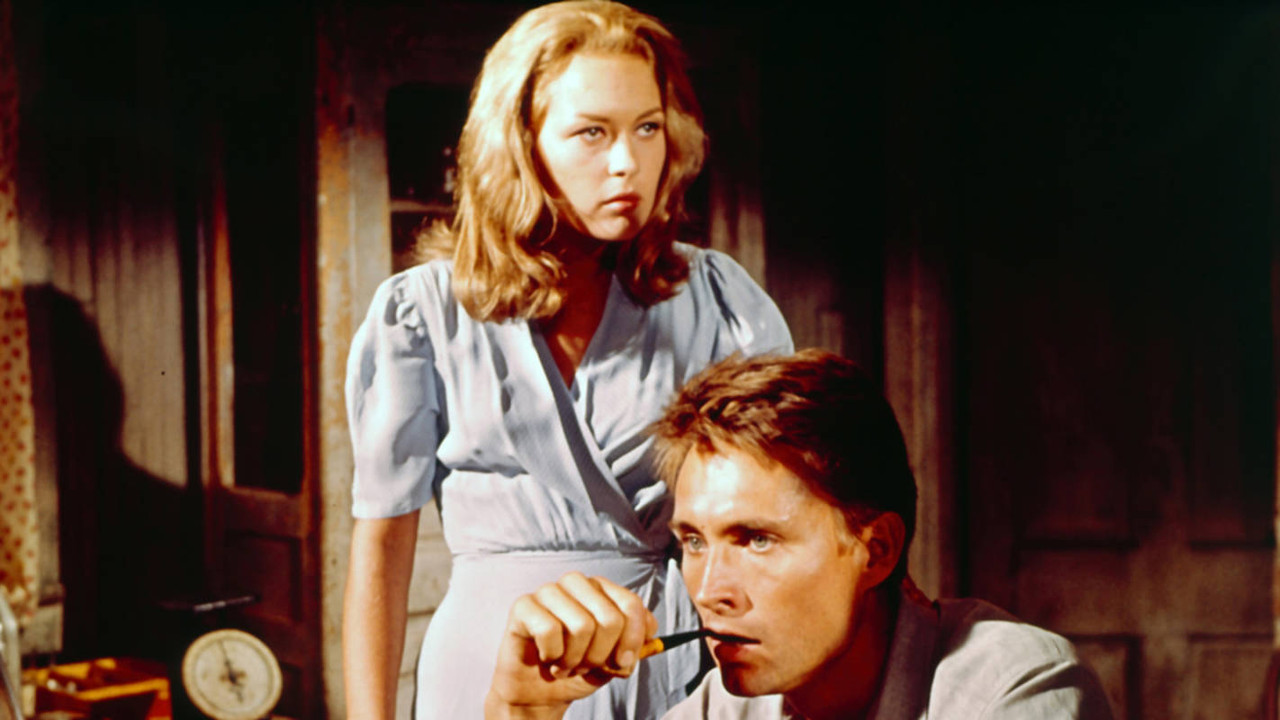
I'm curious about your thoughts on HURRY SUNDOWN (1967) , which I would think qualifies for unintentional camp. It's quite over the top, with all the usual Southern dramatics. It has both Jane Fonda and Faye in it, though I'm not sure if they share any scenes, there might be one. Jane has the juicy part while young Faye is just a supportive, good wife in this. The rest of the cast is pretty good as well, plus Otto Preminger directs. Just like The Chase (1966), it has all the ingredients to be a great classic, but in the end it's just not.

Still I enjoyed my 2 viewings of it and I'd recommend it, flaws and all....


Willie Oleson

Telly Talk Schemer
LV
9
 
Awards
27
I'm curious about your thoughts on HURRY SUNDOWN (1967)
Is that Michael Caine, AGAIN??
THE ARRANGEMENT (1969)
I watched this literally a few weeks ago and I hardly remember any of it except for Deborah Kerr as the sex-craving wife, something that kinda shocked me, but in a good way.
ELLIS ISLAND (1984 TV mini)
One of those potboiler rags-to-riches mini series that was de rigueur in the late 70s and 80s. Fred Mustard Stewart's (the novelist) work is a slightly trashier version of John Jakes' bibliography. Needless to say, I devoured all of their respective novels I could get my hands on.
I don't remember much of Faye's role but Ann Gillian was very entertaining as the ambitious and ruthless bitch, and Kate Burton was very entertaining as the neurotic hysterical bitch.
EVITA PERON (1981 TV mini)
Aah..yes...
53d336f8f9176966c155287a4c287235dbfbab45.gif


4d534e9240e29a8fcfe283af214644a768bf19e0.gif


It's very possible that I'm being totally misinformed but I get the idea that Faye Dunaway wanted to play these iconic characters (including Maria Callas, I'm not sure if that project was ever finished?) and while there's nothing wrong with career choices I think, from a more artistic point of view, it kinda puts the cart before the horse.
Dunaway could still carry a bad movie and make it slightly less bad
Yes, whatever her shortcomings are, mediocrity is not one of them. However, when an actor starts to take him/herself too seriously it can become a problem.
But as always it's never just one thing that determines one's success or downfall. Great leading roles for aging female actors were in short supply, thankfully this has changed a lot since the period of what was supposed to be the peak of Dunaway's career. Olivia Colman is now the reigning queen of British cinema, I recently saw her in THE FAVOURITE and she was absolutely fantastic in that most unflattering role (as opposed to Faye's glamorous choices). Being a good actress is not good enough anymore, you have to go down and dirty - with or without shoulder pads.
 
Top