Ingrid Bergman Remembered - 1915 - 1982

Barbara Fan

Admin
LV
16
 
Awards
39
In her 1980 bio she said she didnt want to be stereotyped in Hollywood as so many actors were
You played the bad guy, the good guy, the bad girl, the good girl, the gangster - whereas in Sweden you got to play a range of roles as thats what actors do!
 

Barbara Fan

Admin
LV
16
 
Awards
39
a few more from a Walk in the Spring rain

Ws8n1lI.png


kI3zfV7.png


EoSqHOu.png


vRuETqH.png


love BF x
 

Barbara Fan

Admin
LV
16
 
Awards
39
I cannot recommend this highly enough, its one of the best documentaries out re an actress and it features so much of ehr behind the scenes Cine film of ingrids as she rarely went without her camera

I love it!


Barbara Fan

Admin
LV
16
 
Awards
39
Its an amazing film, i watch it every xmas day and i cry! it has fantastic clips and scenes off camera and all her children talking about their mother so fondly, including Pia who could easily have done a BOOK on how she was abandoned by her mother as a child - but she said she would never do it, she was just so much fun and they all wished they had more of her as she died aged 67 @DallasFanForever

I love it.
 

Barbara Fan

Admin
LV
16
 
Awards
39

Ingrid Bergman in “Stromboli” and the Power of Nonprofessional Actors​


Ingrid Bergman in “Stromboli” and the Power of Nonprofessional Actors | The New Yorker

1615318740950.png

Ingrid Bergman and Mario Vitale in a scene from Roberto Rossellini’s 1950 film “Stromboli.”Photograph from Everett

https://www.newyorker.com/culture/t...boli-and-the-power-of-nonprofessional-actors#

There are as many ways of casting nonprofessional actors as there are of casting professionals, and as many ways to direct films with the one as with the other. Nonprofessionals can be dramatically inspired newcomers (such as Lynn Carlin in “Faces” or Souleymane Demé in “Grigris”), exemplary documentary-style incarnations of themselves (such as the entire cast of “The Exiles” or “People on Sunday”), blank slates for radical de-theatricalization (as in nearly the entire œuvre of Robert Bresson). But there are particular creative tensions that arise out of casting nonpros alongside movie stars. What interests me most about the casting of nonprofessional actors in dramatic movies is their disruptive presence, the way that their relative lack of technique and inexperience taking direction and playing to the camera create textures of the sort that directors have sought to achieve since the early days of narrative movies. The acclaim of Chloé Zhao’s “Nomadland,” in which Frances McDormand performs with a remarkable group of nonprofessionals, whom the production encountered on location, spotlights both the power and the pitfalls of such pairings. A more successful precedent is Roberto Rossellini’s 1950 film “Stromboli,” starring Ingrid Bergman alongside residents of the titular island. Their onscreen relationships are the very mainspring of the drama.
In the movie that first showcased the concept and the practices of so-called Italian neorealism, “Open City,” from 1945, Rossellini told a story about the Italian resistance to Nazi occupation by casting one of the rising stars of the time, Anna Magnani, and the well-known comedic actor Aldo Fabrizi alongside many nonprofessionals. The tension of the shoot (which took place during wartime, at high risk) and the immediacy of the drama elevated the entire cast to a sharp dramatic focus. Rossellini continued to work with nonprofessionals in his next features, “Paisan” and “Germany Year Zero,” both about the war and its aftermath, and the dramatic effect of their presence was heightened by the historical thrust of the stories and the equally significant depiction of war-scarred Italy and Germany; the casting fit the stories and the environments. Then, when Bergman, one of the biggest stars of the time, wrote to him admiringly to offer to work with him, he followed the same methods—albeit more radically—in their first collaboration, “Stromboli,” another drama rooted in the Second World War. Here, the casting didn’t just serve or heighten the story—it became the story.
In “Stromboli” (which is streaming on the Criterion Channel and—in a slightly shorter cut—on IMDb TV and other services), Bergman plays Karin, a Lithuanian woman in her late twenties who, after the end of the war, is living in a refugee camp. She’s more glamorous, more energetic, more refined, and, especially, a lot more cynical than the other women in her barracks, and she’s desperate to get out. Karin is involved in a romance with an Italian fisherman named Antonio (Mario Vitale, a real-life fisherman, in the first of his few movie roles) from the other side of the barbed wire separating the women’s and men’s compounds. When she’s turned down for a visa for Argentina, she accepts his proposal of marriage and leaves with him for his home, the volcanic island of Stromboli. Arriving there with him, Karin is instantly and inconsolably miserable. The island is geographically forbidding; its houses are old and dilapidated, its residents poor and struggling. The young and energetic aspire to escape, while those who remain (and the many elderly people who return) are deeply religious and bound to tradition. In short, it offers none of the urbanity and sophistication that marked Karin’s earlier life in European capitals.

https://www.newyorker.com/video/wat...rty-four-year-old-plant-shop-in-new-york-city
Yet the tradition-bound, poor, and isolated islanders—played by nonprofessionals, people encountered there—are clumsy and nervous. They look on camera as they appear to Karin, stiff and backward. They seem like the opposite of naturals, appearing uneasy before the camera and in the presence of Bergman’s gaze—and, above all, in Karin’s. Stromboli is their island but the intruding presence of the camera, the star, and the glossy newcomer detaches them from it, makes them seem like misfit strangers at home and awkward fits in the film that depicts their way of life. They tear through the surface of the drama, interrupting its texture and flow.

The urbane Karin comes to Stromboli, it seems, not only as a way of getting out of a refugee camp but as a way of avoiding deportation to her home country. (It eventually emerges that, during the war, she’d had an affair with a man whom she identifies as one of the occupiers—presumably, a German.) In her misery, she plots her escape, scheming to get the money with which she and Antonio can leave for Australia or the United States, while also trying to squeeze whatever bits of happiness she can find into what she treats as her new form of confinement. Karin is what one woman on Stromboli calls a “flirt”: she associates uninhibitedly with a woman considered “bad”; attempts to seduce the one worldly man on the island, the parish priest (who’s also played by an outsider, Renzo Cesana, a writer and producer who was also a minor Hollywood actor); and playfully embraces another fisherman. Antonio himself, though devoted to Karin, is harsh, demanding, imperious, and, when their marriage becomes the subject of gossip, even violent toward her.
As for the islanders, they’re gossipy, unsparing, and rigidly judgmental, paying hardly a glimmer of attention to opening the island to wider currents of change and progress. Yet Rossellini also restores them to themselves cinematically when his dramatic direction shifts toward documentary—notably, in a justly celebrated sequence showing fishermen rowing out patiently, steadfastly, and silently, while Karin visits Antonio and sees for herself the heroic, violent, dangerous struggle of their daily lives, and hears for herself the work songs that sustain them in their harsh labor. Then comes a volcanic eruption, which reveals—to viewers, as to Karin—the ambient terror of imminent catastrophe that silently but decisively haunts life on the island, the presence of death that’s both its residents’ horrific burden and sacred spiritual trial.
In the course of the film, the roles become reversed—life on Stromboli reveals Karin’s strangeness, her clumsiness, her misconceptions, and also the ill-fitting graft of Bergman herself among its people. Through the drama, the residents, in effect, again take possession of their home and of the cinematic space in which Rossellini presents them. Unlike in “Nomadland,” where McDormand’s character, Fern, is defined from the start by her empathetic connection to other nomads (however different their motives and circumstances), in “Stromboli” neither Karin’s nor Bergman’s (nor, for that matter, Rossellini’s) outsider gaze upon the troubles of locals has their perspectives built in. The calmly lucid and analytically precise images, weaving documentary observation into staged fiction and crystallizing the drama from unscripted events, make the mutual clash of lives and dreams, the conflicted graft of the star onto the island and the islanders into the dramatic cinema of a star, the hot and unstable core of the drama. Far from disguising or downplaying the production’s methods and realities, Rossellini puts them into the foreground and builds upon them the movie’s grand emotional world—and his grand social and spiritual vision.

 

Barbara Fan

Admin
LV
16
 
Awards
39

This looks really interesting and one I would want to see​

The Rossellinis” grapples with what’s in a name​


1620763951613.png

Roberto Rossellini’s grandson directs a documentary that is a fascinating exercise in filmmaking as therapy.

NOW STREAMING:
Powered by JustWatch

In 1945, the release of Italian neorealist classic Rome, Open City pulled Roberto Rossellini and his family out of poverty and catapulted them into the international limelight. The Rossellinis, a new documentary from one of his five grandchildren, Alessandro, grapples with living in the famed filmmaker’s shadow.


We’re introduced to Alessandro’s aunts and uncles as they trail their father’s coffin on live television in 1977. There are Roberto’s children with actress Ingrid Bergman: Robin, who lives a hermit-like existence on the Swedish island where his mother spent many of her summers; model and actress Isabella, who’s perhaps the most famous of the group; and her twin sister, Ingrid Jr., a New York-based professor. There are also Roberto’s two children with
screenwriter Sonali Das Gupta, dancer Nur (born Raffaella) and adopted filmmaker Gil.


Alessandro is the son of filmmaker Renzo, Roberto’s child with costume designer Marcella De Marchis. (Renzo also had an older brother, Marco, who died as a child.) “If you’re a bit confused, no worries,” jokes Alessandro in his voiceover narration. For him, what matters most is that they all descend from the same patriarch. And, in choosing that patriarch’s funeral as its starting point, The Rossellinis marks itself as concerned as much with his absence as his presence.

1620764008600.png


“My grandfather left the world his masterpieces, and not a penny to any of us,” Alessandro explains. “Instead, he left us an enormous inheritance of family conflicts.” The younger filmmaker believes that he suffers from what he calls “Rossellinitis,” a hereditary condition characterized by three main symptoms: a skewed moral code, outspokenness, and an aversion to monogamy. Alessandro’s link to his grandfather has felt like more of a curse than a blessing, and he seems to credit it with many of his problems in life, from his fractured relationship with his mother to his struggles with drug addiction. Assuming that his family members feel the same about their own lives, he sets out to hear their testimonies: “My idea of this journey is to reach truths our family never shared.”


The surviving Rossellinis are a multi-generational, -racial, and -continental bunch, taking Alessandro everywhere from Sweden to the United States, Italy to Qatar. The Rossellinis is his first feature, which only adds to its self-reflexivity. He fidgets with his equipment, periodically vlogs about the status of the project from various hotel rooms, and conspicuously involves his crew. Because we have his mission statement, however, these visible seams come across as charming rather than irritating. (Less charming overall are the film’s song selections, which often feel out of place, sometimes owing to extremely literal lyrics.)


As Alessandro begins testing his theories out on his relatives, it becomes clear that some of the stories he’s told himself about his family are precisely that. Isabella, one of his funnier interview subjects, pokes holes in the documentary generally speaking, wondering whether he’s projecting his own insecurities onto everyone else. “I think you have to go back to therapy,” she teases. More than once, Alessandro is overly aggressive with his interview questions—desperate to have someone validate his Rossellinitis—and has to apologize to a family member afterwards. Throughout, clips from Roberto’s films are used to illustrate different emotions.

The project benefits immensely from the wealth of paparazzi photos and other archival material that comes with having a famous family, not to mention all the home video footage of Alessandro’s aunts and uncles from when they were children. One of the film’s more interesting stretches revolves around the occasional tension between his twin aunts—one bookish and camera-shy, the other internationally recognized for her beauty. Though Ingrid Jr. and Isabella once appeared together on Larry King Live (alongside their half-sister, Pia Lindström), the former was upset by the latter’s Guy Maddin collaboration, My Dad Is 100 Years Old (2006), in which Roberto appears as a disembodied belly.


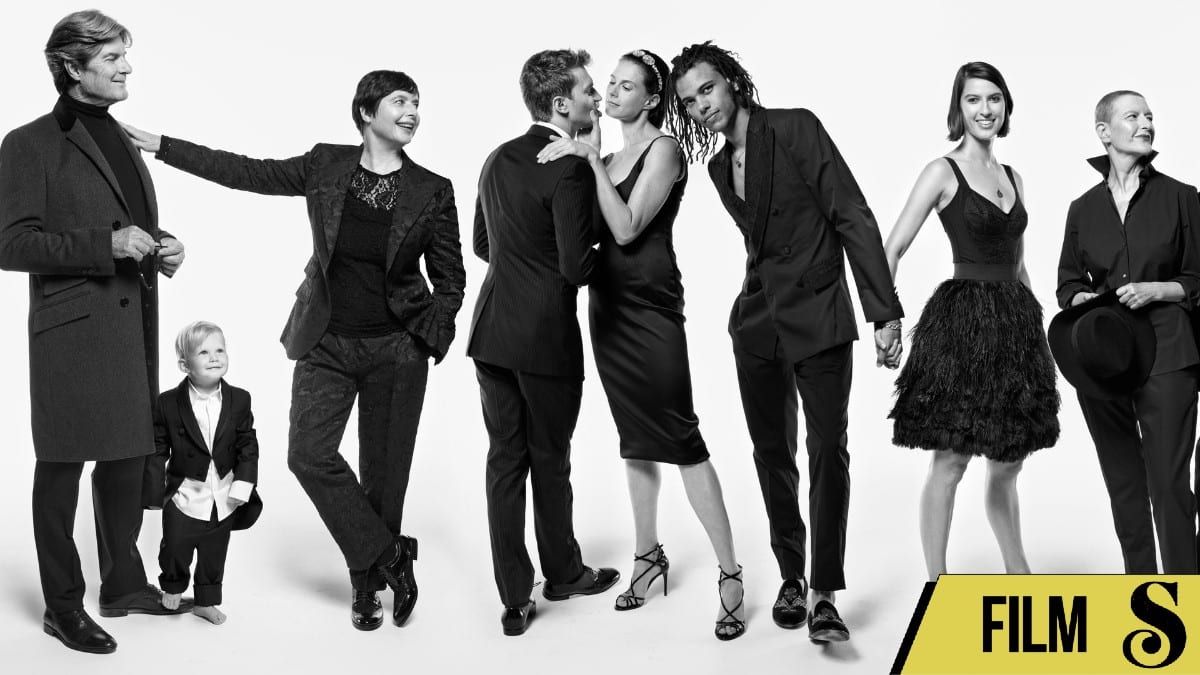
The Rossellinis suffers somewhat from its sum total of loose ends. For all the ground that Alessandro covers, we learn virtually nothing about any of his own partners or children, nor anything about Ingrid Jr.’s personal life. So when the clan—minus Alessandro’s mother, dancer Katherine Cohen, who lives in a New York City nursing home—reunites for a Dolce and Gabbana-styled family portrait in Vogue Italia, we’re missing context on a full quarter of the picture. Alessandro, whose mother is Black, also gestures often towards race as it relates to his Rossellinitis but never fully commits to discussing it—a missed opportunity given the racial diversity of his extended family.


On the whole, however, the film is a fascinating example of filmmaking as therapy, reminiscent to some extent of Sarah Polley’s Stories We Tell (2012). The Rossellinis works as both an unlikely love letter to the Rossellini family and an explainer for the rest of us, anchored by that highly relatable desire to understand what exactly is in one’s name.


Barbara Fan

Admin
LV
16
 
Awards
39
I look forwards to seeing this and think it rather nice that her Italian son now lives on his mothers and 3rd husband Lars island off the coast near Gothenburg


“I think you have to go back to therapy. It wasn’t enough,” says Isabella Rossellini, drily and only somewhat jokingly, to her nephew Alessandro, as he interviews her on some hard family truths. The documentary he’s making is that therapy, he tells her, earning a fixed stare of equal parts affection and skepticism. “Good luck,” she finally replies.

1621172475562.png

It’s a droll but loaded exchange between the most celebrated child and the self-declared misfit of the Rossellini dynasty, hinting at varying levels of privilege and damage among the families it comprises. It’s a cobweb of dysfunction founded, Alessandro believes, in the self-determined moral code of their shared patriarch, trailblazing Italian filmmaker Roberto. “The Rossellinis” represents Alessandro’s attempt to unparcel that legacy, though it often plays as personal catharsis in the guise of wider family counseling.


The flashes of discomfort and occasional hostility emerging from that disconnect are what make the film intriguing, even if the younger Rossellini’s techniques as both a filmmaker and an interviewer border on gauche. The very premise of the documentary is self-indulgent. Alessandro, the son of Roberto Rossellini’s eldest living child Renzo and the African-American dancer Katherine Cohen, is a recovering drug addict who has diagnosed himself with the separate affliction of “Rossellinitis”: a chronic state of insecurity, stemming from being born into a clan “where you’re expected to be cultured and creative by nature.” His relatives are bemused when he brings up the term. His efforts to pitch individual crisis as a shared condition aren’t necessarily a success, though he exposes tricky, intricate family politics in the process.


“The Rossellinis” — which premiered last year in Critics’ Week at Venice, before embarking on the docfest circuit — isn’t Alessandro’s first stab at capturing his thorny family history in documentary form. A previous attempt at launching the project culminated in the short “Viva Ingrid!,” a more straightforwardly celebratory tribute to his grandfather’s most famous wife Ingrid Bergman. Via archive materials and the bittersweet recollections of her three children, Bergman remains a critical presence in this documentary — and the chief hook for an international audience less versed in the Rossellinis’ Italian celebrity. What he gathers of her and his grandfather’s marriage and acrimonious divorce is nothing that Hollywood scholars don’t already know. Its trickle-down effects on their children’s lives, meanwhile, are selectively guarded in Alessandro’s one-on-one interviews with them.


Anyone hoping for gossipy showbiz color may come away disappointed. Isabella is a wry and quizzical interviewee, though she doesn’t hold forth on her glittery career or romantic life. Instead, she’s briskly candid about the pressure she felt, as the most famous and wealthy of her father’s children, to financially sustain her extended family — Alessandro, with his history of substance abuse problems, included. She has wrestled with the Rossellini inheritance onscreen before, writing and narrating the Guy Maddin documentary short “My Dad Is 100 Years Old,” to the consternation of her twin sister, New York-based academic Ingrid: Perhaps that past experience is part of the reason the Rossellinis approach Alessandro’s camera with a smiling wariness, knowing full well what tension it can foster.

Interactions with the director’s suave uncle Robin, who lives a solitary life on his mother’s estate at Sweden’s Danholmen Island, are less flinty, but also not entirely forthcoming. Alessandro’s visit to the estate is most interesting for what it reveals of how he perceives his own place in the extended family, as he describes himself as “the little Black nephew about to disembark at the mythical temple of the Bergmans.” Alessandro’s biracial identity, and how he feels it distinguishes (or separates) him from other Rossellinis, surfaces repeatedly as a point of concern, though it’s rarely addressed head-on — even in the film’s final third, where he journeys to Qatar to interview his aunt Nur, the daughter of Roberto and his fourth wife, Indian writer Sonali Senroy Das Gupta. The Rossellini surname, he implies, is an identity that subsumes all others.

For all its ambitious breadth of scope, “The Rossellinis” is best when it sticks closest to home for the filmmaker. Alessandro’s own children, perhaps protectively, are left out of the equation, but the film’s most affecting stretches document his years-in-the-making reunion with his estranged mother Katherine, now living in a modest New York nursing home and long removed from the merry-go-round of Rossellini issues, even if she’s had her own alcoholism to contend with. Alessandro’s producer father Renzo, meanwhile, is mostly good-humored about a life and career in cinema that never quite escaped the long shadow of his father, whose legacy further permeates “The Rossellinis” via a thrilling selection of film clips. (They speak for themselves rather better than Alessandro’s commentary on them, which is limited to such bland generalities as calling “Rome, Open City” a “masterpiece of cinema.”) If this flawed but compellingly heartfelt doc never quite outpaces Roberto Rossellini’s shadow either, well, that’s largely its point.
 
Last edited:

Barbara Fan

Admin
LV
16
 
Awards
39
In loving memory of Ingrid Bergman on her birthday in 1915 and the anniversary of her death in 1982

Sadly missed and never forgotten

JUU5i3Q.jpg


XpihxmH.jpg


sLvRWo7.png


KnnYheU.png


Thank you @Karin Schill and Jenny for what you did for me - It was very memorable and I thank you both for it, it was very special x
 

James from London

International Treasure
LV
6
 
Awards
18
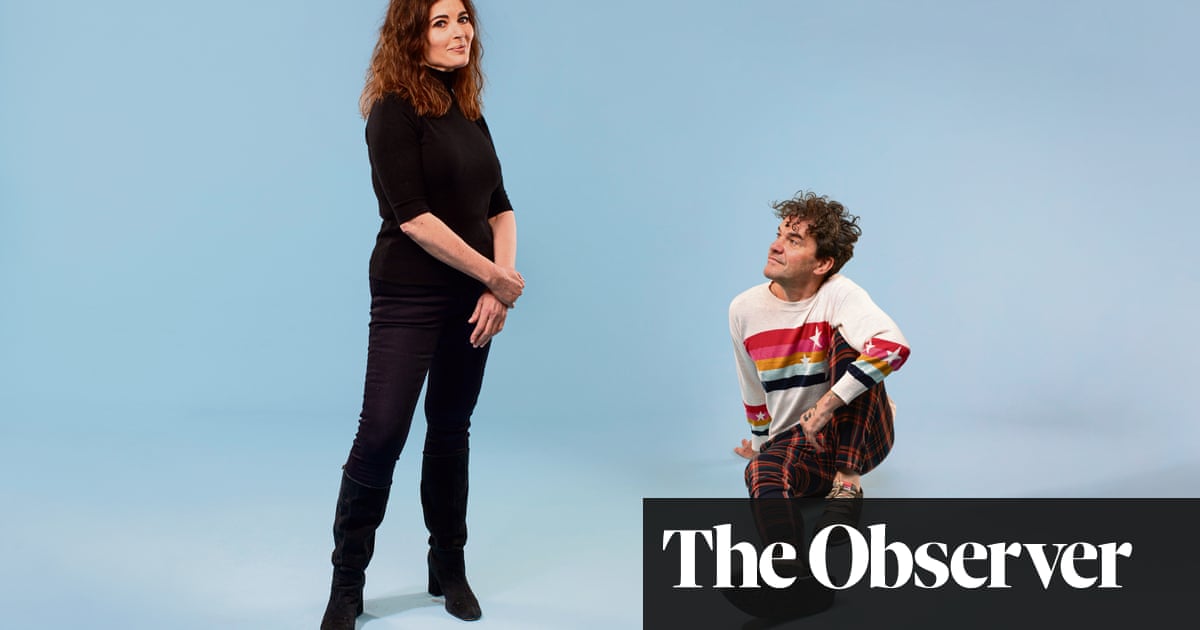
MC: Can I ask about looking and ageing, Nigella? When I was making The Story of Looking (book and film), I was moved by two images of Ingrid Bergman, 36 years apart. The exact same composition, but I found myself imagining what the older woman had seen that the younger hadn’t – the birth of her twins, the end of the second world war etc. The older Ingrid had more images in her head.
Two images of Ingrid Bergman (in Casablanca, left, and Autumn Sonata), 36 years apart, as seen in Mark Cousins’s film The Story of Looking.


As I get older, I feel I’m on a physical decline but an imaginative incline. We accrue as we get older, don’t we? Older Ingrid is more alive than younger Ingrid?

NL: I reacted in two opposing ways to that double image [in the film]. My instant reaction was to feel how cruel it must be to have such a witness to the (to use a cliche, sorry) ravages of age. But that was replaced by the feeling that the older Ingrid is so much more of a person; she inhabited her face, herself, so much more. Of course, there are other factors: when young, women are too often – as you said in your film – “looked at but not seen”; when older, perhaps it becomes easier for us to take up space less pleadingly, less ambiguously. I don’t know. Most generalisations are problematic.


I used to feel slightly squeamish about old age. I’d look at a wrinkled old apple lingering in a bowl (I promise I will try not to let fruit in bowls be my standard reference here!) with all the juice gone from it, and see it as analogous with the ageing process in us. And there is something disconcerting about the notion of withering on the vine. I feel now that the physical depredations of ageing – in aesthetic terms – don’t matter. What makes a difference is health (obviously) but also curiosity. You’re absolutely right to say that by the time we’re older we have accrued – images, ideas, experience, life – but what’s vital is keeping open to more. Once people lose curiosity, and see worth only in what’s in the past (in a personal and political sense) we atrophy as people (or as a country, you could say).

 
K

Karin Schill

Guest
I think most people of Ingrid Bergman's generation aged with dignity. Not like these days when people are so desperate to stay young that it becomes impossible to tell their ages.
 
Top