The Great British Sitcom: Fawlty Towers

Mel O'Drama

Admin
LV
16
 
Awards
44
Well, today I finished the entire run of small screen On The Buses.

It truly was a trudge to get through Series Seven, and the fare for that last mile was paid entirely with goodwill that came from any remaining familiarity. Recycled plots, scenarios and lines only served to remind the viewer of the series as it was during peak hour.

The absences needn't have so detrimentally affected the series, but there was nothing to fill the void left by them.

There wasn't really a point in the last half a dozen episodes where I actually missed Reg Varney and his regular glances to the audience and camera (both of which betrayed his music hall background, I'd say). But I still quickly grew to resent the remaining cast being simultaneously stretched too thin and overused. By which I mean that their deficiencies and limitations were very quickly exposed. I realise this is repeating what I'd already said in an earlier Series Seven post, but it really was taken to the limits when we were stuck with just four characters for each of the 25 minutes.

Blakey's gurning and moaning (and Stephen Lewis's overacting) were already testing me, but I ended up feeling relieved whenever he wasn't on-screen (which wasn't often considering he became the series' new lead and featured in almost all the scenes both at the depot and the Butler home into which he'd moved as a lodger before Stan had even departed.

While ways were found to keep the depot and the occasional bus in the picture, the dynamics changed there, and most were for the worse. Without the peer pressure and enabling of Stan, Jack felt like even more of a wide boy and none too likeable for it. By series' end his underhanded stuff was so blatant it didn't make any sense even for this world.

Olive's daftness was borderline endearing in earlier series. With Arthur gone she became even more of a caricature while also giving her significantly more screen time and it was no longer endearing. At all. Olive as a clippie simply didn't work for me, and at home she became ridiculously brainless and clumsy while grinning cheekily. While there were one or two smiles raised, overall I grew to find her a pain.

This leaves Mabel as perhaps the most consistently watchable in this final run. But watching her fuss and cluck round Blakey had very little appeal. And the less said about the episode where she and Olive fought over Blakey, each believing the tea leaves told them he was Mr Right, the better.

The bottom line for me is that while the series might have been buried with Stan's departure, it had actually died when Arthur left (having flatlined some while before that... probably when the writing duties changed hands). Admittedly, he was a favourite character for me almost from the start, but his absence really proved how important his cynicism and conflict was for the series. There were attempts at keeping both these elements with other characters, but it ultimately felt too manufactured and unnatural.

The final episode was an example of this. It was the old sitcom standard where feuding neighbours battle to get the best garden to win a competition, resorting to sabotaging the other's efforts. Hilarity ensues. But the "neighbours" in this case were Jack and Blakey. Technically this was fine, since Jack was established as renting a room very close by the Butlers' house well before Blakey got anywhere near it. Problem is, it has very little to do with the series' premise. It could easily have been an episode of Terry & June or Never The Twain or something. Shoehorning in the "bus" theme by having the general manager judging the competition doesn't really fly. As a one-off this would have been fine earlier in the run, but here the series has lost enough of what makes it On The Buses for it to feel lazy and generic.

There are saving graces in these latter episodes. The aforementioned general manager is played by Michael Sheard, best remembered by me (and many, I would think) as Grange Hill's scary Mr Bronson (he also played Hitler five times, including that brief face-to-face moment in one of the Indiana Jones films). Given the material here, there's no danger of him setting the screen alight, but he's a welcome addition all the same. Likewise, it's lovely to see Yootha Joyce, almost immediately before going on to national treasure status as Mildred Roper.
 

Mel O'Drama

Admin
LV
16
 
Awards
44
Given my contempt for Blakey at this point in the series, you can imagine my joy at watching the first episode of Don't Drink The Water, contained in isolation as a bonus feature here.

The Brits in Spain premise feels familiar from other projects - most of which would come after this one: Duty Free and Eldorado spring to mind. Perhaps the most notable (possible) influence would be Carry On Abroad. Most of the scenarios here - half finished accommodation, bad plumbing, language barriers, threatening law enforcement, staff who don't seem to get it - had all featured in that film over a year-and-a-half before DDTW. But then the similarities could also be due to the era where affordable package holidays were seeing an increase in Brits travelling abroad (and presumably returning with some nightmarish stories).

It's interesting to see this first episode isn't an "origin" story where we seen Blakey and his sister in England deciding to retire abroad. We begin in Spain, and there we'll stay (though the layout of their apartment looks rather familiar having just finished On The Buses. Presumably this was filmed on the same set as the Butlers' kitchen/diner).

But it's the characters rather than the setting and situations that sell a series, and this is one for hardcore Blakey fans. Helping not, is that I can find Pat Coombs hit and miss. She's appeared in a lot of things I've watched and enjoyed, so there's a fondness there (or at least, some more goodwill), but let's just say I prefer her in small doses.

On the plus side, there's Derek Griffiths, who hits my nostalgia button since I grew up watching him on Play School and Play Away.

The bottom line is that I'm glad I've seen this but won't be seeking the series out anytime soon. Half an hour is fine, but let's just say I've had my fill of Blakey.
 

Mel O'Drama

Admin
LV
16
 
Awards
44
My relationship with the films is the same as the series. I have memories of catching glimpses of them when they were on, but not paying attention. I think they were often on at strange times, like late at night, and frequently at times like Christmas when I was too preoccupied with other things to pay much attention to what was on telly.

...I'm very much looking forward to watching the films, and the prospect of seeing them in HD makes it feel even more attractive.

Today - 27th December - is the official release date for the On The Buses Film Collection. And what better way to celebrate than by watching it?! Once again, I'm so chuffed my set arrived so early from Australia, giving me the perverse satisfaction that comes from owning and using something before one is technically permitted.

Last night I kicked them off with (of course) the first one,


On The Buses (1971)

iu


I'll raise my hand and say that this was a greatly anticipated experience. I was a little excited about watching the films, even more than the series. This is partly due to them being in high definition and partly because I love British comedy films of this era. Plus the discussion here indicated this first one was pretty good.

Let's get this part over with: first impressions were a little jarring. It had very little to do with the numerous changes made for this adaption, and rather more to do with the way it was shot.

Being on film made it the aesthetics very different anyway and the ratio is different. Harry Booth has a TV background (I'm not familiar with the series he'd shot before this), but presumably this film has more time for setups and more going on in the background (location work, more interesting sets, more extras) that allows for more wide shots. There are far fewer close-ups than I'm used to seeing in the series, presumably in large part because it was intended for cinema (the thought of Stephen Lewis gurning and mugging on a twenty foot high screen doesn't bear thinking about).

But it's these wide shots that were part of the hurdle for me with the film. Since I'm watching this on the same screen as the series, the characters suddenly look very small and distant, which makes it feel less immersive and intimate. This enforced objectivity alone changes things and somewhat reduced connection with characters. Compounding this is the lack of the "shared experience" factor that the series had due to the studio audience. I wouldn't have wanted studio audience or (God forbid) canned laughter attached to the film because that would cheapen it (and studio audiences can be annoying. Especially when - as has been the case in a number of this series' episodes - you get one person dead set on laughing louder, longer and sillier than everyone else so they can hear themselves when it's transmitted). All the same, there was a sense of absence or stillness that made the adjustment a significant one, particularly watching this back-to-back with the series.

I suspect it would be very different taking this in isolation and without comparison, but it was hard to shake and meant that, while I enjoyed the film, it didn't blow me away. This is probably as much my own fault as the film's since, as I said, my expectations were high.

Film vs. TV aside, though, I did thoroughly enjoy the film for so many reasons.

Firstly, it's wonderful to see the ensemble complete once again. Given the discouragingly feeble end to the series, this feels like a joyful return to form. Stan and his caustic "How right you are" have been greatly missed and were especially welcome for me.

There are lots of familiar faces both from the series and British comedy of the time. There's Wendy Richard (billed as "Richards", about which I'm sure she was none too pleased) playing "Housewife" (along with a cough and a spit from Reg Varney's daughter playing her friend, as I've just learnt from watching the audio commentary); There's the quiet blonde one from Hi-de-Hi! who's now married to George Roper in real life; David Lodge, Peter Madden, Brian Oulton, Andria Lawrence, Claire Davenport and Pamela Cundell will all be familiar names to anyone who knows their British pop culture. Davenport was in a couple of OTB episode I watched just yesterday.

Most of all, I enjoyed the abundant location work, with the fun of spotting all the early 1970s cars and fashions (one male extra in the background of an outdoor confrontation scene just screamed "Carnaby Street" with his turtle neck, big black sunglasses. I could swear he was Julian LeStrange made real).

Location spotting is something I really enjoy, and there are lots of landmarks here. Today I've spent a bit of time looking at the various locations for this film on different websites, and looking where they are and their proximity to one another. Unsurprisingly, most were within a couple of miles to Elstree, with many being shot in neighbouring streets. Indeed, the Butlers' home in this film is literally a stone's throw from Albert Square, mere feet away from one of the entrances to Elstree.

The special features are probably just enough. The audio commentary is fairly dry, but informative, and clearly done by people who know their subject and British film in general (ooh - how I'd love to be a "film historian". Imagine making a living from watching and talking about this stuff. But I'm sure there's much more to it than meets the eye).

I hadn't realised until after watching the film that there was an open matte version included. That could have been interesting, though these versions can sometimes show things that we weren't meant to see and distract from the actual film. Whenever I rewatch it (which I'm sure I shall) I'll try to remember to give the open matte version a spin.

The interviews on Mutiny... look better still, with the main cast interviewed.

All in all, an enjoyable slice of early Seventies Britain.


I can find Pat Coombs hit and miss. She's appeared in a lot of things I've watched and enjoyed, so there's a fondness there (or at least, some more goodwill), but let's just say I prefer her in small doses.

And on the very same day I watched her as Blakey's equally annoying sister in Don't Drink The Water, she shows up in the On The Buses film as one of the women bus drivers with whom the regulars feud. And she worked really well here. Give her a supporting role and I actually quite like her. Which could also apply to Blakey.
 

Angela Channing

World Cup of Soaps Moderator
LV
19
 
Awards
52
On The Buses (1971)
I have little to no memory of watching the TV series so I've watched this film as a standalone, uninfluenced by the TV series and I really enjoyed it. It's not Shakespeare and the production values aren't particularly high, although as you say there is a lot of location filming which I can't imagine was the case for the TV version, but it made me laugh and I found the silly storyline to be pretty good. It is typical 1970s British sitcom humour and that's not a bad thing. Clearly the cinema-going public loved it as according to the British Film Institute, it was the highest grossing film at UK cinemas in 1971 which is quite remarkable as that year is considered by some to be one of the best ever for films.
 

Mel O'Drama

Admin
LV
16
 
Awards
44
there is a lot of location filming which I can't imagine was the case for the TV version

The TV series actually had more location work than I'd have expected going in. More than most of its sitcom contemporaries, I'd say. It wasn't as expansive as the film, and there was certainly a lot of time spent on the two main sets, but it was a nice surprise.

Speaking of sets, the new sets for the film worked fine for me. I was expecting them to be vastly different and quite possibly using real interiors but the Butlers' messy kitchen/diner in particular was almost identical in layout and size, which added to the cosy familiarity. And the more substantial and impressive bus depot interior only made the film more pleasant to watch than the dull interiors in the series (particularly later episodes after they moved to a smaller studio that couldn't even accommodate a real double decker bus, with the resulting fakery being all-too obvious).


it made me laugh and I found the silly storyline to be pretty good.

Same here. Much like many film spinoffs from sitcoms, a number of the beats were lifted from various episodes of the TV series, but it was done well and there was enough original stuff to satisfy.


It is typical 1970s British sitcom humour and that's not a bad thing.

I wholeheartedly agree.


Clearly the cinema-going public loved it as according to the British Film Institute, it was the highest grossing film at UK cinemas in 1971 which is quite remarkable as that year is considered by some to be one of the best ever for films.

Yes - it was a bit of a shocker to learn this had topped even Bond. Diamonds Are Forever may not be Bond's finest outing, but it's still quite an achievement.

Sadly, without subscribing to the Telegraph I can't view the article in your second link beyond the first line or two, but I get the gist enough to be even more impressed.
 

Angela Channing

World Cup of Soaps Moderator
LV
19
 
Awards
52
Sadly, without subscribing to the Telegraph I can't view the article in your second link beyond the first line or two, but I get the gist enough to be even more impressed.
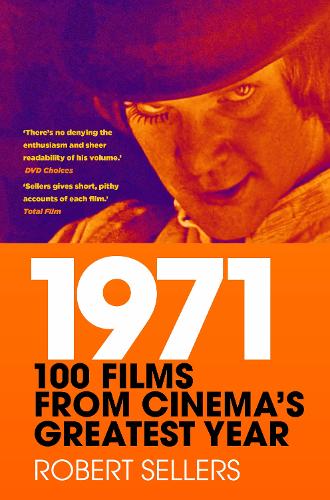
It was an article by Robert Sellers explaining why he thought 1971 was the greatest year ever in cinema which he goes into more detail in his book. I've not read the book but I'm pretty sure he doesn't consider On The Buses to be one of the 100 best films of that year.

9780750999991.jpg
 

Mel O'Drama

Admin
LV
16
 
Awards
44
It was an article by Robert Sellers explaining why he thought 1971 was the greatest year ever in cinema which he goes into more detail in his book.

Thanks for this. I enjoy people putting forth arguments for specific points like this so the book looks an interesting read.


I've not read the book but I'm pretty sure he doesn't consider On The Buses to be one of the 100 best films of that year.

That's mildly disappointing. Even if it were at the bottom end it could have been fun to see it get a little nod.

Still, there's no arguing with that box office.

Incidentally, I was curious enough to take a peek at the highest grossing films of 1971 at the US box office. Unsurprisingly (especially given its very British humour) there's no sign of On The Buses in that Top Ten.
 

Mel O'Drama

Admin
LV
16
 
Awards
44
Last night I watched the middle act of the Buses trilogy with...


Mutiny On The Buses (1972)

nr019715-18_1.jpg


Surprisingly, perhaps, I might have enjoyed this even more than the first film. Not that this means it's necessarily better than the first. But by this time I've adjusted to the tone of the films and got past the adjustment period from the series. I'm sure spending some of yesterday immersed in the audio commentary and reading up on locations for the first film helped since it gave me an appreciation for Hammer's version of this franchise.

One less enjoyable aspect for me was Stan as the predator. It always feels really icky to me watching him confidently using his moves on a young clippie. A great deal has to do with his age (Reg Varney was 56 here), but it's also a character thing. Jack as the playboy may not be a pretty sight, but it fits his character. Lecherous Stan feels at odds with his character. Yes - he's portrayed this way in the series from time to time as well, but something about Reg Varney playing these scenes just makes him look like a square peg to me. The audio commentary for the first film mentioned that Chesney & Wolfe wanted to always write Stan as the one who loses out to Jack when it comes to the girls, but Reg Varney insisted on adding something to his contract to the effect that Stan, too, would get the girl. I'm not sure whether this is because he felt it important to the story or he needed it for his own vanity. I suspect the latter to be the case but, either way, I don't feel it's a good look for Stan.

Once again, the thin plot is supported by (or made up of) a series of sequences reprised from the series (two-way radios ending up on police and airline frequencies, for example. Or drunk Olive getting into a fight with the tart Arthur's chatting up). It's none the worse for it and I view these films as the equivalent of a time capsule, into which the writers put all their favourite gags from the series so that they may be seen by a wider audience for generations to come.

Arthur going to work on the buses is possibly a first. I think (but can't be certain) he was the only regular who didn't end up employed by the company at any point during the series, so it's nice to have that box ticked. He's a lot more productive in other areas during the films. While his infamous operation has had a few mentions, he's still managed to produce one child, with another now on the way as of the end of this film. It's funny, but my image of Olive is as a stay at home mum dealing (lazily and usually badly) with dirty nappies and with a kid hanging from her arm. All these years I'd thought this was all from glimpses of the series, but it seems I've seen more of the films than I thought.

As previously mentioned, this film has my one and only specific scene memory of OTB in any medium: the lion on the bus from the Windsor Safari Park sequence. It works well, but I also found myself thinking less of Stan who could have got people killed by covering up his mishap with the emergency door (which allowed the lion entrance), but treated the whole thing like a joke which was someone else's fault. It's the nature of the beast, but I just found it an embarrassing way for a man who is nearly a sexagenarian to behave.

The familiar faces are numerous once again. David Lodge is back, as is Babsalike Pat Ashton. Michael Nightingale is a very familiar face from the Carry Ons.

One of this film's key appeals came from Ron Grainer's score. I enjoyed the Roaring Twenties sound that was blended in. It all felt appropriately quirky and light and, from this first proper watch of the three films at least, I found the music in this one more memorable than Max Harris's music for the first (not that I didn't enjoy the first film's score. It worked fine too).

Again, I've had fun this morning looking up locations on maps and street view (the parade of shops at good old Shenley Road is back), and I really can't get enough of this little window into early Seventies Britain.​
 

Mel O'Drama

Admin
LV
16
 
Awards
44
my new Britcom is as contemporary as it gets.


iu

Just for posterity, Ghosts is back.


And, in between watching the On The Buses films, I've whizzed through the final series of Ghosts, concluding last night with the Christmas special that completed the story.

One thing this series has been is consistent. The episodes flow and, even coming back to the series after a significant gap, there's a sense of familiarity that makes it feel instantly right and welcoming. The stability within the cast (other than Mary being "sucked off" and disappearing) is a huge factor here, and the fact that I like them all helps greatly too.

Yes, I've had my issues with the series. I've pushed down most of my irritation with anachronisms in speech patterns and language. Likewise the Captain's incessant throat clearing. A new irritant this series has been Mike at times being pushed harder as the daft sitcom husband. This peaked with the middle two episodes of this series where he first locked himself into a safe and then spent another episode attempting to converse in French with someone who had a translator. The latter was a nice idea for a short scene, but ended up being run into the ground to the point that Mike became plain annoying (as opposed to funny annoying, which I suppose was the intention). Fortunately, this was mitigated by the scene in the safe where he admitted his own ineptitude and his anxiety about becoming a father.

Which leads to a different point. I'm very impressed that there's a degree of serialisation woven in, with certain events having an impact on later ones (Alison's pregnancy being key in this series) yet it still remains accessible and easy to dip in and out of.

There were still some crackers of ideas as well. The final episode introduced a genuinely interesting idea with the exorcism. I've only ever watched such things in films where spirits are "othered". But here they're the protagonists so the potential success of an exorcism bore a genuine threat. I also thoroughly enjoyed the "murder mystery" episode where the ghosts attempted to piece together Kitty's death in the belief that she might have been murdered.

The balance of comedy and character fired on all cylinders right to the end. I'd never have expected to find watching a line dance so heartwarming, but it was rather lovely. The final scenes brought on a degree of shmaltz (to be expected) but it wasn't overdone at all. I'm still undecided whether the flash forward to old Alison and Mike revisiting Button House many years later was needed (I felt a little moved but simultaneously knew I was being manipulated which I slightly resented), but overall it wrapped up nicely, and I feel this series has been just long enough.

It may not be for some years, but I would certainly be very happy to visit this series again (and perhaps again). Long term, I wonder if it might end up being viewed as one of the truly classic sitcoms.
 

Mel O'Drama

Admin
LV
16
 
Awards
44
The On The Buses saga drew in to the terminus last night with the final film...

Holiday On The Buses (1973)

iu


Things got off to a slightly worrying start with the bus crash sequence which was brought on by a nubile woman's wardrobe malfunction, leaving her boobs exposed to Reg - and us - for quite some seconds. Although by the standards of the time it was reasonably tame and fairly standard, it still felt like a line crossed which didn't necessarily need to be.

Funnily enough, I'd been reminded of On The Buses' relatively skin-less record when watching Mutiny On The Buses which had a sequence upon which Carry On England seemed to base one of its scenes several years later. In both films, an authority figure bellows that his subordinates are to wear only "X" uniform, which the rebellious group chooses to interpret literally. And in both films, the women end up with boobs exposed. The main difference is that Mutiny's women turned their back to camera to part their jackets and expose themselves to the character in question, whereas England's women (depending which cut one watches, at least) had boobs exposed to camera for prolonged scenes of dialogue. The Mutiny method is far preferable and no less funny since we all get the point (so to speak). It reinforced that exposed flesh doesn't make it any funnier.

I suppose this is just Buses keeping up with the times: Percy had come and gone (oo-er Missus), the Carry Ons were inching themselves towards being bawdier and the Confessions franchise was just around the corner. I'm not offended by the relatively modest boobage on display here, but perhaps a little disappointed that On The Buses came so close to maintaining its own kind of innocence right to the end but failed at the very last jump.

I did fear this film was going to be full of such salacious cheap gags. As it was, this was really a one-off, apart from a very unsexy flash of "Olive's" bare bum in the swimming pool (it actually belonged to someone hired after days of auditions for an arse double).

The "send 'em on holiday" scenario is something that was in the air at the time - the Carry Ons had been Camping and Abroad, and I believe Steptoe and Son had been on a honeymoon the previous year, setting a trend for big screen sitcom spinoffs that would run through to at least Are You Being Served?'s package holiday in '77.

Stan and Jack taking jobs on the buses at a holiday camp felt surprisingly natural. The biggest hurdle to get past was the contrivance of both of them and Blakey ending up on the same camp, but the dynamic is so essential to the setup I was able to willingly suspend disbelief.

It's clear that the films take place in their own continuity, one that's separate from the series - which is why it's so nice to see Stan and (especially) Arthur back since this film was made after the final series where they'd been absent. It was expected that nothing would be said about their "returns", because in this timeline they'd never been away. What I hadn't expected was that the film series would drop the ball slightly with its own continuity.

One example of this - Blakey being Inspector at the beginning of Holiday despite having been demoted to conductor the end of Mutiny - can be easily forgiven. It's a sitcom standard for a character to get their just desserts at the end of one episode only for normal service to be resumed by the beginning of the next. In this regard, Blakey's return to Inspector is in-keeping with the motifs of this world. The audience needs its familiarity, so it's probably preferable to a strict continuity from the previous one - particularly since it's clear a significant amount of time has passed between films.

The other example, though, is one I found more bothersome. At the end of Mutiny, Olive and Arthur revealed they're expecting a second child, but in Holiday there is no sign - nor any mention - of another child, despite Little Arthur clearly being a couple of years older. Most of the ways this can be explained away don't feel very sitcom-appropriate. Not this particular sitcom world, anyway. I suppose there's the comic phantom pregnancy, or symptoms brought on by Olive's constant eating. Frankly, though, it shouldn't be for the audience to do the writers' work, and this feels like a case of the ball being dropped.

Expectations for this final film were low. I'd read a some less-than-favourable comments about it along the way as I did searches to satisfy curiosity about the series, so I was prepared that it might well be a bit of a schlep to get through.

On these lines, it's worth noting that this film was directed by Bryan Izzard, whose body of work up to this point consisted exclusively of television work: mostly sitcom episodes. Fortunately, as it turns out, the bulk of his television work was made up of On The Buses episodes. All from the last two series, so not exactly peak time Buses, but he clearly knew and understood the cast and this comes across on-screen. In many ways, Holiday - despite the significant change in setting - captures something of the series that the previous two didn't. It's not necessarily better than them, but for my money it's every bit as watchable and I feel a big part of this is due to the collaboration of writers, a director and a cast who had all worked on the series together.

The change of location to the holiday camp is good fun and injects a nice energy. With original writers and cast present and correct, it still feels more like the On The Buses we know than the last few series, no matter where it takes place. It serves as quite the showcase for Pontins. I had noticed their signage featured prominently on the side of buses in the first couple of films and wondered about sponsorship. In one of the interviews on the Blu-ray, Roy Skeggs mentioned Fred Pontin who seemed to have some kind of relationship or connection with (or clout over) Hammer, and it sounded like using Pontins for the camp was a no-brainer for this reason (to do otherwise, presumably, would have rocked the boat too much). Prestatyn itself looks very pretty on film and the camp mostly comes across as shiny and attractive (apart from the shots of the exterior where guests roam around just inside very high barbed wire fences which make it look reminiscent of a concentration camp).

The guest cast is certainly the most fun of the three films. Of course, there are the familiar character actors and dollybirds of the type we've seen in the other two - with Michael Sheard included in the former category, playing this timeline's version of his character in late episodes of the series. But there are bigger names as well: Like Henry McGee as the holiday camp manager, and Kate Williams (probably best known from Love Thy Neighbour, but also cropping up in a number of the previous series in this thread) as Blakey's unfaithful girlfriend, the camp's nurse. Possibly most notably is Steptoe himself, Wilfred Brambell as Doris's Irish suitor. The chemistry is really good and he and Doris Hare work well together.

Even though I've never seen Romany Jones or Yus, My Dear, it still felt exciting to see the characters from those series (also Chesney & Wolfe creations) cross over into the world of On The Buses. I hadn't really considered watching either of those two series, but I enjoyed them enough to put them onto my viewing radar.

With this being the last we'll see of these characters, I suppose a lot was pinned on the ending. It's certainly not perfect (for the purposes of this, I suppose perfection would probably be everyone ending up back at the depot or the Butler home with the promise that they'll scheme and be frustrated in their various ways forevermore), but it's wrapped up in a far more satisfying way than the series' (admittedly piss poor) ending. Stan may have ended up as a demolition driver, but at least he looks happy. And - this being On The Buses - we can assume he'll probably be back at the depot in a week or two (along with Jack and Blakey). Somewhat appropriately, we left Arthur looking as though he was about to give Olive a backhander. But I'm sure he restrained himself.

And that's that for On The Buses...​
 

Mel O'Drama

Admin
LV
16
 
Awards
44
On The Buses over, I'm going into an even more sizeable commitment with the first of several different series, linked by one inimitable character:


iu


As mentioned previously in this thread, I don't believe I've watched anything of Till Death Us Do Part. It had wrapped up long before I was old enough to even consider watching. I do remember the third series in the saga, In Sickness & In Health, with its Chas & Dave sung theme tune, and I'm sure I've seen some of that. I don't recall watching enough to form any opinion (I'd guess at the time it just wasn't my cup of tea), and I'd imagine part of the reason I didn't watch was because my Mum very much disliked In Sickness... because the central character was so very bigoted.

This is an angle of the series that intrigues me. My Mum felt that Alf spouting parochial views was an endorsement of such views, and that to watch -and, God forbid, enjoy - such a vehicle was tantamount to enabling bigotry. It's an admirable stance but, having read a little about the series and actors, and watched a few scenes before investing in the DVDs, I'm going in with the understanding that the series' raison d'être is to satirise the Alf Garnetts of the world.

Something that feels very evident in this series is its sense of reality. The characters may be a little larger than life, but they also feel very much grounded in reality. It's certainly worlds apart from On The Buses with its caricatures and catchphrases, and has more in common with another series I'm concurrently watching: Brookside. The scenes are lengthy, verbose and often politically charged, and the characters speak in a way that feels truthful. The profanity may be fairly tame by today's standards, but must have raised a few eyebrows in the mid-Sixties, with Alf peppering his sentences with "bloody", "bleeding", "crap" and the like (interestingly, his frequent put-down to Else changed from "silly old mare" in the first episode to "silly old moo" in subsequent ones. Presumably to soften it a little). It's surprising to me that this aired at 7:30pm back in 1966. And on BBC1, mind you.

It's quite likely that it wouldn't air in full today, not because of the mild profanity, but because the epithets so frequently bandied about would get it cancelled or heavily censored. It's certainly been uncomfortable to hear these terms used so liberally, but it's supposed to be. There were - and are - plenty of people who hold such views, and they deserve to be exposed. What I've found interesting is to see a family having a heated discussion about whether such terms are not only appropriate, but also accurate. Allowing the debate to happen actually exposed the ignorance that drives such bigotry, because Alf under pressure went round in circles and his argument essentially came down to "because I say so". He was given a metaphorical shovel and dug himself deeper and deeper. Mike and Rita's points, on the other hand, were well thought out and had substance to them.

Meanwhile, the only black character seen on screen so far has been a middle class GP who looked at Alf with polite pity as Alf loudly professed his open-mindedness about seeing a black doctor while everything he said told us (and him) the opposite. Alf's terrified look as the doctor's hands got closer to him was simultaneously horrifying and hilarious. And this sums up why this series works so far. Were Alf played by a less charismatic actor, or one who genuinely shared the character's opinions he would become so ugly and grotesque he would be unwatchable. Warren Mitchell gets the character. He knows exactly who Alf is, and he shows him to us in all his flailing glory. And, despite the situation, we laugh. It's a promising start.
 

Mel O'Drama

Admin
LV
16
 
Awards
44
I'm now three quarters of the way through existing episodes from Till Death Do Us Part's black and white years, having watched the nine remaining episodes from the first two series, plus the Easter Special.

Since many black and white episodes were wiped, the visual and sound quality are pretty poor on a lot of those sourced here. This, along with the lack of colour can make them feel ancient. Plus most episodes run a full 30 minutes (some more), and it's hard going at times because of this.

And this is not even touching on the content, which brings its own, more deliberate, challenges. Alf's opinionated, bigoted rants aren't meant to be comfortable or pleasant. Satirical as the character may be, there's still the uncovering of things that aren't pleasant to see or hear. Even with Alf as a laughing stock, there's still that part of me that simply doesn't want to be around him. It's to the credit of all concerned that the series still manages to entertain and get laughs.

The most recent two episodes have been interesting. The first of these was the "Mary Whitehouse" episode, in which Alf was shown to be a supporter of Mary Whitehouse's campaign, and spent much of the episode reading her book Cleaning Up TV and spouting the wisdom he picked up. This choice is one of genius by Johnny Speight. Since this series was one of her key targets, it would have been easy to simply speak out against her. But using a foolish character that she already despises to epitomise her supporters takes things to another level. It's certain she would have been watching that evening, as usual, pen in hand. Oh, to have been a fly on her wall as she watched.

The episode even ends with her book being burnt (by Una Stubbs of all people) as Alf's foolishness and hypocrisy is laughed at by his family.

It's even more interesting, though for being a partial episode. Ten minutes are missing, and these are woven into the episode using an audio recording of the relevant sections along with still images. It's certainly a novel way to watch.

The latest episode I watched was equally fascinating. It didn't even feature the usual opening titles, just the sub-title Till Closing Time Us Do Part on the screen as the opening scene played. Looking it up afterwards, I've found it was an Easter special, which explains the 40 minute running time, the abundance of guest-stars, and the unusual setup - it took place in real time, all in one set (a pub) and featured regulars and guest stars breaking into song as they took turns accompanying someone playing the Joanna.

The real time aspect made me wonder if this actually aired live. It certainly feels as though it was filmed as live. And this gave it a really special energy. It also really captured the feeling of the end of the evening at a busy local. It's fun to see a young Tarby and Kenny Lynch as themselves, doing their thing (Kenny has a lovely voice) and gently mocking Alf as he got drunker and louder. Plus there was Joan Sims in her first outing as "Gran". I knew Joan played Gran in this series but, from the name, had assumed she was playing Else's mother (especially since I'd thought at some point she was seen in the house). But it looks like she's just a random local whom everyone calls "Gran".

I think there are only three or four more black and white episodes left.
 

Mel O'Drama

Admin
LV
16
 
Awards
44
Having exhausted the remaining Sixties episodes, I've now entered the technicolour world of Till Death Us Do Part's 1970s revival.

I've read with interest some background to the series, and the problems plaguing production of the Sixties series with scripts coming in very late - largely due to Johnny Speight's desire to include topical discussion from the headlines - causing headaches for actors and producers alike. Ironically, I get the sense that those challenging early series are the ones now considered the series' heyday.

The Seventies episodes seem to be viewed as deliberately less political and less topical. I suppose they are, but this makes these later episodes a little more timeless for me. While it was certainly interesting to see the late Sixties mainly through the prism of the political debate between Alf and Mike, I suppose a certain amount of it also went over my head because I have only a passing knowledge of the political landscape of the time, so dropping in a certain minister's name didn't give me the immediate context it would have done a viewer of the time, which meant certain gags didn't land with me.

Further adding to the appeal of the Seventies episodes, there's more of a sense of "themed" episodes. There's The One Where The Baby Is Born; The One Where They Go On Holiday; The One With The Pigeon Racing; The One Where Alf Has A Broken Leg; and so on. Arguably this puts it into more conventional sitcom territory, but Alf is still at the centre of things so it's never in danger of feeling like Bless This House or Happy Ever After or something.

Alf is still pontificating in the living room and I continue to be impressed by the cast here. Warren Mitchell in particular has reams of dialogue which he fires off quickly and angrily - often whilst having some physical business to contend with, from eating to pacing around the room to hanging wallpaper. And he doesn't miss a single beat. Good as the ensemble is, it's easy to see that he is the core of this series. Those around him have far less dialogue, but if someone comes in with a line too soon and has to repeat it, it's invariably one of the others (I quite like when this happens because it adds to the series' naturalism, and I think the actors get that). Absolutely nothing seems to break Warren's stride and he seems to be permanently in full flight and if he's fluffed, I've yet to catch it. It's even more impressive to think that in the earlier episodes he was getting a lot of this material at the eleventh hour and still running with it.

Una Stubbs has impressed me. I enjoy how forthright Rita has become. In early series Rita seemed to just be a bit of a mouthpiece, echoing what Mike said and laughing a lot. By this point, she seems to have a lot to say for herself, and it's not just Alf who gets it from her, but Mike too. There's a suggestion of growing irritation or resentment within the marriage, and it's creating a lot of interest. Adding to this, Rita is increasingly harried by the pressures of being a new mum in an environment where she gets very little support, and it feels like quite a statement that she's not radiantly glowing and cooing at the baby, but joining in the shouting as she holds him. In the latter part of the series, the baby has become a very obvious doll (with a realistic "ugly crying" face). This is a bit of a relief to me, since I was getting worried about the poor child getting billows of thick smoke in his face as actors leaned over him with cigarettes or pipes.

The 1972 series has benefitted from Joan Sims being in most episodes as Gran. As I kind of/sort of remembered, she is with them in the living room now, and I assume she is actually a relative (presumably Else's mother and Rita's gran). She gives such a convincing old woman, it's quite awe-inspiring. Other familiar character actors this year have included Roy Kinnear as a colleague of Alf's (yes, we've seen him at work for the first time); Bill Maynard as the one with whom he had the bet on the pigeons and - rather more questionably - Spike Milligan in brownface.
 

Mel O'Drama

Admin
LV
16
 
Awards
44
Despite the Seventies revival of Till Death Us Do Part being viewed as somewhat inferior to the Sixties run, the newer episodes continue to appeal to me even more strongly.

It could be the case that it's taken me this long to "get" the character of Alf. Perhaps the colour, the improved image quality and the consistency of episodes (with none from this era being missing) are all swaying me. All could be factored in, but I continue to feel that the more "conventional" sitcom feel here, with reduced emphasis on stories of the day makes it feel more accessible to me. It's still politically charged, but there's less topical stuff to make it difficult to follow.

Alternating this series with Brookside is proving interesting, because I can really see parallels between the energy of the cast here and those that would come in Brookie's Grant household. Here, as there, it feels completely believable and "lived in" without being too comfortable or cosy. There's constant tension and friction in the household, with resentments that bubble along and get brought into the light regularly, while still convincing me that familial loyalty and love are the glues which bind this often dysfunctional family together.

The central couple - Alf and Else - seem to genuinely dislike each other at times. They bitch at each other and seem to revel in the one-upmanship and genuinely enjoy seeing the other one humbled or even humiliated in some way. But they stay together because it's what they know and too late to opt-out. For this generation it really is Till Death Us Do Part. Alf rants and moans. Else gets the other members of the household on board and colludes with them to belittle and shame him. It sounds larger than life, but I've seen this dynamic firsthand with people I've known and so I don't question it.

I fully believe that Alf loves Rita while barely tolerating her husband (possibly even liking him but being unable to show it). Likewise, I can see that Rita loves her Dad even as she finds him foolish and disagreeable. She'll join in the rowing and push back at him again and again. Then, every once in a while she'll lean in and kiss him on the lips and giggle like a gleeful naughty schoolgirl. It's very endearing.

Una Stubbs has been a standout in these Seventies episodes. Rita has blossomed and so has Una who is regularly making me laugh out loud. At this point, Rita now gets regular "You make me sick, you do" rants mid-episode, and a few of theses have blown me away. In one of these she went into a diatribe that felt several minutes long, just as Alf started to make a point. When she finished, there were cuts to each of the other three rendered speechless and open-mouthed.

Joan Sims is also terrific as Gran (and in the episode where they thought she was dying, I could swear she genuinely had no teeth in, whereas usually it looks like she's doing that theatrical thing of folding her lips into her mouth to cover her teeth). It currently seems Gran isn't a member of the family, but a family friend whom everyone calls Gran, but it's been a confusing situation.

Spike Milligan in brownface continues to be the series' major misstep for me. He just made his second appearance (though his first wasn't acknowledged and I'm not sure if he's meant to be a different character). The sight of a white man playing an Indian character is far more uncomfortable for me than Alf's language. Yes - his character helps expose Alf's ignorance for what it is, but it would carry more weight - and support the writer's point - if he were played by an ethnic minority actor. I really don't understand why this is the only non-white character to be played by a white performer, and I hope this is the last we've seen of this.

I'm now up to the end of Series Five. I know Else is about to depart or have a drastically reduced role, and I'm curious to see how this significant change affects the tone of the series.
 

Mel O'Drama

Admin
LV
16
 
Awards
44
Else's departure for Australia has certainly shaken up the format of Till Death Us Do Part's sixth series, a year which is arguably characterised by changes or errors to continuity.

With Dandy Nichols disappearing over the horizon, most of Else's lines fall to Patricia Hayes as Min. There is a similar energy, but it helps greatly that Patricia Hayes is a good actress. In all truth, she's probably better than Dandy Nichols who seems to have made a career out of playing the same simple, outspoken character in everything (albeit extremely well). Further helping things, Min isn't fulfilling exactly the same function as Else. She was established as the Garnetts' neighbour way back and is still playing the same character who has some of Else's characteristics but also some different ones of her own. Notably, Min doesn't have Else's cruel impishness (which seemed pushed to the limits in one of her last appearances when Alf phoned her in Australia and she left the phone on the side to chat to the milkman, before hanging up with a satisfied smirk).

Nonetheless, it is a little jarring that Min and Bert now seem to spend most of their time in Alf's living room when we rarely saw them before. Also notable is that Bert is now played by Alfie Bass. I think this makes him Alf #3. Bill Maynard previously played him and I'm fairly sure he was played by another actor in the character's first appearance (the one where Alf has diarrhoea while the loo is broken and has to keep rushing next door) where he didn't really speak.

Other continuity notes: from the Garnetts' living room, characters have referred to Min's house and indicated an internal wall on the opposite side the house from where it was established. I thought Min's home was established as being on the side where the Garnetts' stairs and front door are, but they appear to have somehow swapped with the neighbour Alf was said (in several early episodes) to have fallen out with.

Also, Rita and Mike's baby has not been seen for a very long time now. It's either early Series Five or even Series Four since we saw him. He didn't even get a mention until one of the last Series Six episodes. I'm assuming it's done for convenience - so that they don't have to film with a screaming baby. But it seems a tad too convenient since they seem to all be able to spend nights at the pub or dash out to the airport without any indication that they have a child at all.

Another disappointment this year is that Joan Sims hasn't appeared as Gran. It's another hurdle to get past since her presence would have added much-needed familiarity.

All in all, the changes bring a sense of a series entering a period of change which is recognisable as those seen in later episodes of so many TV series where the main cast begins dwindling. It's subtle - and a far cry from the godawful last year of On The Buses - but it has lost a little of its identity.

Not that it's not watchable. Despite the obstacles put in its path this year, I've still found Series Six far more moreish than many of the Sixties episodes and the actors are giving their all to this enforced new direction, with some good onscreen chemistry.

Once I've watched the final episode of Series Six, there'll just be the half a dozen Series Seven episodes to watch. But that won't be the Garnett saga. Not by a long chalk.
 

Mel O'Drama

Admin
LV
16
 
Awards
44
Series Seven built on the previous series' law of diminishing returns.

While Dandy Nichols' health-related departure seems the biggest blow on paper, a more damaging aspect for me has been neglecting the remaining core cast. In particular, Series Seven saw Patricia Hayes and Alfie Bass receive second and third billing, clambering over the backs of Anthony Booth and Una Stubbs.

I'm sure there are reasons for this. I understand that Anthony Booth was increasingly unhappy with the writing and apparently there was tension between he and Warren Mitchell. Perhaps it was either a drastically reduced role for Mike and Rita, or no Mike and Rita at all.

Nonetheless, the end result feels like we're promised one thing and given quite another. There's nothing wrong with Min and Bert as supporting players, but watching them practically take over the show feels wrong. The chemistry on the series just doesn't work as well as it did. Even when the focus isn't on them, there's a strange lack of energy that transmits to the audience. A lengthy chat between Alf and Bert at a park while Min gurned and vamped in the background springs to mind. I couldn't even tell you what Alf was saying.

Increasing Patricia Hayes's role has exposed some weaknesses in her performance. Her nose-touching habit went from interesting to endearing. She fluffs her lines quite a bit. And there was one scene where Min was shouting at Alf through the communal wall between their houses where Hayes kept looking in what appeared to be the direction of the studio audience, and ended up delivering half her dialogue straight to camera. It's true what they say about familiarity.

Warren Mitchell gave it his all to the end, but it feels that there's little in this goofier, less real, more traditional-feeling sitcom to inspire even him. It's notable that Series Seven is the only where I noticed him trip over his words a couple of times during a rant. Only a little (and it's the kind of stuff that Anthony Booth and Dandy Nichols were doing regularly. As does Patricia Hayes in these later series), but it felt symbolic. With hardly any family around to hear him, Alf's role in the world has changed and perhaps he's flailing. The political speech has diminished yet more, so Alf is more a sitcom grumpy old man than ever before.

Not that Warren didn't excel to the end. In one of the last episodes there was some rather terrifying-looking stunt work from him when Alf was stuck - his thighs trapped in a first floor window as he attempted to clean the outside of them. Yes, the house exterior and the street below were clearly sets, but that didn't make it any less risky for him. He spent a good part of the episode, with one lengthy scene showing him upside down, propped up by a step ladder wedged beneath his head while Min waterboarded his upside down mouth and nostrils with tea. It's one of the most uncomfortable-looking things I've watched, and that's even without the risk of breaking his neck or drowning. It's hugely impressive because it's very clearly Warren Mitchell the entire time. And he's not a young man at this point.

I'd read that the series ended with a telegram from Else asking for a divorce. All the same, it wasn't the greatest to watch. The one saving grace was that the final episode included - for the first time in years - an ensemble of more familiar faces with Joan Sims and Pat Coombs among others.

It's a sad ending for a series that's had such a big voice, but right that it finished before it got terrible. There are two sequel series to follow. The second I am somewhat familiar with, but I believe the first will be completely new to me. I'm looking forward to seeing how the rejigged format works after watching the original.
 

Mel O'Drama

Admin
LV
16
 
Awards
44
I had a nice surprise in preparing to watch my next Garnett series. As I was unsealing the DVD, I noticed there's a bonus feature: 1980's The Thoughts Of Chairman Alf At Christmas (On Yer Actual Boxing Day).

When looking at the list of Till Death Us Do Part episodes (and all its related sequels and spinoffs), I'd scrolled past this one, noting that the entry said it was an "ATV stand-up show, which still exists in the archives". I thought it sounded interesting... particularly since I've also got the Nineties series of the same name and format lined up to watch in due course, but presumed it wasn't readily available to watch... not on home media, anyway. So, as I said, finding this last night was an unexpected treat.

Naturally, I'm very curious about the background of this. It seems unusual, to say the least, to revive a sitcom character five years after their series had ended on a rival channel just for a one-off special featuring said character operating on a completely different plane. ATV's sequel, Till Death... would begin some five months later, so I can only assume this came about partly to test the water or pave the way. Or perhaps they simply decided to make use of the character as soon as possible having obtained the rights, and quickly put together a show that didn't involve the expense of sets, location work or even a cast.

Beginning as it meant to go on, Alf entered from the back of the studio audience mid-barney with someone who appeared to be trying to stop him. He came ranting down the steps then gave the audience the same treatment., dumping his scarf, hat and coat in someone's lap, calling one elderly lady after another "silly cow". They loved it.

It's certainly novel to see this character interact with real people, with Warren Mitchell energised by from whatever came his way and ad libbing his way through Johnny Speight's script. The frequent glimpses of the studio audience, by the way are a lovely reminder of how much visual character people had back then.

One slightly more disturbing thing I found myself wondering as I watched was: what percentage of the audience is there because their own beliefs and prejudices align with those of Alf. Writings would suggest that there was a proportion of the viewing audience who weren't bright enough to see that the character is actually poking fun at Alf's incredible ignorance, and admired the character for expressing the views he did. It's difficult to tell this from a few glimpses of people laughing at lines that are funny anyway, but certainly the vast majority of the audience seemed to be older white people*. The only time I noticed a non-white face in the audience was when a black man was singled out by "Alf", who had a chat with him while calling him "sambo". He seemed to take it in good humour, but still...

Seeing Warren Mitchell in full, live flight was really something. He won't break character for anything, and his memory for dialogue is hugely impressive. Johnny Speight gave him huge spiels of dialogue, and it all seemed so easy for him. Even more impressive, he played the entire second half with Alf being drunk, supposedly having had a few too many with the audience during the commercial break.

As a one-off curio, it's fascinating. And even more so because of the cross-network story behind it. I suspect an ongoing series of this might wear a bit thin, but I'm still looking forward to seeing the Nineties version of this when I get to it.


* Not that older people have a monopoly on racism. And it's always possible this audience was coached in unaware of what they were coming to see, like the infamous Wood & Walters audience, described as a sea of silver hair, with one woman loudly complaining to her companion "you realise we're missing Brideshead for this?".
 

Mel O'Drama

Admin
LV
16
 
Awards
44
Next in the Garnett Saga is perhaps the most low-profile series of them all.

With Alf's regular disparagement of the BBC, he would no doubt approve of the move to commercial television for ATV's 1981 sequel seriesTill Death....

iu


It's incredible to think of how resilient the original concept is proving, and how many times it's been revived. Even by 1981 there had been a Comedy Playhouse pilot; the original hit series; two big screen outings; the Seventies TV series revival and ATV's one-off stand-up comedy show. And that's not including stage shows.

Watching Till Death... back to back with The Thoughts Of Chairman Alf is a little jarring because, while they have the character of Alf in common (right down to the ranting monologues), the execution is the polar opposite.

In Chairman Alf, the studio audience was a significant part of the experience. The character acknowledged and interacted with his studio audience, who essentially become avatars of the audience viewing at home. We share their laughter and are equally buoyed by the warm energy they emit. Till Death.... dispenses with the audience altogether. The biggest surprise of this series is that there is no laugh track at all. For this reason it feels like a different animal not only from Chairman Alf, but also - crucially - from its predecessor, Till Death Us Do Part.

The lack of laugh track does make for a different experience. Psychologically, hearing laughter can make something feel a little funnier, and I suppose I'm quite a lazy viewer in that regard because I think I'm laughing less than I was with the previous series, but equally I suppose it might just be that I'm now thinking about it because I've noticed the absence. There are, of course, advantages to having no laughter. Firstly, there are no annoying distractions (like that person you occasionally get in the audience who affects a loud, annoying laugh in order to be heard above everyone else). It makes the dialogue stand out a little more. And, for better or worse, tonally it feels a bit more grown up and serious. Cinematic, almost: I haven't yet watched the big screen version, but I can't imagine that having a laugh track, either.

There are bold choices, too, with the writing and continuity. Anyone watching this "cold", without some kind of blurb to explain the change in premise is likely to be confused. There's almost nothing in the first episode to explain why Alf, Else and Min are wandering through Eastbourne, nor what has happened since we left them with Else in Australia and asking for a divorce. None of this is addressed, leaving more questions than answers.

"Baby" Michael appears with Rita in the second episode, and he is actually the most bewildering factor in terms of continuity. This series was transmitted just eight and a half years after his birth, but he's now a punk of 16 or so, meaning he is almost twice the age he should be. We last saw him as a baby somewhere around 1973 or 74, and he could be heard crying in a latter episode of the original series when he still sounded very much like a baby or toddler. We can possibly assume that in on-screen time there is a much bigger gap between the end of the last series and the start of this one. All the same, stretching it from five and a half years to some thirteen or fourteen is simply asking too much. I've had to conclude that Michael is a victim of SORAS, ageing quicker than those around him as TV kids are wont to do in order for writers and actors to have an easier life.

The anomaly that is Michael aside, I applaud the choice to catch the audience up organically.

Eagle-eyed viewers will spot that Min is sporting a black armband in Episode One, leaving us to assume that the reason Bert isn't present is because he's recently died (something finally confirmed in the third episode). In the first episode empirical evidence suggests our triad is on holiday. We see no sign of a home and they all go to a hotel. In the second episode we see the interior of their home, but no real context. Again, it's the third episode which confirms they now live together having sold up and pooled resources (Alf is outraged that Min only pays a third of utilities when she owns half the house and doesn't have to share a bed).

I'm assuming back in 1981 there would have been publicity around the new series, and some kind of summary of the new premise in the TV Times and other television listings. Perhaps there were even promos explaining things ahead of time. I believe the first I heard of Till Death.... was a while back when I saw it on the Network site (RIP). Even then, I half thought it was a repackaged "best of" version of the original series and didn't pull the trigger until late last year when I started researching the series a little more.

While I'm enjoying this sojourn in Eastbourne, I'm curious to know if other questions will be answered along the way: most notably Else's return from Australia which hasn't been addressed at all so far. Likewise, it will be interesting to see how this fits into the bigger picture when Alf returns to the BBC. Is this necessary, in terms of continuity, or can it be skipped. Perhaps it's not even canonical. Time will tell.


Also, a note: The DVD cover uses a standard, three dot ellipsis at the end of the title and no quotation marks, but the opening credits use a four dot ellipsis and quotation marks. I'm too lazy to do the quotation marks each time, but I will make an effort to add that extra dot whenever I remember.
 

Mel O'Drama

Admin
LV
16
 
Awards
44
Last night I completed Till Death.... with the final three episodes.

If anything, the series became more enjoyable as it went along, but I was left with mixed feelings after watching.

In some ways, the change of format offered new scope. The retirement to Eastbourne, for example had a kind of logic and gave some enjoyable scenery. The shift to the triad of Alf/Else/Min gave a kind of balance and, from a practical angle, perhaps it also took the pressure off Dandy Nichols, allowing her to return. Min herself was more watchable here than in the last series or two of the original series. With Else doling out most of the unpleasantries towards Alf, Min was left to simply be a bit daft. Indeed, her ingenuous moments were those that made me laugh the most in latter episodes (a nice example being her strong conviction that Prince Charles loves Lady Di because "It said so in Titbits").

There was some stronger material in the latter episodes, but at a cost. A number of lines, situations or entire scenes was cribbed directly from material seen in the parent series. An example of this was the TV repairman with whom Alf put his foot in it. Plus half of the last episode with Alf's alcohol poisoning and Else's parable about the sausage to make her point about the insanity of Alf's behaviour around booze.

Nice as it was to see Una Stubbs in a few episodes, it simply wasn't the same. And Michael effectively ended up as a substitute Mike.

Overall, it's an odd little diversion, but one that could have had legs given the right circumstances. It seems this didn't perform as well as hoped (though I haven't seen any stats or ratings around it), but I suppose it was ultimately a victim of offscreen politics when ATV ended and Central took over. My recent prolonged stay at Crossroads has helpfully given me at least a little context of time and place there.

In location spotting, from some street signage in the episode with Alf's motorbike, I've sleuthed out the Garnetts' home to the area around The Square, Pevensey Bay, near Eastbourne. Camber Drive could also be seen. My best guess for the house itself would be 2 Westham Drive, but many of the houses look similar so I'd have to rewatch to be certain. The houses in the series are prefabs and I thought they might have been long gone by now, but all are still present and correct.


it will be interesting to see how this fits into the bigger picture when Alf returns to the BBC. Is this necessary, in terms of continuity, or can it be skipped. Perhaps it's not even canonical. Time will tell.

And I'll find out very soon when I begin the next series in The Garnett Saga.
 

Mel O'Drama

Admin
LV
16
 
Awards
44
The Garnett Saga continues...

iu


In Sickness & In Health is the Alf Garnett vehicle with which I'm most familiar. As mentioned in (several) earlier posts, how much I've seen is a blur. It may all come back to me, or it may be that I've only ever watched two or three scenes here and there. Whatever the case, I'm familiar with the premise as it was post-Else.

As for how this links up with the broader Alfie-verse, two episodes in and there's no real sense of that continuity. The characters and their portrayals are comfortingly familiar, but there's been no mention of Eastbourne or Min. We seem to be back in London, but in a different home from the one in Till Death Us Do Part, which would make sense if they'd moved away. Even if they hadn't, we know that house was demolished before even the original series went to colour.

At the moment, while there's nothing to say the three distinct series aren't connected, each does feel as though it operates in its own little universe. There are many similarities between the three worlds, but also things that could make them distinct entities. Essentially, one can choose a preferred timeline. It's possible to watch each series in isolation and enjoy them. Or one could skip Till Death... and watch only the BBC series. Or vice versa. Watching all three is satisfying in many ways, but also raises questions when continuity is ignored or changed. That said, we're only two episodes into In Sickness..., so perhaps something will happen to tie everything together.

One thing is clear... there's something special about this series. A certain spark that wasn't present in the ATV series, and hadn't been seen for many years in Till Death Us Do Part is present here. There's a sparkling energy that picks the viewer up and carries them along. I've laughed out loud at these first two episodes more than I have the last three series (and a good deal of the earlier years) combined. Despite the main cast being fairly thin, the writing, production and performances keep it working extremely well.

Alf's lengthy rants are engaging and perhaps funnier than ever. This is helped by several factors: firstly, I'm more familiar with the social, political and pop culture landscapes of the mid-Eighties than I am the Sixties and Seventies, so names and references dropped click with me.

Secondly, it's worth noting that the racist language has been toned down. Alf still very much "others" non-white people, but his language is a little more palatable ("blacks" is now used where he would have said "coons" before). While I understood Alf's frequent use of epithets in early series wasn't meant to be comfortable, it's far more enjoyable to have less of that.. particularly at this stage. We've established how Alf thinks, so at this point it's enough to know that he's bigoted without it being in-your-face explicit. Even Alf probably understands he's living in different times where even some of his opinions need to be articulated differently. There's some familiar territory in some of his spiels (during his rant at the hospital, he again spoke about the white man having a black man's heart transplanted in South Africa and not knowing which toilet to use), but people with this mindset tend to be repetitive in their diatribes in real life, so I can accept it.

Dandy Nichols has aged so much in the four years since Till Death... she is almost unrecognisable here. She looks terribly frail it's easy to see why this is her last year on the series. It's wonderful that Johnny Speight has written her arthritis and wheelchair use into the series (Alf scoffing that here comes "Zola Budd" as Else tottered sluggishly across the room made me laugh out loud).

The comedy features arguably more traditional situational scenarios, but it's well done. The wheelchair has opened up many new avenues for comedy, and perhaps the funniest sequence so far saw Alf pushing Else along the road and refusing to move aside for a motorist. The whole thing looked bloody dangerous: Warren Mitchell genuinely pushed Dandy Nichols in front of a speeding car which screeched to a halt with feet to spare and, during the pursuit, Warren was sandwiched between Else's wheelchair and a Mk III Escort right behind him as the driver leant out of the window to hurl abuse. A slip of the clutch and it could have been nasty. But the risk makes the comedy work. Dandy Nichols has gamely allowed Warren to bash her into doorframes and brick walls as Alf struggles with pushing the chair.

I believe Winston will arrive in the next episode, so I'm looking forward to seeing Alf's reaction.

Finally, Chas and Dave's iconic theme song makes it all feel even more perfect. Despite being less political than its parent series, I feel this might the the one I end up enjoying the most.
 
Top