Dallas had our attention, but did it have our respect?

James from London

International Treasure
I think this is why I watch so few of these kinds of series in recent years. I'm so determined to give it my full attention and maximise the impact that I have a philosophy of not doing anything else while watching, and only viewing when my concentration is good. Which is surprisingly restrictive.

Maybe I just make life difficult for myself.

I watched the whole series and loved it, but I'd be lying if I said I was able to keep track of all the business plots and exactly who was doing what to whom the whole time. But it didn't really matter. The relationship dynamics between the family members, and also the Family members, are hugely enjoyable and fascinating in and of themselves. And it's worth watching for the scenes between Tony and his therapist alone. As I say, it's very very funny.
 

Kenny Coyote

Telly Talk Star
it's worth watching for the scenes between Tony and his therapist alone. As I say, it's very very funny.

That was funny, but I couldn't take the show seriously anymore after they showed this supposededly tough, career criminal paying a therapist to talk about his feelings.

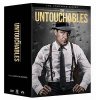
For those of you who like mafia oriented TV shows, this was the innovator and still the king of that genre:

th-3.jpeg

The Untouchables is an American crime drama produced by Desilu Productions that ran from 1959 to 1963 on the ABCTelevision Network. Based on the memoir of the same name by Eliot Ness and Oscar Fraley, it fictionalized Ness's experiences as a Prohibition agent, fighting crime in Chicago in the 1930s with the help of a special team of agents handpicked for their courage, moral character, and incorruptibility, nicknamed the Untouchables.
 
Last edited:

James from London

International Treasure
supposededly tough, career criminal

Supposedly is right. He's not solely defined by his occupation, as much he might wish to be. That's kind of the premise of the series.
 
I'd be lying if I said I was able to keep track of all the business plots and exactly who was doing what to whom the whole time.

Oh - that didn't stop me enjoying Sons and Daughters. Even if that was quite a different kettle of fish.


The relationship dynamics between the family members, and also the Family members, are hugely enjoyable and fascinating in and of themselves. And it's worth watching for the scenes between Tony and his therapist alone. As I say, it's very very funny.

I'm very intrigued. And I certainly like what I've seen and heard.
 

Rove

Telly Talk Warrior
I think Dallas did a nice job of balancing the two a good deal of the time
During those first several seasons I think Dallas struck the right chord between grittiness and glamour. I enjoyed the rodeo/Ewing bar-b-que and the Oil Barons Ball. Dallas (more than Dynasty in my mind) reflected perfectly the ugliness stemming from the late 70's through to the high octane colours of the 80's however it did suffer from the Dynasty influence during the Dream Season...
 
Culture has changed, of course. Britain has become ever more obsessed with and immersed in American culture (says he, typing away on his MacBook). People watch more American series and films than they do home grown. There's Starbucks and MacDonalds on every other street, replete with the lingo that's become part of our world. And there's all this internet business.

So it's less alien. We've lost the barriers, but we've also lost a little of our identity with it.

And after some reflection on this, I'll add that it seems to be a two-way thing. Certainly in terms of Hollywood and TV series - which is perhaps the most tangibly visible element of culture - it seems that there is now far more visibility for British actors. Though perhaps it works slightly differently since many of them seem to play American characters in American series. So maybe this, too, is a byproduct of British (over)exposure to American culture and language. While both countries no doubt find interest in different aspects of the other's language, Brits in particular are particularly tended towards aping words and expressions. So many expressions that would have been part of what made shows like Dallas seem so fascinating a few decades ago are now part of our language. Perhaps being so conversant in - and closer to - American language, accents and "isms" is an asset when it comes to playing one. Which is not by any means to belittle the craft that goes into pulling off such a feat. God knows I wouldn't even know where to begin.

I struggle to think of a reverse example: an American actor playing a British character on British TV (though I'm sure someone will know of some). And that's intriguing. Perhaps it's because (generally speaking, of course) Americans have kept a far firmer grasp on their cultural identity than we have and so are less malleable (or less practiced). And while it seems British TV is enjoyed greatly in the States, the ratio of exchange is far from equal. Very rare, I imagine, is the American for whom British television, film and music* makes up 50% of their viewing and listening. While I dare say that for many Brits, American output makes up 95% of their exposure to the same media.

I'd guess for many Americans, British TV and film has the same kind of novelty, curiosity and otherworldliness US output did for us during Dallas's heyday.


*British pop music hardly counts anyway, since an overwhelming majority of British popular music artists use fake American accents when singing.
 

Rove

Telly Talk Warrior
I'd guess for many Americans, British TV and film has the same kind of novelty, curiosity and otherworldliness US output did for us during Dallas's heyday.
This explains the popularity of Downton Abbey in America or were the American viewers fascinated how the English lived in the early 1900's.
 

Willie Oleson

Telly Talk Schemer
Perhaps it's because (generally speaking, of course) Americans have kept a far firmer grasp on their cultural identity than we have
When I think of American pop culture vs. British (and other European) pop culture I get the impression that it was the British who tried to keep that firm grasp on their cultural identity, while the American approach of doing so feels less intentional. They had, and still have, so much going on in their own huge country that they don't need any cultural import.
Why promote a single by a relatively unknown Swedish band like ABBA when they've got thousands of singles by US established artists to promote? Was it anti-Euro snobbery or simply a matter of logistics and not wasting time and effort on something that may or may not become a hit?
Interestingly, something similar happened in Europe in the 90s decade when house music started to dominate the European charts. The Euro-made supply of said music was so overwhelming that it almost seemed impossible, not to mention unnecessary, to squeeze in the American dance tunes that also had a very different sound to the Euro tunes.
This changed at the end of the decade with the increasing popularity of modern R&B music* and Latin-American productions, which resulted in Europeans mimicking the American sound.
Although it should be noted that some of the biggest US hits of that time had European songwriters and producers behind it. What didn't work for ABBA certainly worked for Britney Spears.

*(I wonder how much of this mirrors the success of Sugarhill Gang's "Rapper's Delight" at the time that 1970s disco music as we knew it in Europe started to change, although I'm sure that the popularity of the 80s electronic sound played the biggest part in it).

Generally speaking, the attitude towards foreign TV productions in Holland (I'd rather not speak for other European countries) has always been very impartial. Similar to our music charts, everything and everyone had an equal opportunity to become a hit. I like that, it makes things a little bit more adventurous.
In addition to the hit singles and tv hit shows that were popular in both/either US and UK, we got the imports from Germany, France and Italy. The most popular foreign TV show of the 80s was not Dallas but The Flying Doctors, and probably the German crime show Derrick, too.
But most of the easy-to-digest family entertainment mainly targeted at a younger audience were American productions (The A-Team, Knight Rider, Dukes Of Hazzard etc.)
I'd be hard-pressed to name a similar TV show from the UK or elsewhere that was equally successful (Dick Turpin?)
On the other hand, most of the sitcoms we got in the 1970s were British. We had All In The Family and Mork & Mindy, but that was it, I think.

 

Snarky Oracle!

Telly Talk Supreme
Willie Oleson said:
Why promote a single by a relatively unknown Swedish band like ABBA when they've got thousands of singles by US established artists to promote? Was it anti-Euro snobbery or simply a matter of logistics and not wasting time and effort on something that may or may not become a hit?

I don't know if this is what you're saying or not, but ABBA was huge in the States at the end of the '70s.
 
Last edited by a moderator:

Willie Oleson

Telly Talk Schemer
but ABBA was hug in the States at the end of the '70s.
I stand corrected! Somehow I had this idea that they didn't gain the same popularity they enjoyed in Europe and Australia. And I thought "Dancing Queen" was their American one-hit-wonder.

Well, then replace "ABBA" with "Boney M".
 
This explains the popularity of Downton Abbey in America or were the American viewers fascinated how the English lived in the early 1900's.

Probably both. It's terribly British, but it also has that stately grandeur and period thing going on. And a sense of heritage. All of which seems attractive when people visit from outside the UK.

I lived in Bath for a while. For a relatively small place tourism is huge there because it's so rich in history (not least the Jane Austen connection) and a lot of the architecture is like stepping into a period drama (and indeed is much filmed for that purpose). It seemed that I took twice as long to get anywhere because I was regularly stopped by American and Japanese tourists anxious - in the days before smart phones and GPS were commonplace - to find Royal Crescent or The Circus.


When I think of American pop culture vs. British (and other European) pop culture I get the impression that it was the British who tried to keep that firm grasp on their cultural identity, while the American approach of doing so feels less intentional. They had, and still have, so much going on in their own huge country that they don't need any cultural import.

Comparing the size and population of America with the UK, it's a bit of a losing battle for us to hold on to our identity under such overwhelming odds. This is especially true with the internet. Most spell-checks, online dictionaries, search engines and whatnot are American (those sponsored YouTube ads for Grammarly with the vocal fry narration make me want to scream). And it's very rare to find a YouTube video that's not American unless I seek out something British. So those spellings, pronunciations and expressions have crept (in some cases, crept back) into our language.

While I'm saddened by the extent to which this is now true, there's also a lot that America does well from which the UK has learnt. Customer service perhaps being top of the list. There are far fewer Basil Fawltys and Mrs Slocombes around than there were a couple of decades ago - judging and criticising you while you hand over your money - because people have needed to adapt and keep up.


The most popular foreign TV show of the 80s was not Dallas but The Flying Doctors

Brett Climo strikes again! :dance:


I don't know if this is what you're saying or not, but ABBA was hug in the States at the end of the '70s.
I had this idea that they didn't gain the same popularity they enjoyed in Europe and Australia. And I thought "Dancing Queen" was their American one-hit-wonder.

I hadn't realised this either.

For some reason I'd thought that ABBA had failed to break the American market and only started to become popular through the Mamma Mia musical. I'm very happy to hear that's not the case.
 

Kenny Coyote

Telly Talk Star
When I think of American pop culture vs. British (and other European) pop culture I get the impression that it was the British who tried to keep that firm grasp on their cultural identity, while the American approach of doing so feels less intentional. They had, and still have, so much going on in their own huge country that they don't need any cultural import.

In music, The US and the British have had a history of going back and forth on being influenced by the other.

In rock and roll it started in the US with Elvis, Chuck Berry and the rest who were influenced by blues and country.

America dominated rock and roll in the 50s.

Then British bands like The Beatles, The Rolling Stones were heavily influenced by both American rock and roll and black American blues musicians. The British dominated rock in the 60s and into the 70s with Led Zeppelin and Pink Floyd.

Eric Clapton was considered the very best blues based guitarist in the 60s, he was the "guitar god" and remained so until Jimi Hendrix made his debut - in England of all places! Hendrix was told by his management that his heavily blues influenced, hard rock would be better received by the British at that time. Only after becoming a star in England did he become a star here in the US.

Hard rock/Heavy metal originated in England with Black Sabbath (from Birmingham) and hard rock legends Deep Purple in the very late 60s and then in 1970 when Sabbath released their debut. In 1971 Black Sabbath released their legendary album "Paranoid." Another Birmingham band, Judas Priest made their debut in 1974 and their second album in 1976 was what started getting them known as well as establishing themselves as the prototype for heavy metal bands, both in music and image.

American rock bands were tremendously influenced by that British 60s and 70s rock and by the late 70s or certainly by the 80s, America began dominating rock music again, both in mainstream rock like The Eagles and Journey and in the hard rock and heavy metal of the American bands influenced by Deep Purple, Black Sabbath and Judas Priest.

Metallica has often said that without Black Sabbath there never would have been a Metallica. Countless American heavy metal bands popular in the 80s cited Deep Purple and the Birmingham bands Black Sabbath and Judas Priest as their biggest inspirations and influences.

Each country has had musicians of vital influence to the music of the other country.
 
Last edited:

James from London

International Treasure
This might be of limited interest, but it shows Dallas in the context of the history of British TV:

 
Last edited:
This might be of limited interest, but it shows Dallas in the context of the history of British TV

Oh my. This is just wonderful.

It's incredible the nostalgia just hearing those voices taps into. They always made the anticipation of an episode about to start feel just that more intensely special.


Confession: I was listening to the Eldorado theme just this afternoon.
 

Toni

Maximum Member
Answering to the OP question:

I really, really gave my respect to "Dallas" in the episode "Royal Wedding", when I realized they could handle a gay character "decently" and even J.R. could treat him the say way as the rest of the word: as something that might be useful to him. Bobby and Pam were gay-friendly and cared about him and Lucy. And besides, J.R. could get rid of the little poisonous niece...When "Dynasty" was released I here, I knew that my relationship with "Dallas" would be a lifetime love story.
 

James from London

International Treasure
Even for someone who finds ratings quite a boring subject, this is weirdly mesmerising:


Oh yes, that would be fascinating -- for someone to go back and critique the No.1 TV show for every week in history, as they do for the No.1 singles on Popular and Pitchfork!

By the look of things, you'd have to critique an awful lot of episodes of I Love Lucy and American Idol.

I'd love to see a British version.
 
Last edited:
this is weirdly mesmerising

It is, isn't it? It's odd to see taste change before ones very eyes. It felt exciting when we got to 1980 and I could see the Dallas phenomenon.

I was expecting a big drop off in numbers in recent years was surprised when the numbers in 2019 weren't that different to the Seventies. But then I remembered that America has always had a large number of channels.

It would indeed be interesting to see a British version of this which in addition to changing genres would also include fads in imported TV (I didn't spot one non-American series in the video, though I dare say there were one or two), and dramatic changes in the figures with the way we watch TV changing - going from two or three channels to the silly numbers we have today.
 

Taylor Bennett Jr.

Telly Talk Winner
Even for someone who finds ratings quite a boring subject, this is weirdly mesmerising:


By the look of things, you'd have to critique an awful lot of episodes of I Love Lucy and American Idol.

I'd love to see a British version.

It was all over for Dallas once they fell behind Who's the Boss? and Growing Pains. They did manage to hold off Amen and 227 before the meteoric rise of Roseanne, though, in a nail-biter.

Arthur Godfrey ruled 1951-1952!
 
Top