
Mary Tyler Moore Show and Its Spin-Offs

Seaviewer

Telly Talk Warrior
LV
9
 
Awards
20

Mel O'Drama

Admin
LV
16
 
Awards
44
Season Two
And Now, Sitting In For Ted Baxter / Don’t Break The Chain / The Six-And-A-Half-Year Itch / …Is A Friend In Need / The Square-Shaped Room / Ted Over Heels / The Five-Minute Dress / Feeb / The Slaughter Affair / Baby Sit-Com / More Than Neighbours / The Care And Feeding Of Parents / Where There’s Smoke, There’s Rhoda / You Certainly Are A Big Boy / Some Of My Best Friends Are Rhoda / His Two Right Arms


It strikes me that many - if not most - scenarios in MTM found their way into sitcoms that followed it. While there were, of course, sitcoms long before this series, the way the situations unfold here feels contemporary, as though this became something of a template or, at the very least, influenced what came later. These include standard situations such as The One Where The Wife Thinks The Husband Is Cheating When He’s Actually Planning A Nice Surprise. Or The One Where The Neighbour Moves In After A Fire To Everyone’s Exasperation. But even the more specific ones apply.

An example of this is Mary feeling guilty after her complaint about poor service gets the waitress sacked, leading to her trying to fix things by arranging new employment for the girl at her own place of work. This exact premise was later used for a Will & Grace episode (with Grace in the Mary role). Likewise, I recall The Golden Girls’ Dorothy having a shallow, snobby new (or old) friend who tries to edge out one of her current closest friends until Dorothy tells her to go to Hell.

Speaking of that one, Some Of My Best Friends Are Rhoda is an absolute blinder of an episode. Somewhere along the line I’d read or heard that one of the episodes addressed anti-Semitism and was curious to see how it would play out. It’s pleasing to see that it did so in a way that I don’t believe diluted the comedy, and was also unexpected for Rhoda not being directly involved (nor even explicitly knowing what had happened), with Mary experiencing and challenging her new friend Joanne’s bigotry, even briefly telling Joanne that she is Jewish herself.

I don’t recall watching anything in which Mary Frann has appeared but her name is familiar for coming close to being cast as Sue Ellen on Dallas. Due to this I found myself watching trying to envisage her in that role. While I know little about her acting range and she has a very different energy to Linda Gray, I really could see her working in those early episodes since she did passive-aggressive very well here and convinced with the requisite snobbery with a brittle, cold edge when needed, but an intelligence and charisma that made sense of why she’d attract friends. I’d also buy her as a Miss Texas. Apparently Mary was best friends with Joan Van Ark as well.


has a loud, desperate, unfunny vibe to it that feels very "stuck on" at the of the first season -- and smells vaguely like a bad, late-'60s sitcom in that way. (The episode with Bill Daily as a hapless politician has a comparable vibe).

Backdoor pilots are always so clunky. And fortunately this one failed

See, I didn't know it was a backdoor pilot. But it certainly feels that way.


I watched this episode last night and yes - realising it’s a backdoor pilot made sense of the change in tone and the inordinate time spent with different players. It clicked when I saw Bill Daily’s name at the end and remembered scrolling past the previous discussion on it. I found Janet MacLachlan very engaging as Sherry, and liked Isabel Sanford as her mother. Beyond that, the new characters did nothing for me.
 

Snarky Oracle!

Telly Talk Supreme
LV
8
 
Awards
21
It strikes me that many - if not most - scenarios in MTM found their way into sitcoms that followed it.

Yes, sadly but inevitably, innovators rarely get credit for their innovations several decades down the road and after being copied left-and-right -- sometimes, younger generations even consider the innovator hackneyed and cliched because they don't realize where the subsequent field of imitators got these things and that the innovator was the first to do it.

Only those of us who were there at the time retain any awareness of how fresh the innovator was. And then we die off.
 

Crimson

Telly Talk Enthusiast
LV
2
 
Awards
9
Speaking of that one, Some Of My Best Friends Are Rhoda is an absolute blinder of an episode. Somewhere along the line I’d read or heard that one of the episodes addressed anti-Semitism and was curious to see how it would play out. It’s pleasing to see that it did so in a way that I don’t believe diluted the comedy

One of the few "message" episodes of MTM and evidence of how dexterous the writers of the show could be; the same message handled on a Norman Lear show would have resulted in the audience being clobbered over the head with the point.

I don’t recall watching anything in which Mary Frann has appeared but her name is familiar for coming close to being cast as Sue Ellen on Dallas.

I often feel bad for actors who came close to being cast in projects that became successful and who never got another chance; Mary Frann at least did find her success, as the wife of Bob Newhart on his second hit sitcom. That role didn't really take advantage of the qualities you list out, but at least she got a nice paycheck. The only other project that I recall seeing her in was the Jackie Collins miniseries LUCKY CHANCES.

I was unaware that she had been in consideration for Sue Ellen. Not that I'd want anyone else in the role other than Linda, I could see Mary embodying some of Sue Ellen's notable characteristics while bringing a very different energy to the role; makes me wonder what the character's trajectory would have been. (And we're both lucky the Sue Ellen fanatics of this forum are long gone or they'd be forming an angry mob against our heresy.)

 

Mel O'Drama

Admin
LV
16
 
Awards
44
sometimes, younger generations even consider the innovator hackneyed and cliched because they don't realize where the subsequent field of imitators got these things and that the innovator was the first to do it.

Yes. While I don't consider myself a younger generation, MTM did begin some years before I was born and here I am watching it for the first time almost five and a half decades after its original airing. I've had to check myself over finding certain things familiar or predictable by recognising that every time I've seen these familiar situations has been in later projects (some of which perhaps involved creative personnel from MTM such as James L. Brooks).


One of the few "message" episodes of MTM and evidence of how dexterous the writers of the show could be; the same message handled on a Norman Lear show would have resulted in the audience being clobbered over the head with the point.

I'm sure you're right.


makes me wonder what the character's trajectory would have been.

While watching last night, I was thinking that it would have to have gone in a different direction simply because her screen presence (here, at least) is so different from Linda's. I think it would have worked, and don't think it would have necessarily have been better or worse, but like you I'm fine with what we got in the end.


(And we're both lucky the Sue Ellen fanatics of this forum are long gone or they'd be forming an angry mob against our heresy.)

:devil:
 

Snarky Oracle!

Telly Talk Supreme
LV
8
 
Awards
21
I don’t recall watching anything in which Mary Frann has appeared but her name is familiar for coming close to being cast as Sue Ellen on Dallas. Due to this I found myself watching trying to envisage her in that role. While I know little about her acting range and she has a very different energy to Linda Gray, I really could see her working in those early episodes since she did passive-aggressive very well here and convinced with the requisite snobbery with a brittle, cold edge when needed, but an intelligence and charisma that made sense of why she’d attract friend

I often feel bad for actors who came close to being cast in projects that became successful and who never got another chance; Mary Frann at least did find her success, as the wife of Bob Newhart on his second hit sitcom. That role didn't really take advantage of the qualities you list out, but at least she got a nice paycheck. The only other project that I recall seeing her in was the Jackie Collins miniseries LUCKY CHANCES.

I was unaware that she had been in consideration for Sue Ellen. Not that I'd want anyone else in the role other than Linda, I could see Mary embodying some of Sue Ellen's notable characteristics while bringing a very different energy to the role; makes me wonder what the character's trajectory would have been. (And we're both lucky the Sue Ellen fanatics of this forum are long gone or they'd be forming an angry mob against our heresy.)

Mary Frann was a pretty good dramatic actress -- and her role as the antisemite on MTM was basically a dramatic part. But comedy wasn't her forte, as NEWHART in the '80s proved; people often defend her boring casting in NEWHART by pointing out she was given thankless material, but so was Suzanne Pleshette in Bob's '70s show, but she still found a way to make it work.

Had she been cast in DALLAS, Mary Frann would have brought intelligence and the requisite bitchiness to the role of Sue Ellen. But she lacked the Joan-Crawford's-daughter narcissistic divadom that Linda Gray effortlessly brought to Southfork. And, without that, DALLAS would never have worked.
 

Snarky Oracle!

Telly Talk Supreme
LV
8
 
Awards
21
Yes. While I don't consider myself a younger generation, MTM did begin some years before I was born and here I am watching it for the first time almost five and a half decades after its original airing. I've had to check myself over finding certain things familiar or predictable by recognising that every time I've seen these familiar situations has been in later projects (some of which perhaps involved creative personnel from MTM such as James L. Brooks).

And you may be smarter.

Mary Frann was a pretty good dramatic actress -- and her role as the antisemite on MTM was basically a dramatic part. But comedy wasn't her forte, as NEWHART in the '80s proved; people often defend her boring casting in NEWHART by pointing out she was given thankless material, but so was Suzanne Pleshette in Bob's '70s show, but she still found a way to make it work.

Had she been cast in DALLAS, Mary Frann would have brought intelligence and the requisite bitchiness to the role of Sue Ellen. But she lacked the Joan-Crawford's-daughter narcissistic divadom that Linda Gray effortlessly brought to Southfork. And, without that, DALLAS would never have worked.

And who knows if the "Untitled Linda Evans Project" that David Jacobs scrawled across the first draft of his pilot script for DALLAS, had actually come to pass...?

Evans had done a TV movie for Lorimar months earlier and had only recently left CBS' talent division (where they'd been trying to find a series for her). As such, she was never offered the Pam role in DALLAS. She was also "too old" for Patrick Duffy (lightyears younger than Victoria Principal).

Some people sneer that Linda Evans couldn't act (VP was wildly inconsistent herself during her first four years on DALLAS) but many people don't remember that Linda Evans, after bitchy-turned-vacuously-angelic Audra on BIG VALLEY in the '60s, had metamorphosed into a heart-brokenly soulful screen presence in the '70s -- she'd become a genuinely good (and quite beautiful) actress, which is why she was subsequently hired to play Krystle in DYNASTY, a show that paid her well but essentially ruined her finely-etched performance thru increasingly nonsensical scripting and, worse, the Static Acting Directive implemented with the very first episode of Season 3 and maintained for the next six years.

So people have little memory of how goof Linda Evans was during DYNASTY's first two seasons, where she was getting awards and even tied BBG for the Golden Globe in 1982 (and no one laughed. Yet).

Still, DALLAS wouldn't have destroyed Evans' acting as DYNASTY did, but it's hard to see her as a prospective Pam. When the casting is as right as it was on DALLAS, it's hard to picture anybody else in the role. (As Donna Reed proved).

But I'm getting sidetracked now from Mary in Minneapolis.


Krystle, Barbarella and Pam, oh my!
3144ec0a9f2d735e96b88d8bede20a8c2296a493.jpg
 

Crimson

Telly Talk Enthusiast
LV
2
 
Awards
9
She was also "too old" for Patrick Duffy (lightyears younger than Victoria Principal).

I must admit that Linda Evans has always looked older to me than she actually was; I thought Krystle looked older than Alexis. Even on THE BIG VALLEY she seemed older than her character. Maybe it's the frosty blonde hair, or maybe just that she's kind of a serene, subdued actress.
 

Snarky Oracle!

Telly Talk Supreme
LV
8
 
Awards
21
I must admit that Linda Evans has always looked older to me than she actually was; I thought Krystle looked older than Alexis. Even on THE BIG VALLEY she seemed older than her character. Maybe it's the frosty blonde hair, or maybe just that she's kind of a serene, subdued actress.

Scorpio Risings -- they may be quite comely in youth, but age quickly. Even the good ones -- and there are good ones, like Linda.

While Joan Collins, a bitch on screen and a quasi-pseudo-pretend bitch in life, is an Aries Rising, which age far better. (If they keep the weight off).

And that was one of the many perverse quirks on DYNASTY, both in fiction and in reality, the Scorpio Rising is the good one while the Aries Rising is the bad one on DYNASTY.. And that's not usually what happens (although ... there are weird exceptions).

But there's just a Yin-yang thing between Aries Rising and Scorpio Rising. Typically, Scorpio Rising is the clever, talented manipulator, kind of the "dark star" of the zodiac (which, at its worst, become the most pathological dictators in history -- the Hitlers/Stalins/Napoleans/Mousillinis/Castros/Putins/AllenDulleses/OsamabinLadens, etc...). While the Aries Risings (although admiring of Scorpio Risings' intellect and self-possession) are themselves more vulnerable and less clever (and know they are), they nonetheless represent a certain unique life force (that Scorpio Rising recognizes and admires but also resent because the Scorpio Rising can't quite 'control' the Aries Rising in the way Scorpio Risings generally prefer). So there's a tension.

And it works on screen as well (if not exactly in the same way) as it does off screen.

You see a lot of Aries Rising (usually the wife) and Scorpio Rising (usually the husband) couples:

Anthony Newley and Joan Collins
Jack Cassidy and Shirely Jones
John Derek and Bo Derek

(Okay, sure they're all joke-couples, but you can see the pattern).

Jock Ewing and Miss Ellie (Scorpio Risings usually see Jock as the "good" one).

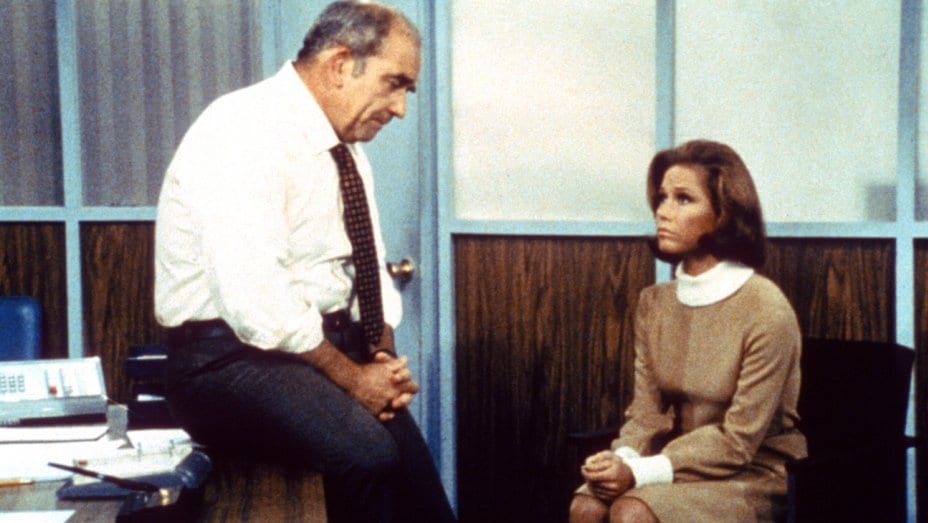
Lou Grant and his underling Mary Richards. (Crowley and Pepper on that old cop show). He's the over-gruff boss, contemptuous and undermining of the melancholy woman he supervises, for the same reason he admires her.

So there's a weird rivalry at the center of the Scorpio Rising-Aries Rising dynamic. Over on the DYNASTY page, I pointed out that the Miss Ellie/Lady Jessica duo was the equivalent of the Krystle/Alexis thing -- a Scorpio Rising pitted against an Aries Rising, in both cases; a Gemini pitted against a Sun in Scorpio, in both cases; and even two Alexises (both of the Geminis) pitted against the hapless Sun in Scorpio victims (Miss Ellie and Krystle)... Only, the DALLAS duality is more common: the predatory Scorpio Rising (Lady Jessica, Alexis Smith) is the villain; while on DYNASTY, the villain is the Aries Rising (Alexis Carrington, Dame Joan of Collins), which is much less frequent but happens.

Which is why I wanted to see Barbara Stanwyck and Dame Judith Anderson together, however briefly, in Season 6 of DYNASTY (and THE COLBYS) -- a geriatric version of the Aries Rising-Scorpio Rising adversarial pairing that I'm pointing out. But you only get to see it in THE FURIES (1950) where Stanwyck, in maniacal frustration, stabs Judith Anderson's eye out with a pair of scissors. Stanwyck also murders Anderson in THE STRANGE LOVE OF MARTHA IVERS (1947) but it's the little girl version of Stanwyck's character, so it's not entirely the same thing.. So the Aries Risings aren't always saints, and the Scorpio Risings and their 24/7 schemes can bring out the malice in the Aries Risings (which can sometimes go over the top in its own right).

Again, in life and in fiction. It's a Cain & Abel thing -- and which is which depends on whom (and whose friends) you ask.

DYNASTY was atypical, because the Aries Rising was the unquestioned villain and the Scorpio Rising was the unquestioned holy person -- flipped from how it tends to work. But there's usually enough blame to go around. When the Aries Rising cracks, it's rare but they may bare a firearm in a foolish display of incompetent-if-focused rage; and when a Scorpio Rising comes to power, after writing great books and directing brilliant movies and cooking fabulous meals, they lay waste to nations.

But they've got chemistry fer damn sure.

^ ^
I copied this out of the Apocrypha from the Bible.

I think I'll re-post this on that DYNASTY threads so the crazies will have something strange to read.

LG3.jpg
 
Last edited:

Daniel Avery

Admin
Top Poster Of Month
LV
9
 
Awards
24
I've had to check myself over finding certain things familiar or predictable by recognising that every time I've seen these familiar situations has been in later projects (some of which perhaps involved creative personnel from MTM such as James L. Brooks).
I think you hit the nail on the head here regarding the re-use of plotlines in future sitcoms. People who worked on MTM and its successors went on to later, also notable shows, and those people trained/mentored others at those shows. James Brooks especially stayed a force in BTS sitcom-land for decades, so if you're going to copy someone, at least he's someone worth copying.
 

Chris2

Telly Talk Dream Maker
LV
0
 
Awards
5
Mary Frann was a fine performer and she had good chemistry with Bob Newhart. But she wasn’t a comic actress like Suzanne Pleshette was. Carlene Watkins from ”Bob“ had the opposite problem; she was a good comic actress but had little chemistry with Newhart. Pleshette had both qualities, so the “Bob Newhart” writers were able to mine a lot of story and laughs from Bob/Emily.

But the “Newhart” writers couldn’t lean on the Dick/Joanna relationship for laughs and had to turn elsewhere. Which is why the supporting cast went through changes in the early years of the show, and why they had to lean too heavily on Stephanie/Michael once the cast settled in.
 

Jock Ewing Fan

Telly Talk Star
LV
0
 
Awards
8
Mary Frann made a more than acceptable substitute for Betty Buckley in the first Eight Is Enough reunion move.
Mary Frann was underrated.
Naturally, we all know that Suzanne Pleshette was great in Bob Newhart's previous show,
and no on was going to be as iconic.
Mary Frann's character was more of a "straight man" type, and she couldn't show her entire range.
But it worked in the show, and it made the show even better
 

Crimson

Telly Talk Enthusiast
LV
2
 
Awards
9
Since I dusted the book off its shelf, I've been reading through about the early production of MTM. It may seem like the show hit the ground running from the first episode, but those behind the scenes had much less confidence they were making a good show. Some tidbits:

Rhoda was considered very unlikeable early on, leading to uncertainty about the character. It was suggested to make Bess fond of Rhoda so that the audience would see the character through the little girl's eyes.

An early indication of low confidence in the show came when veteran director John Rich left the production. He had worked with Mary for years on THE DICK VAN DYKE SHOW, but told the producers of MTM that they seemed to be making something that was "just OK" ; he had expected more from Mary. Instead he joined Norman Lear's developing ALL IN THE FAMILY, which he suspected would be a flop but was at least "outrageous".

Jay Sandrich, who had directed the short lived HE & SHE (a partial inspiration for MTM) was brought in to direct. Sandrich looked at other contemporaneous 3-camera sitcoms and disliked how the actors seemed to be yelling at each other, because they were playing to the audience. Although MTM also used the 3-camera method, Sandrich directed the actors to pretend they were making a movie. Thus, MTM avoided having the deafening tone of other sitcoms of the era.

Angus Duncan, who played Mary's ex-boyfriend in the first episode, disliked re-writes so much that he threw his script on the ground. At the end of filming, he asked if his character could be recurring, to which the producers said "thanks but no thanks".
 

Snarky Oracle!

Telly Talk Supreme
LV
8
 
Awards
21
Rhoda was considered very unlikeable early on, leading to uncertainty about the character. It was suggested to make Bess fond of Rhoda so that the audience would see the character through the little girl's eyes.

Apparently, the studio audience hated the first shooting of the pilot (there was a bomb threat, the AC was out, and the audience were afraid for poor Mary because of Rhoda's caustic first scene). No one laughed and Mary rode him in tears, her husband, Grant Tinker -- who had put the entire production together -- called Brooks & Burns and said, "fix it!" (Tinker joked later that "fix it" meant absolutely nothing and was no help at all).

Script supervisor Marjorie Mullen, who'd also worked on THE DICK VAN DYKE SHOW, recommended little Bess advocate for Rhoda, Bess telling Mary that Rhoda was really a terrific person. Thus allowing the audience to view Rhoda in a different context than simply "mean".

Otherwise, there were supposedly no changes. And the second night they re-shot the pilot, the audience roared with laughter. The test audiences later still hated it, calling Mary "a loser" because she was single at 30, and uncomfortable that there were "two jews" in the cast. The network had similar concerns, assuming their great star, Mary Tyler Moore, was going to be brought down by a disastrous production company, with "awful" scripts that were character-based and structurally unrecognizable from '60s sitcom scripts which were line/punchline/line/punchline, etc...

But CBS had a 13-episode commitment for the show, so they decided to bury it in a dead-end timeslot on Tuesday night, initially scheduled against MOD SQUAD (which was #1 in the ratings that summer).

Ethel Winant, the casting director for CBS, however, loved the show and its early scripts, and agreed to cast it. She found Asner, Leachman and a completely unknown Valerie Harper whom Winant had seen in an off-Broadway play (whom she had to scramble to find, as Harper belonged to no guild whatsoever). As Allan Burns said, Winant defended the series "almost to her detriment" to the button-down all-male brass at the network who universally hated it.

Then, network consultant wunderkind, Fred Silverman, was so impressed when he screened the finished pilot -- edited and scored, with the opening titles -- that he called New York in the middle of the night and told the CBS brass that they needed to move MTM to Saturday nights (just before MISSION: IMPOSSIBLE), or this great new show was going to be lost (which had been CBS's intention). In an era when fall schedules were set and adhered to months in advance, the advertizers apoplectic over any last minute (or even last month) changes.

Jay Sandrich, who had directed the short lived HE & SHE (a partial inspiration for MTM) was brought in to direct. Sandrich looked at other contemporaneous 3-camera sitcoms and disliked how the actors seemed to be yelling at each other, because they were playing to the audience. Although MTM also used the 3-camera method, Sandrich directed the actors to pretend they were making a movie. Thus, MTM avoided having the deafening tone of other sitcoms of the
Although it seemed to take them about a year to rein it in, as the first season indeed has that "too loud" '60s sitcom delivery. Not that I mind very much, but I'm glad they subdued it pretty quickly.

BTW: Joan Darling, who five year later directed "Chuckles the Clown," was almost cast as Rhoda before they were able to locate Harper.


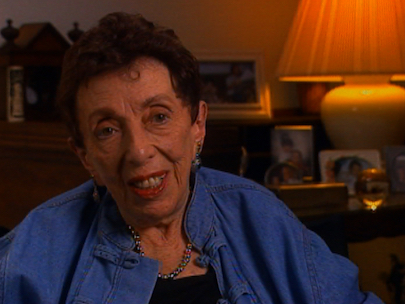
Ms. Winant who, along with Fred Silverman, saved the show:
ethel_winant_screenshot.jpg
 

AndyB2008

Telly Talk Well-Known Member
LV
0
 
Awards
6
I liked Bill Daily in both I Dream of Jeannie and The Bob Newhart Show but I agree that he was not funny in a central role. He was best as a confounding annoyance to the leads. He starred as a vet in a sitcom called Starting from Scratch which just falls flat. He's overshadowed by Nita Talbot as his wise-cracking assistant.
Starting From Scratch was later remade for British TV as Close to Home, with Paul Nicholas and Jane Briers in the Bill Daily and Nita Talbot roles.

Angharad Rees played the Connie Stevens role and Lucy Benjamin and Andrew Read played the Heidi Helmer and Jason Marin roles. (While Jason Marin was the one to be successful from Starting from Scratch due to his role as Flounder in the Little Mermaid, Lucy Benjamin was the one to be successful from Close to Home).

Close to Home was slightly successful than Starting from Scratch, but LWT weren't impressed with the ratings as the show was retooled for Series 2.

Brian Cooke stepped down as head writer (although he continued to be credited as creator) and a new writing team came in. Stephen Frost was dropped from the cast, Pippa Guard came in as a love interest for Paul Nicholas's character, and Jane Briers got her role diminished so they could concentrate on the Pippa Guard romance.

The opening and closing credits were given a revamp too.
 

Jock Ewing Fan

Telly Talk Star
LV
0
 
Awards
8
Mary Frann was a fine performer and she had good chemistry with Bob Newhart. But she wasn’t a comic actress like Suzanne Pleshette was. Carlene Watkins from ”Bob“ had the opposite problem; she was a good comic actress but had little chemistry with Newhart. Pleshette had both qualities, so the “Bob Newhart” writers were able to mine a lot of story and laughs from Bob/Emily.

But the “Newhart” writers couldn’t lean on the Dick/Joanna relationship for laughs and had to turn elsewhere. Which is why the supporting cast went through changes in the early years of the show, and why they had to lean too heavily on Stephanie/Michael once the cast settled in.
I tend to agree. Suzanne Pleshette is so iconic and so wonderful as an actress, that it is difficult to replicate her chemistry with Bob Newhart.
I thought Mary Frann was a great co-star, too. Maybe because she was in so many scenes with BN as the Inn's co-owner (as opposed to BN's
office scenes) that the supporting characters were more utilized (IMHO) in the show.
 

Mel O'Drama

Admin
LV
16
 
Awards
44
Season Three

As I’ve wrapped up another season this is an obligatory check-in really. I don’t feel I have much to say about it, but it’s mostly more of the same which is no bad thing.

I feel the tone has become a tad broader with this season. This works in large part because it seems to come from a kind of confidence or comfort within the cast, and also because it’s balanced with a willingness to address topics that feel more grounded and semi-dramatic.

There’s a recurring theme of scenarios where we see characters dealing with low self-esteem: Murray’s depression. Rhoda struggling to cope with success from winning a beauty contest. Jerry Van Dyke’s character’s wish to broaden his scope beyond being Chuckles The Clown, leading to painfully bad stand-up. Georgette’s people-pleasing. Even Lou’s emotional (and possible actual) infidelity with his new boss. In addition this season has given us an example of a non-stereotypical gay character whose homosexuality isn’t there for cheap laughs. I’d imagine this to be one of the first such examples on television (Number 96’s Don Finlayson had been around for almost a year by this point and was a recurring character to boot, but that’s a different genre).

I’d say Georgette perhaps embodies the different tone at this point. Up to this point, Ted’s been the most caricature-ish character with most others staying comparably in-check. But Georgette with her funny voice and almost one-dimensional niceness is entering the same territory. There are a few saving graces here. Firstly, it could be argued that Ted needed someone as cartoony as he is to partner up with. Secondly, the niceness has been acknowledged as something that frustrates other characters as much as it could the viewer. Finally there’s Georgia Engel’s performance, which gives the character a vulnerability as well as keeping her likeable.

We’ve now met all four of Mary and Rhoda’s parents, and it’s interesting to see the similarities in the dynamics. Both have critical or controlling mothers and more placid fathers who are also kept on a short leash by their wives. Nanette Fabray has done a nice job of making Mary’s mother a passive-aggressive nightmare.

With Season Four just around the corner, I’m already dreading the exit of Rhoda who is the best thing about Mary’s home life and an essential part of the series. At this point, I’ve shifted my position on the spinoff and would be up for watching it if the opportunity arose, which it probably won’t since it seems difficult to buy on DVD round these parts (the first season is on YouTube but even if I could reconcile the questionable legality life is just too short to watch headache-inducing poor quality uploads). In better news, my next episode sees the first appearance of Sue Ann.

I’ll probably dive into Season Four in the next week or so.
 

Crimson

Telly Talk Enthusiast
LV
2
 
Awards
9
I’d say Georgette perhaps embodies the different tone at this point. Up to this point, Ted’s been the most caricature-ish character with most others staying comparably in-check. But Georgette with her funny voice and almost one-dimensional niceness is entering the same territory

Georgette's inclusion in the cast originally had an ulterior motive to humanize Ted. Ted Knight had been increasingly resentful about playing the buffoonish Ted Baxter and pushed the producers to add depth to the character. I'm not sure why his first on screen girlfriend, Chuckle's daughter, fizzled. The episode ended with the two still together, but she was never seen again; not even in a later episode famously about Chuckles. (The actress turns up again, but playing a different character.) I find Georgette mildly irksome in her earliest episodes, but she toned down her ditzy performance eventually.

Nanette Fabray has done a nice job of making Mary’s mother a passive-aggressive nightmare.

I thought Nanette was particularly well cast. She was one of Mary's comedic inspirations and looked like she could have been Mary's mother. Odd that the character ws never seen again.

At this point, I’ve shifted my position on the spinoff and would be up for watching it if the opportunity arose

I wouldn't go so far as to discourage you, but would suggest you go in with very low expectations. RHODA isn't necessarily a bad show, but it's not good either. It never found its identity or its focus. Even Rhoda herself lost much of the spark from MTM.

In addition this season has given us an example of a non-stereotypical gay character whose homosexuality isn’t there for cheap laughs.

I said earlier in the thread that MTM's handling of 'issues' was more subtle than on Norman Lear's concurrent shows, but I think a better description is matter-of-fact. Rhoda being Jewish, Gordy being Black, Phyllis' brother being gay, Mary being sexually active and on the pill -- these things simply were. On Lear's shows these would have been hot topics for the principals to argue over, but on MTM they just existed.

"As Mary Tyler Moore goes, so goes America" -- Arthur Harmon on MAUDE, expressing his dismay over Mary being on the pill.

Somehow it seems appropriate that a Norman Lear sitcom commented on the cultural impact of MTM, and that MTM never felt the need to reciprocate. The aforementioned book has a chapter exploring MTM's societal impact in the 70s and comparisons to Lear's shows. While MTM and AITF broke ground, in very different ways, in the same year, the author focused on the comparisons between MTM and MAUDE. Calling the two shows "sisters in TV feminism", she also notes that Maude was the anti-Mary Richards: middle aged, married, non-working, and aggressive in her politics. The two shows even shared some female writers, but felt no need to match MAUDE's more strident approach to issues.

One of MTM's few message episodes, the previously discussed "Some of My Best Friends are Rhoda", was not well liked by the show's creators. Allan Burns, the co-creator and writer, called the episode "a little preachy" and "not our MO". They would deliberately avoid any further episodes that trod into Norman Lear territory.
 
Last edited:

Snarky Oracle!

Telly Talk Supreme
LV
8
 
Awards
21
I thought Nanette was particularly well cast. She was one of Mary's comedic inspirations and looked like she could have been Mary's mother. Odd that the character was never seen again.

Or at least referred to again. To have her parents move around the corner, somewhat to Mary's dismay, and to never even have her mention that they moved away, is an unusual fumble for the show.

But even Mary's show had continuity issues -- some easy to understand and some not. One of the series' strengths was that it was one of the first programs which unfolded in real time, but they couldn't keep straight Mary's highschool name nor which year was born (1939 or 1940?). I just saw an early Season 6 episode yesterday in which Mary referred to knowing Ted "seven years" (when it should have been six or even five, and the program was usually a little more consistent with these things).

I wouldn't go so far as to discourage you, but would suggest you go in with very low expectations. RHODA isn't necessarily a bad show, but it's not good either. It never found its identity or its focus. Even Rhoda herself lost much of the spark from MTM.

Yes, and that's it. It was predictable that when you take a very popular, snarky side-character and give them their own shows, most of the edge will be removed and handed over to a new side-character, Brenda the sister (only she didn't have much of that edge). Plus, Brenda was so different (and differently cast) than she was on MTM briefly, they should have said Rhoda had two sisters -- the one from MTM you never saw again.

RHODA's identity was indeed up for grabs. There was never the clarity that existed on the parent series -- there's a rolling sea of pleasantly lame episodes, one after the other, that just don't entirely work.

One of MTM's few message episodes, the previously discussed "Some of My Best Friends are Rhoda", was not well liked by the show's creators. Allan Burns, the co-creator and writer, called the episode "a little preachy" and "not our MO". They would deliberately avoid any further episodes that trod into Norman Lear territory.

Interesting. I know the '70s feminists weren't all that thrilled with MTM because, basically, Mary Richards was too nice, her feministic discovery too subtle and organic. They wanted her to be more of a MUROHY BROWN kind of character, kickin' ass and takin' names (presumably male ass & names) which wouldn't have worked in 1970 and became tired quite quickly even on Candice Bergen's show.
 
Top