The Ambassadors Of Death (21-3 / 2-5-1970)
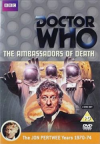
The word "ambassador" has a Spanish twang to it, I think. Conquistador, matador, por favor ambassador. And if the aliens in this story had spoken in La la la language then I would have interpreted their spaceship as an allegory for Spain.
But first things first, and we get our first look inside the coloured version of the 1970s Tardis.
It pains me to say that it's not very good. The violet wallpaper and cabinet with figurines gives it a very "grandma" look, and that's not appropriate for a sexy scientist in white boots. That's Liz Shaw of course, and they also didn't show her entering the Tardis for the first time.
I don't care how many times I've already seen that reaction, it always works for me, as if I the viewer sees it for the first time.
This story is quite sober and restraint for Doctor Who and yet I found it more addictive than the previous story.
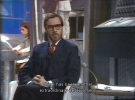
It's full of cloak and dagger espionage and sabotage, mafia-style assassinations and effective cliffhangers.
The Space Centre technobabble is surprisingly digestible, but when it becomes too ambitious it contradicts what I see on screen. It's not quite "Batcave" but nevertheless I had a few good laughs.
The Doctor requires very expensive and very advanced material to build a machine that allows the aliens to communicate with humans.
But when I hear the word "machine" I think of something more impressive than this:
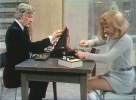
To be fair, it works, and it's more realistic than watching characters pushing big buttons and yanking at levers of alien technology that they're seeing for the first time - not knowing what they're doing and then being surprised that something unexpected happens.
The Ambassadors Of Death is certainly not without a healthy dose of contrivance.
The kidnappery and murderous thugs can effortlessly sabotage space travel technology, and armed forces are consistently inept at reacting to the various criminal attacks. But maybe it's a good reminder that I'm watching a TV series that primarily targets younger audiences.
Speaking of which, I noticed that some scenes are scored with nondescript euro-folksy music, the kind of music I strongly associate with children's TV of the 1970s.
I hope they keep it.
The Doctor's eccentric yellow car - Bessie - is also becoming sort of a character.
And so the real evil in this story turns out be another blast 'em! human being, although the sense of PTSD makes him a little less evil.
Sergeant, major, colonel, general, brigadier - I can never remember the level of authority of all those ranks, not even in cop shows.
General Carrington - a very hammy and funny character - places the Brigadier under arrest and then five minutes later the Brigadier places the General under arrest. I won't even try to overthink this.
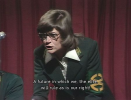
The TV presenter returns in the final scenes, and the intended but unjustified exposure of the aliens gives it an almost epic scope. I even entertained the possibility that the General was The Master in disguise.
Anywayz, I enjoyed this twisty little series very much, but according to wiki The Fanclub disagrees with me.