- Awards
- 21
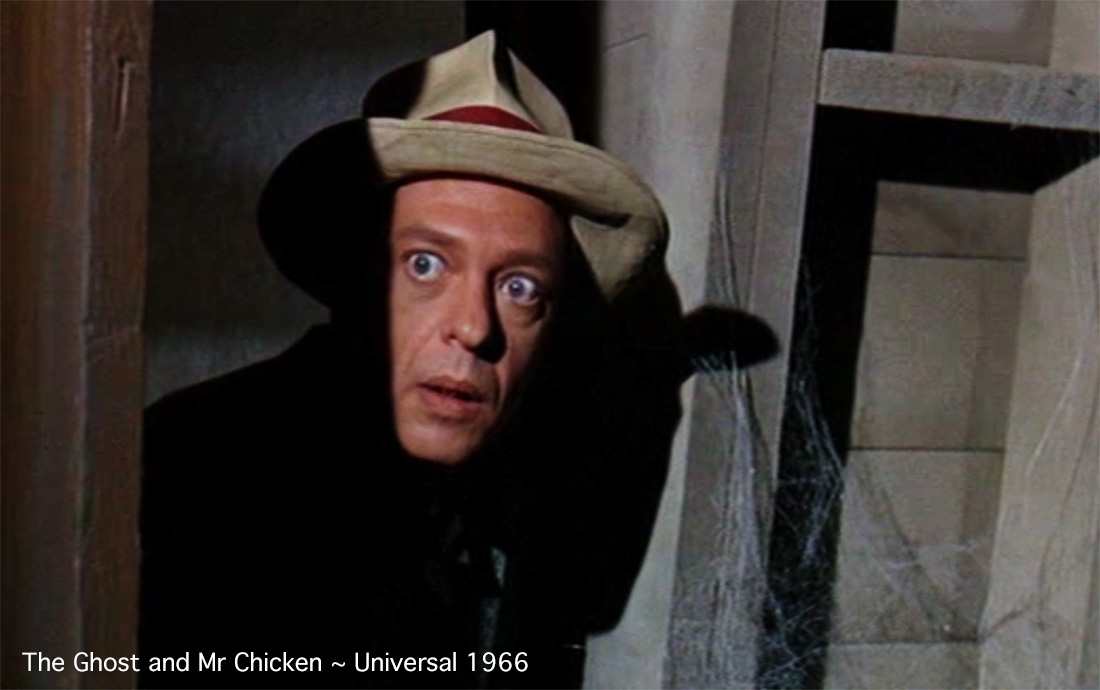
Re-watching THE GHOST & MISTER CHICKEN on some broadcast station... Silly as it is (inspired by 1963's "The Haunted House" episode of THE ANDY GRIFFITH SHOW) this movie is still extremely popular amongst audiences (Jim Carrey, for example, loves it) and in demand.
And why? Aside from Don Knotts' trademark physical comedy (he essentially repeats his Barney Fife routine) there is precious little gore, no sadism, and the "scares" are preposterous. And yet it works for the viewer, even after three generations.
It's the atmosphere. It's the era. It's that twilightzone-y/end-of-the-world/ghostly funereal vibe from the early-'60s (okay, it's shot in Summer 1965, and released the next year) which is both weirdly innocent and simple yet ground-zero spooky. And, like that GRIFFITH installment (in which Opie loses his baseball in the haunted murder mansion on the edge of Mayberry, in black-and-white, managing to be both comedically ridiculous and absurdly creepy) THE GHOST & MISTER CHICKEN manages to do the same in color.
There's something about the film stock of the time (as in THE BIRDS from 1963) which adds to the atmosphere, and it's hard to delineate; my brother once described it as "the way the light hits the ground," and it's true. So even at high noon and in living color, the ghostliness resonates.
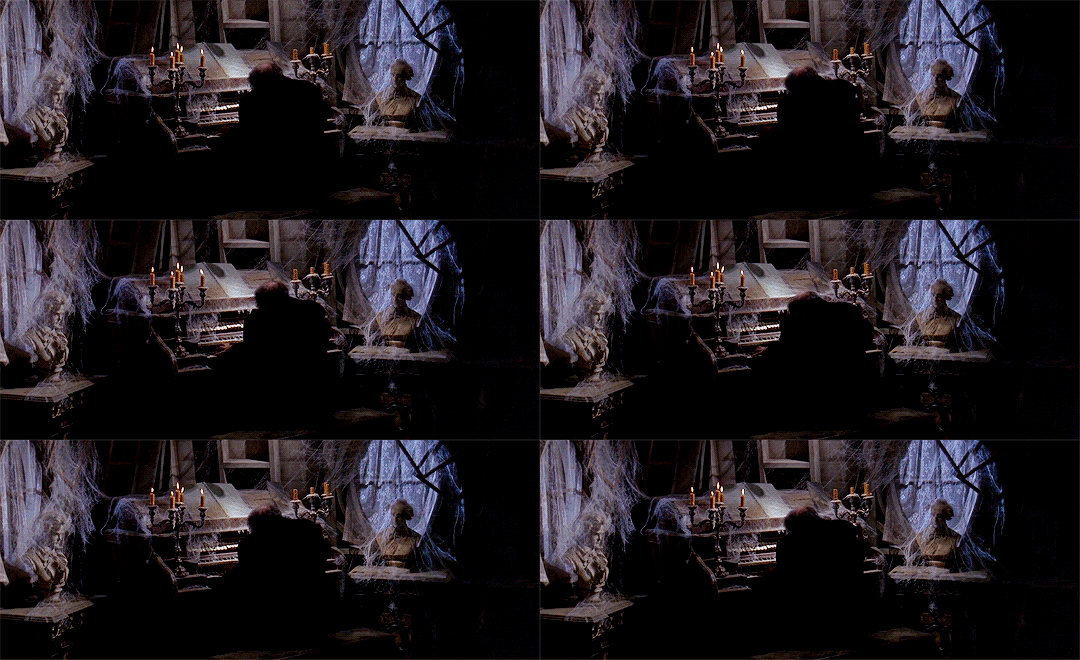
Even the interior scenes -- the brick in the newspaper office, the brick in the murder mansion, the woodwork, the organ loft, the blood on the keys... there's just a vividness to it all, a cozy immediacy, which invites an eeriness despite an intentionally stupid plot.
And that's probably it: a cozy flavor which is necessary for a "horror film" to really pull the audience in by getting inside their heads -- something filmmakers (certainly today, and probably even then) have little understanding of.
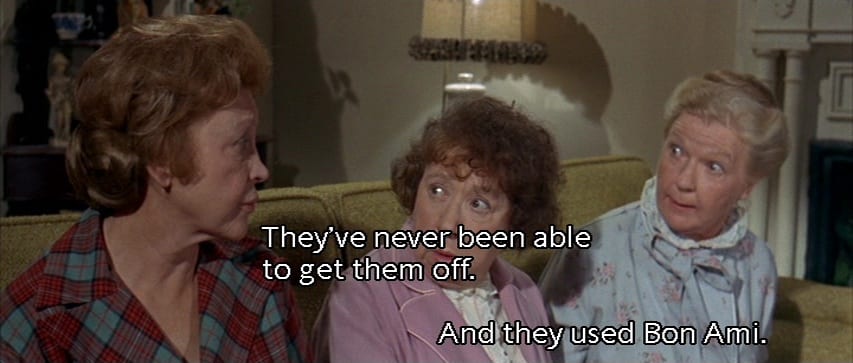
MISTER CHICKEN had a broad and leisurely script (Knotts is a nervous would-be reporter who spends a night in a Victorian house with a homicide-laden history, and then he becomes a local celebrity when his misadventure hits the newsstand) and Knotts spends most of his screen time mooning over a smalltown girl who seems oblivious to him but isn't. And a lot of chuckles are mined from lines like, "Attaboy, Luther!", and "And he used Bon-Ami!"
Universal Studios backlot sets and period sitcom character actors are all recognizable. But why was this communal flavor, facetious yet focusing, seemingly impossible to conjure after the mid-'60s...? It's not just cultural; it's also visual.
And why? Aside from Don Knotts' trademark physical comedy (he essentially repeats his Barney Fife routine) there is precious little gore, no sadism, and the "scares" are preposterous. And yet it works for the viewer, even after three generations.
It's the atmosphere. It's the era. It's that twilightzone-y/end-of-the-world/ghostly funereal vibe from the early-'60s (okay, it's shot in Summer 1965, and released the next year) which is both weirdly innocent and simple yet ground-zero spooky. And, like that GRIFFITH installment (in which Opie loses his baseball in the haunted murder mansion on the edge of Mayberry, in black-and-white, managing to be both comedically ridiculous and absurdly creepy) THE GHOST & MISTER CHICKEN manages to do the same in color.
There's something about the film stock of the time (as in THE BIRDS from 1963) which adds to the atmosphere, and it's hard to delineate; my brother once described it as "the way the light hits the ground," and it's true. So even at high noon and in living color, the ghostliness resonates.
Even the interior scenes -- the brick in the newspaper office, the brick in the murder mansion, the woodwork, the organ loft, the blood on the keys... there's just a vividness to it all, a cozy immediacy, which invites an eeriness despite an intentionally stupid plot.
And that's probably it: a cozy flavor which is necessary for a "horror film" to really pull the audience in by getting inside their heads -- something filmmakers (certainly today, and probably even then) have little understanding of.
MISTER CHICKEN had a broad and leisurely script (Knotts is a nervous would-be reporter who spends a night in a Victorian house with a homicide-laden history, and then he becomes a local celebrity when his misadventure hits the newsstand) and Knotts spends most of his screen time mooning over a smalltown girl who seems oblivious to him but isn't. And a lot of chuckles are mined from lines like, "Attaboy, Luther!", and "And he used Bon-Ami!"
Universal Studios backlot sets and period sitcom character actors are all recognizable. But why was this communal flavor, facetious yet focusing, seemingly impossible to conjure after the mid-'60s...? It's not just cultural; it's also visual.
Last edited: