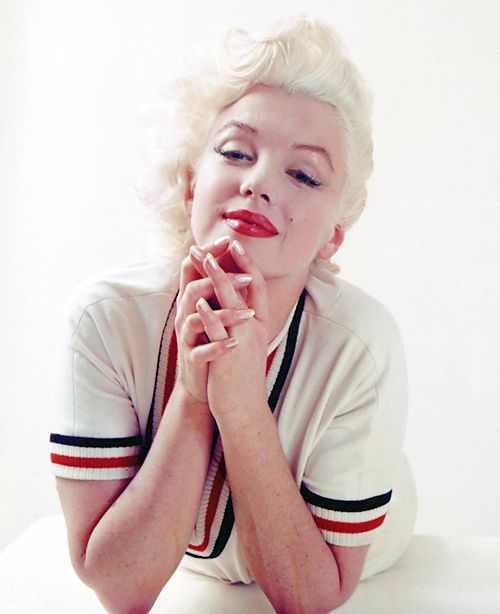
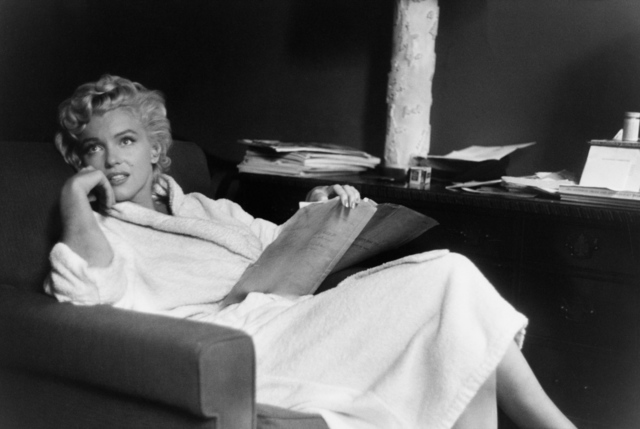
By 1959, Marilyn Monroe hadn't made a movie for her home studio, Twentieth Century-Fox, since the release of
Bus Stop in 1956. The studio was insistent that she live up to the contract, and assigned her a lead role in a movie tentatively called
The Billionaire. The story would concern, as the title suggests, a billionaire businessman who ends up playing himself in an off-Broadway satirical play and ends up falling for the play's lead actress, played by Monroe. In the earliest stages, the male lead, eventually known as Jean-Marc Clément, was touted for Gregory Peck. The notion was that, since the movie would be a musical comedy, the humor would be derived from the leading man's lack of skill in the musical aspects of the story. That's why the producers wanted an actor whose forte wasn't musicals.
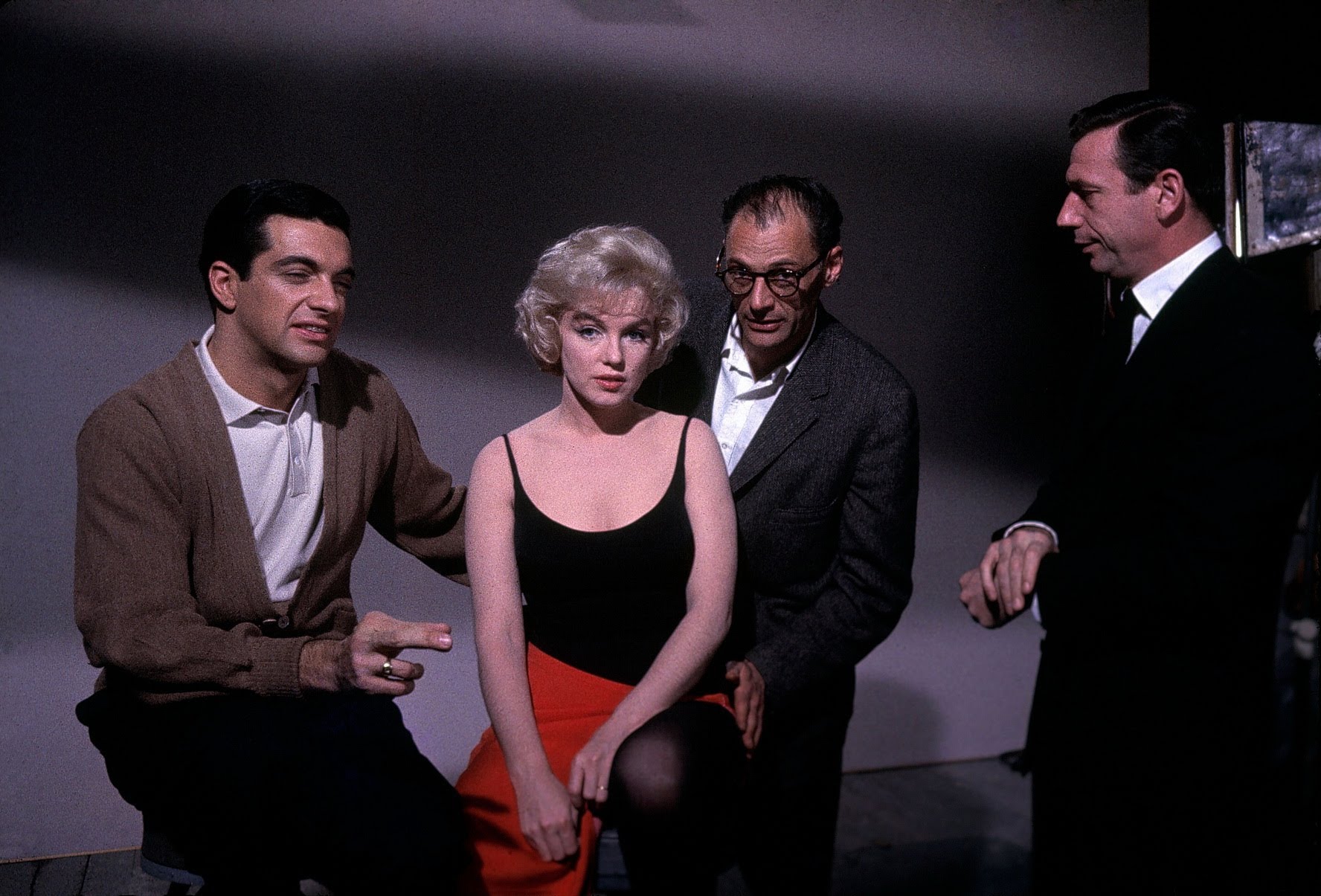
Right off the bat, Monroe had issues with the script, which she considered weak. Her husband, playwright Arthur Miller, was approved by Fox to commit a series of rewrites, particularly to shift emphasis to Monroe's character. Marilyn was also successful in having the film's title changed to
Let's Make Love. After Miller's rewrite and the title change, Gregory Peck bowed out of the production. The studio then leaned toward James Stewart or Gary Cooper, but both declined. The host of contenders for the male lead eventually included Rock Hudson, Charlton Heston, and Cary Grant, but for reasons I can't determine, they all ended up passing on the part. Eventually, Fox presented Monroe with French actor Yves Montand, and she quickly approved of his casting.
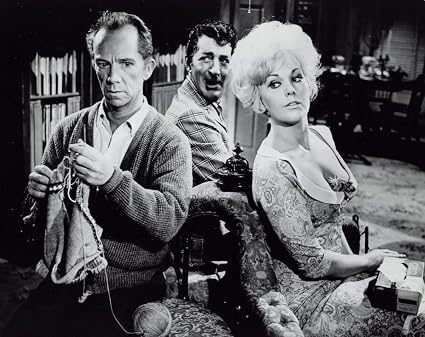
Let's Make Love began filming in early 1960. The story was eventually tweaked, particularly during Miller's rewrite to shift greater emphasis to Monroe's on-screen Amanda Dell, while further adjustments were made upon Montand's hiring. To round out some edges, Tony Randall and English singer Frankie Vaughn played supporting roles, while Milton Berle, Gene Kelly, and Bing Crosby pop up in uncredited cameo roles. Marilyn has a delightful opening number, "My Heart Belongs to Daddy", in which she swirls down a stripper-like pole. She knocks it out of the ballpark, to say the least. There are a few other decent musical numbers, but the majority of the movie is stuck in a mistaken identity fiasco, a tactic I'm sure was fueled by the success of
Pillow Talk the year prior.
Overall, the film in its entirety falls rather flat. The acting is dry, and the story itself feels weak. I find myself thinking, "Wait, didn't they rewrite this? And this is still what they came up with?" The writing, and the lighting for that matter, is bland. I get the feeling, though, that Fox and the movie's producers were pushing for a more bleak early sixties beatnik-style, but it doesn't work here. All the comedy bits, and that term is used quite loosely, fall short of expectations, and I leave this movie wondering what could have been had Monroe been given a better co-star. I guess we will never know that one.
Behind the camera, rumors flew of a off-screen fling between Monroe and Montand. Apparently the duo were caught spending some time alone while both of their spouses were out of town.
Let's Make Love came out in September 1960, receiving mixed reviews and moderate box office success. Despite its reputation as a flop, the film actually generated a profit, leading many to consider it a hit. Either way, Monroe was never a fan of the outcome. In her final interview, given just weeks before she passed, she said that her part in
Let's Make Love was the worst of her career. She complained that there were major faults with the script, and that her part was only tacked on to fulfill her Fox contract.
At the end of the day, I don't really know if I'd recommend
Let's Make Love or not. It's certainly not one I'd suggest to a new Marilyn Monroe fan, although fans of oddball musical comedies might find something to gleam at in different bits.
Your thoughts?