
You are using an out of date browser. It may not display this or other websites correctly.
You should upgrade or use an alternative browser.
You should upgrade or use an alternative browser.



- Awards
- 44
Five and a half decades later... I'm discovering MTM for the very first time. Beginning last night with the three opening episodes.
Season One
Love Is All Around / Today I Am A Ma’am / Bess, You Is My Daughter Now
It's such a renowned series I’m aware it exists. I’ve heard and seen some pop culture references (Romy and Michele’s argument over which of them is the Mary and which the Rhoda; pastiches of the opening credits on Family Guy…). I know some of the characters’ names and faces, and I know about the three spinoffs (Lou Grant being the most familiar of all four series. I have a feeling it may have aired in the UK whereas I don’t recall ever being aware of the others transmitting here… including MTM itself). And I know Betty White plays Sue Ann Nivens who I believe is some kind of man-hungry nymph hiding behind a Betty Crocker image.
Some of the cast are familiar from other things. I watched Valerie Harper’s eponymous Eighties sitcom. Cloris Leachman I only know from her turn as Hippolyta in The New, Original Wonder Woman, where she dialled up the ham (literally chewing on her own hand at one point). Probably best-known to me is Ed Asner, and the good news is I’ve yet to see a role of his in which I didn’t love him. I know him best from The Trials Of Rosie O’Neill and Spider-Man TAS, in both of which he played the same gruff, blustery boss role as he does in MTM. Of course he was also terrific in Up!, and I finally watched JFK a year or two ago and he was delightfully unlikeable in that.
Beyond that, most of the cast are unknown to me. And that includes MTM herself who I know by sight, but don’t recall actually watching anything in which she starred. I have, of course, watched numerous productions from her company… including the aforementioned Rosie O’Neill.
From what I’ve seen so far, everything works incredibly well in terms of on-screen chemistry. Even Bess is well-cast which is great news for someone who has a very low tolerance when it comes to cutesy kids in series. Everyone feels fully formed right from the start, and there are some winning deliveries of great lines.
James L. Brooks is also a familiar name. Beyond The Simpsons I most strongly associate him with As Good As It Gets where he was responsible for some of its most memorable moments. I’m already seeing hints of this style in the lines here which are easy to identify with.
The tone of the series has already won me over. Not only is the entire cast great, but it just feels so accessible. I already feel very much connected to this cosy little world and it’s a place I not only want to visit but need to continue visiting. Sixteen hours ago I’d never experienced it and already I’d miss it if it wasn’t around. I can’t even begin to say how unusual this is for someone with whom series often take a while to settle in.
That apartment set with its painted wood panelling (every time I see that colour I think of Farrow & Ball’s Mizzle) is absolutely beautiful, and I could actually live in a place with this decor and change very little (apart from perhaps the shag carpet). I can’t think of another series of this era where I’ve said that before. I’ve just finished Maude and while I found the earth tones comforting I know if I moved into a house with that decor there would be a serious overhaul. Following on from a discussion in the Maude thread, by the way, I see Mary’s apartment has the obligatory swing door to the kitchen.
As far as eras go, it feels like MTM has the best of several worlds. Some of the styling, as mentioned, feels contemporary, and it certainly has the Seventies sense of progressiveness despite its lack of garishness. At the same time, there’s also something of the Sixties Mod about Mary herself. I’m reminded of Barbara Feldon, Pat Morrow or Yvonne Craig.
I’m a little unclear as to the title of the series. Onscreen it’s only Mary Tyler Moore, but it seems to be universally - and officially - known as The Mary Tyler Moore Show. I don’t suppose it matters hugely, since I’m going to end up just calling it MTM, but it’s still a matter of curiosity for me.
As is probably clear, I’m already a little in love with this series. I don’t know where it goes or how it all ends, and I won't be reading through the rest of this thread yet just in case there are huge spoilers (even though I suspect it may not be that kind of series). At this point I’m just going to enjoy the journey. It’s great to finally be on board.
Season One
Love Is All Around / Today I Am A Ma’am / Bess, You Is My Daughter Now
It's such a renowned series I’m aware it exists. I’ve heard and seen some pop culture references (Romy and Michele’s argument over which of them is the Mary and which the Rhoda; pastiches of the opening credits on Family Guy…). I know some of the characters’ names and faces, and I know about the three spinoffs (Lou Grant being the most familiar of all four series. I have a feeling it may have aired in the UK whereas I don’t recall ever being aware of the others transmitting here… including MTM itself). And I know Betty White plays Sue Ann Nivens who I believe is some kind of man-hungry nymph hiding behind a Betty Crocker image.
Some of the cast are familiar from other things. I watched Valerie Harper’s eponymous Eighties sitcom. Cloris Leachman I only know from her turn as Hippolyta in The New, Original Wonder Woman, where she dialled up the ham (literally chewing on her own hand at one point). Probably best-known to me is Ed Asner, and the good news is I’ve yet to see a role of his in which I didn’t love him. I know him best from The Trials Of Rosie O’Neill and Spider-Man TAS, in both of which he played the same gruff, blustery boss role as he does in MTM. Of course he was also terrific in Up!, and I finally watched JFK a year or two ago and he was delightfully unlikeable in that.
Beyond that, most of the cast are unknown to me. And that includes MTM herself who I know by sight, but don’t recall actually watching anything in which she starred. I have, of course, watched numerous productions from her company… including the aforementioned Rosie O’Neill.
From what I’ve seen so far, everything works incredibly well in terms of on-screen chemistry. Even Bess is well-cast which is great news for someone who has a very low tolerance when it comes to cutesy kids in series. Everyone feels fully formed right from the start, and there are some winning deliveries of great lines.
James L. Brooks is also a familiar name. Beyond The Simpsons I most strongly associate him with As Good As It Gets where he was responsible for some of its most memorable moments. I’m already seeing hints of this style in the lines here which are easy to identify with.
The tone of the series has already won me over. Not only is the entire cast great, but it just feels so accessible. I already feel very much connected to this cosy little world and it’s a place I not only want to visit but need to continue visiting. Sixteen hours ago I’d never experienced it and already I’d miss it if it wasn’t around. I can’t even begin to say how unusual this is for someone with whom series often take a while to settle in.
That apartment set with its painted wood panelling (every time I see that colour I think of Farrow & Ball’s Mizzle) is absolutely beautiful, and I could actually live in a place with this decor and change very little (apart from perhaps the shag carpet). I can’t think of another series of this era where I’ve said that before. I’ve just finished Maude and while I found the earth tones comforting I know if I moved into a house with that decor there would be a serious overhaul. Following on from a discussion in the Maude thread, by the way, I see Mary’s apartment has the obligatory swing door to the kitchen.
As far as eras go, it feels like MTM has the best of several worlds. Some of the styling, as mentioned, feels contemporary, and it certainly has the Seventies sense of progressiveness despite its lack of garishness. At the same time, there’s also something of the Sixties Mod about Mary herself. I’m reminded of Barbara Feldon, Pat Morrow or Yvonne Craig.
I’m a little unclear as to the title of the series. Onscreen it’s only Mary Tyler Moore, but it seems to be universally - and officially - known as The Mary Tyler Moore Show. I don’t suppose it matters hugely, since I’m going to end up just calling it MTM, but it’s still a matter of curiosity for me.
As is probably clear, I’m already a little in love with this series. I don’t know where it goes or how it all ends, and I won't be reading through the rest of this thread yet just in case there are huge spoilers (even though I suspect it may not be that kind of series). At this point I’m just going to enjoy the journey. It’s great to finally be on board.
- Awards
- 44


- Awards
- 21
As far as eras go, it feels like MTM has the best of several worlds. Some of the styling, as mentioned, feels contemporary, and it certainly has the Seventies sense of progressiveness despite its lack of garishness. At the same time, there’s also something of the Sixties Mod about Mary herself
The cusp of the '60s/'70s had an organic-ky heartbroken flavor to the world, and that manifest itself in a lot of montage-y things that were terribly evocative and nakedly poignant (think the silent snow angels sequence in LOVE STORY and the entire HAROLD & MAUDE film, as well as the first season opening theme design and orchestration for MTM).
Mary has a quality, as does the show around her, that taps into that melancholy vibe as much as any TV series did at the time (although there were ubiquitous symptoms of it all around back then). The first season feels the most that way.
That first year is a wee bit "loud" (everybody speaks like it's still a stage-y sitcom or variety show from the '60s) but that adjust quickly by the second season, and the humor becomes more sophisticated (they stop getting jokes out of just Ted mis-pronouncing proper names -- although, of course, he still does it).
MTM develops as nicely as any show ever does, changes to some degree as it goes on (as indeed it does) and it never slides. It's good to the end. Betty White starts popping up here-and-there in the fourth season before becoming a regular.
In the States, it's generally regarded as perhaps the best sitcom of its decade, back in an era where character-based comedies series -- good ones -- were unusual, and not the assembly-lined "clever" genre it became by the late-'80s and beyond.
Be forewarned, however: there is a minority of people who utterly despise THE MARY TYLER MOORE SHOW -- and let's just say they tend to drink a lot of black coffee.
I’m a little unclear as to the title of the series. Onscreen it’s only Mary Tyler Moore, but it seems to be universally - and officially - known as The Mary Tyler Moore Show. I don’t suppose it matters hugely, since I’m going to end up just calling it MTM, but it’s still a matter of curiosity for me.
It's called both, really. But Mary once said in an interview that they left off the THE and the SHOW because "it seemed cozier."
I've seen that. I never picture a big window behind the camera, and I envision Mary's potty room as being round and in that turret.



- Awards
- 9
The tone of the series has already won me over. Not only is the entire cast great, but it just feels so accessible. I already feel very much connected to this cosy little world and it’s a place I not only want to visit but need to continue visiting. Sixteen hours ago I’d never experienced it and already I’d miss it if it wasn’t around.
@Snarky Oracle! has beautifully expanded on both the show's vibe and how it perfectly fit the era, but cozy is a perfect descriptor. MTM is a wonderful series from beginning to end, but I find the feel and atmosphere of the early seasons to be somewhat magical: somehow autumnal with a hint of melancholy, but also very comfortable and snug.
That apartment set with its painted wood panelling (every time I see that colour I think of Farrow & Ball’s Mizzle) is absolutely beautiful, and I could actually live in a place with this decor and change very little (apart from perhaps the shag carpet). I can’t think of another series of this era where I’ve said that before.
Yes, the apartment is a very important component of the series' success; it grounds the series in a firm sense of time and place. Too many shows feel like what they are -- actors on a set. Both of MTM's main set pieces feel real and alive, but particularly the apartment.
I’m a little unclear as to the title of the series. Onscreen it’s only Mary Tyler Moore, but it seems to be universally - and officially - known as The Mary Tyler Moore Show.
Noting that you are deliberately not reading through the rest of the thread, there was a robust discussion about this some pages back. Officially the show is titled MARY TYLER MOORE but verbally it is usually referred to as THE MARY TYLER MOORE SHOW. Presumably this is to distinguish between show and actress. Easy enough to differentiate between MARY TYLER MOORE and Mary Tyler Moore in print, but not when speaking.
- Awards
- 9
back in an era where character-based comedies series -- good ones -- were unusual
Worth expanding on a bit, as presumably @Mel O'Drama doesn't have a deep familiarity with American sitcoms.
By the tail end of the Sixties, American sitcoms were a desolate wasteland of stale, loud, garish shows that were completely disconnected from any sense of reality. In 1970, two shows came along that breathed new life into the genre: ALL IN THE FAMILY and MARY TYLER MOORE. If AITF was loudly revolutionary, MTM was quietly revolutionary -- and all the more effective because of it.
Last edited:
- Awards
- 21
They didn't forget Bess.
Yet they fail to bus in Gordy.
- Awards
- 44
Mary has a quality, as does the show around her, that taps into that melancholy vibe as much as any TV series did at the time
I find the feel and atmosphere of the early seasons to be somewhat magical: somehow autumnal with a hint of melancholy, but also very comfortable and snug.
I think these qualities are captured really well in the opening titles. The jaunty music and occasionally dizzying zooms and fast cuts (very of their time) are offset by the visuals: hazy walks in the snow with skeletal trees and sunsets. The song's lyrics and Mary's smile are hopeful, but there's no mistaking that melancholy.
MTM develops as nicely as any show ever does, changes to some degree as it goes on (as indeed it does) and it never slides. It's good to the end.
With several key characters being spun-off to their own series, I'd feared the main series might be negatively impacted, so this is really good to know.
Be forewarned, however: there is a minority of people who utterly despise THE MARY TYLER MOORE SHOW -- and let's just say they tend to drink a lot of black coffee.
Intriguing.
Mary once said in an interview that they left off the THE and the SHOW because "it seemed cozier."
Presumably this is to distinguish between show and actress. Easy enough to differentiate between MARY TYLER MOORE and Mary Tyler Moore in print, but not when speaking.
Thanks for the clarification both. It's helped make sense of it to me.
there was a robust discussion about this some pages back.
I'm looking forward to catching up on the previous pages in due course.
In 1970, two shows came along that breathed new life into the genre: ALL IN THE FAMILY and MARY TYLER MOORE. If AITF was loudly revolutionary, MTM was quietly revolutionary -- and all the more effective because of it.
Thanks for the context. As you know, I'm a little familiar with AITF, partly because I watched the two Maude-adjacent episodes before watching that series, but mainly due to AITF being a remake of a British series which I'd seen occasionally but actively watched for the first time at the start of this year.
Now I find myself trying - and failing - to decide if a similar revolution was happening with British sitcoms around this time. Certainly, Till Death Us Do Part (AITF's antecedent) stirred things up in the mid to late Sixties, but I really can't think of a British series that would be analogous with MTM.
- Awards
- 9
if a similar revolution was happening with British sitcoms around this time
Before my time, so I don't know how aware contemporaneous audiences were of the entertainment upheavals they were witnessing. Certainly I think AITF's impact was hardly subtle. In '69, American TV comedies were pablum. AITF had to feel like a full frontal assault, even if couched in domestic sitcom coziness. MTM's impact was more subtle and so perhaps only fully apparent in retrospect how it had one foot in the past and one in the future.
Mary's success with her eponymous series didn't exist in a vacuum; she was well known to American TV audiences by way of her co-starring role on THE DICK VAN DYKE SHOW the previous decade. If MTM was the sitcom masterpiece of the 70s, DVD was its 60s counterpart. On DVD, Mary was the lead actor's spouse, an unusually sexy housewife named Laura Petrie. Laurie's comedic image was heavily inspired by Lucy Ricardo (Lucille Ball), the star of the best sitcom of the 50s, I LOVE LUCY. And so, when Mary Richards struck out to make it on her own she carried with her two decades of audience familiarity; early Mary Richards feels very much like Laurie Petrie after leaving her clumsy husband in the suburbs. In fact, Mary was originally meant to be a divorcee but network execs feared audiences would think Laurie had left Rob. But Mary Richards is also symbolic (reluctantly on the part of the actress) of the second wave feminism that was in full bloom and an absolutely vital step in the development of women in sitcoms.
- Awards
- 44
she was well known to American TV audiences by way of her co-starring role on THE DICK VAN DYKE SHOW the previous decade.
And so, when Mary Richards struck out to make it on her own she carried with her two decades of audience familiarity
One of the things I wondered about as I watched last night was MTM's background before the series. The fact that MTM Enterprises produced the series strongly suggests she was experienced, knowledgeable and business minded at this point which feels impressive (and I'm more impressed reading your comment that she was reluctant for her character to be symbolic of the feminist movement).
Now you mention it I somehow sort of knew about her being on The Dick Van Dyke Show, but apparently it was stored away too well in some compartment at the back of my mind.
- Awards
- 21
Before my time, so I don't know how aware contemporaneous audiences were of the entertainment upheavals they were witnessing. Certainly I think AITF's impact was hardly subtle. In '69, American TV comedies were pablum. AITF had to feel like a full frontal assault, even if couched in domestic sitcom coziness. MTM's impact was more subtle and so perhaps only fully apparent in retrospect how it had one foot in the past and one in the future.
Sadly, it's not before my time. Yes, American TV in the late-'60s was bending over backwards to not reflect the topicality going on in the culture at the time -- the only reflection of it was the clothes and, sometimes, the music. The sitcoms were uber-repetitive goofy things like I DREAM OF JEANNIE and the rural shows.
AITF was a wildly impactful show when it premiered in February 1971, just five months after MTM. It was so loudly important a show that AITF became the top program of the decade, ranking at #1 for five consecutive years, helping kick off an era in which the TV sitcom genre became a literal agent of social change.
MTM's ratings, although quite good, were not quite as stratospheric as those of AITF (well, no one's were) but Mary's show was very well appreciated even at the time -- a quieter yet impossible to ignore artifact of the period which received more Emmy nominations (and more Emmy wins) than any other program in television history up until that time ... a record which wouldn't be surpassed for decades when such triumphs would seem somehow easier to achieve by less-distinct material.
Even AITF's successes with the critics, impressed with the in-your-face-politics and Nielsen ratings, would be usurped by MTM with its more low-key creative energy and freshness.
Also, both shows were aired on the same day and became the anchors for CBS' near-legendary Saturday night line-up from the early-'70s: ALL IN THE FAMILY, (M*A*S*H, for a while), MARY TYLER MOORE, THE BOB NEWHART SHOW and THE CAROL BURNETT SHOW.
Mary's success with her eponymous series didn't exist in a vacuum; she was well known to American TV audiences by way of her co-starring role on THE DICK VAN DYKE SHOW the previous decade. If MTM was the sitcom masterpiece of the 70s, DVD was its 60s counterpart. On DVD, Mary was the lead actor's spouse, an unusually sexy housewife named Laura Petrie. Laurie's comedic image was heavily inspired by Lucy Ricardo (Lucille Ball), the star of the best sitcom of the 50s, I LOVE LUCY. And so, when Mary Richards struck out to make it on her own she carried with her two decades of audience familiarity; early Mary Richards feels very much like Laurie Petrie after leaving her clumsy husband in the suburbs. In fact, Mary was originally meant to be a divorcee but network execs feared audiences would think Laurie had left Rob. But Mary Richards is also symbolic (reluctantly on the part of the actress) of the second wave feminism that was in full bloom and an absolutely vital step in the development of women in sitcoms
Yes, Mary was the female lead in the two most-respected sitcoms from two consecutive decades, winning a slew of personal Emmys for both -- and in the fifth and final season of TDVDS, Laura Petrie seems to be rockin' some serious early-Mary Richards.
The gentle feminism of the MTM show was, as you say, probably more effective because it didn't seem to have an axe to grind (unlike AITF and, twenty years later, MURPHY BROWN). Mary Richards would gradually discover certain gender-based incongruities in the workplace as time went on -- which caused those discoveries to resonate with audiences more lastingly than the "I'm-going-to-teach-you-worthless-bastards-how-to-produce-the-goddamned-news!" approach Candace Bergen's series (and others) did later. (Not that I dislike MURPHY BROWN all that much, but all the comic obnoxiousness gets a bit tired pretty quickly).
It's similar to the effect that the now-forgotten POLICE WOMAN with Angie Dickinson had -- a show the feminists hated -- which drove an entire generation of women into law enforcement largely because the lead was an affable lady who didn't seem to hate her male co-workers (like later shows, where they did). Angie made it all seem accessible, and so did Mary Richards. (There was, for those who are zodiacally receptive, the similar dynamic of the overly-tough Scorpio Rising male boss -- Ed Asner and Earl Holliman -- so contemptuous-yet-admiring of the vulnerable, melancholy Aries Rising female underling -- Mary and Angie). But despite its influence in hiring at the police departments, the activist feminists were somewhat successful in pulling down Angie's show, and the quality began stumbling quickly. So it's not revered in the way CAGNEY & LACEY (a good show, and one the feminists adored) was a few years later.
Mary was more liberal back then (before she slipped into her Jon Voight-esque old-person conservative shift rightward) and asserted that the activists' atrocious behavior at protests for the ERA (Equal Rights Amendment) had a lot to do with why the measure failed -- and Mary was at some of those protests, witnessing the misbehavior.
Her creator/producers were James L. Brooks and Allen Burns (who Mary's second husband, Grant Tinker, cleverly put together to make a show for his wife, a show that would lead to the creation of MTM Enterprises, a small, chic production company run by Grant and Mary through the '80s, although Mary admitted she didn't enjoy running a business and stayed in the background despite the company acronym that bore her initials). Brooks & Burns cheekily admitted they "exploited for our own profit" second wave feminism in their development of Mary's show, but they had no brittle agenda in doing so. Nor did Mary.
Decades later, Mary Tyler Moore would criticize Gloria Steinem's anti-mother rhetoric as "dead wrong."
1971: Doris and Mary and Angie, oh my!

Last edited:

- Awards
- 20
I recall a contemporaneous interview in which Moore discussed her wardrobe, saying it was chosen to be timeless rather than stylish (my wording) with an eye to future reruns.As far as eras go, it feels like MTM has the best of several worlds. Some of the styling, as mentioned, feels contemporary, and it certainly has the Seventies sense of progressiveness despite its lack of garishness. At the same time, there’s also something of the Sixties Mod about Mary herself. I’m reminded of Barbara Feldon, Pat Morrow or Yvonne Craig.
That discrepancy was a puzzle even at the time.I’m a little unclear as to the title of the series. Onscreen it’s only Mary Tyler Moore, but it seems to be universally - and officially - known as The Mary Tyler Moore Show. I don’t suppose it matters hugely, since I’m going to end up just calling it MTM, but it’s still a matter of curiosity for me.
to the extant that not one but two reviewers of Rhoda thought they would be clever and called it a "spin-off of a spin-off" because they thought that MTM was a spin-off of DVD. (Oddly, none recognised Good Times - which started at about the same time - as an actual "spin-off of a spin-off", being from All in the Family via Maude.)when Mary Richards struck out to make it on her own she carried with her two decades of audience familiarity;
- Awards
- 9
One of the things I wondered about as I watched last night was MTM's background before the series. The fact that MTM Enterprises produced the series strongly suggests she was experienced, knowledgeable and business minded at this point which feels impressive (and I'm more impressed reading your comment that she was reluctant for her character to be symbolic of the feminist movement).
Should you find yourself interested in Mary, her career, and the background of how Mary Richards came to be, last year's documentary was interesting and informative.
It does delve into Mary's ambivalence about her symbolic role of 1970s feminism.
Yes, Mary was the female lead in the two most-respected sitcoms from two consecutive decades, winning a slew of personal Emmys for both -- and in the fifth and final season of TDVDS, Laura Petrie seems to be rockin' some serious early-Mary Richards.
And of course, Mary learned a lot from her time on DVD and applied those lessons to her own show. MTM lacks the slapsticky comedy of DVD, but otherwise they are structurally and comedically quite similar. It's always a bit surprising to me that Mary resisted what must have been an obvious temptation: guest appearances from her DVD cohorts. Only Jerry van Dyke shows up, and his role in both shows was fairly minor. Also Jerry Paris directed a few episodes, so maybe Mary just liked men named Jerry.
- Awards
- 9
As I did for MAUDE, here are the articles related to MTM from the 1987 book TV SIRENS.
MARY TYLER MOORE
The most coolly accomplished comedienne in TV history, Mary Tyler Moore went from a disembodied pair of legs on RICHARD DIAMOND, PRIVATE EYE to an impossibly sexy housewife on THE DICK VAN DYKE SHOW to a career girl determined to make it on her own on THE MARY TYLER MOORE SHOW. That she made it so big is a testament to her own sensibility. With hubby Grant, Mary forged an image that paralleled the aspirations of a generation of women. She's a bourgeois lady who wants the good life without being dependent on a man. A semi-stylish product of Doris Day comedies, Cosmopolitan magazine, and Bloomingdale's catalogs, Mary's Mary Richards seeks power from a position of powerlessness. Though an associate producer at a TV station, she performs secretarial duties and can't bring herself to call her boss by his first name. The key to her personality is when Mr. Grant asks her if she's "been around". Whimpers Mary: "I've been nearby." She's Mrs. Pynchon without the maturity, breeding, or a rich, dead husband. But she is, after all, making it on her own. When the real Mary decided to do the same, she left her series, divorced Grant, and became a dramatic actress on TV (FIRST, YOU CRY), on Broadway (WHOSE LIFE IS IT, ANYWAY?) and onscreen (ORDINDARY PEOPLE). Stripping away the artifice of her comedic image, Mary showed us the death mask underneath. But she was either a spirited victim of a disease or a pitiable sacrifice to family unity. Her performance in PEOPLE was scathingly exact, but it also endorsed the antifeminist bias against her character. Here was a wife and mother who kept a perfect house for twenty years, and all she got in return were two weepy nerds in crewneck sweaters harassing her for not "loving" them (if the movie had had any guts, it would've ended with the father and son trying to figure out how to work the washing machine). Yes, Mary dared to expose the darker side of the [Tinker] Tootsie -- the control freak terrified of affection -- but she had more independence as Mary Richards, who at least got to keep what she earned (even Laura Petrie got to stay in suburbia with her breast-beating husband and son). In more recent roles, Mary has watched others meet grisly fates: her little daughter in SIX WEEKS, James Garner in HEARTSOUNDS, Ted Danson in JUST BETWEEN FRIENDS. But she's denying herself the full power of the Tootsie's dramatic flip side -- the malicious drive of the prissy wit. In her latest sitcom, MARY, she added bitchiness to her old format -- Mary "grows up". But the show pretended to a light-spiritedness it didn't really feel. Its mustiness was underscored by ALL THAT IS FORGIVEN, a sparkling sitcom whose opening credits were more evocative of MTM than was all of MARY. The show's star, Bess Armstrong, was a delicious update of Mary Richards, partly because she was age appropriate for a struggling career girl. But America wants Mary to stay its sweetheart forever (MARY's being revamped to meet this demand). While her fans wallow in nostalgia, Mary approaches fifty. But the irony is that Mary's never been a sweetheart -- like Doris Day, she's an edgy diva. Basically, Mary botched her comeback. She shouldn't taken advantage of the family sitcom craze by staring as a PEOPLE-type mom who makes life hell for her snotty teenaged kids. It would've merged the Mary we love (MTM) and the Mary we respect (PEOPLE) into a Tootsie for tomorrow. But as the Real Mary becomes dwarfed by the Legendary Mary, she may never take the advice of another legendary survivor: Don't Look Back.
VALERIE HARPER
Until recently, Valerie Harper was the saddest casualty of California psychobabble: a gifted comedienne who'd lost her sense of humor. As Rhoda Morgenstern on THE MARY TYLER MOORE SHOW, and in her own spinoff, RHODA, Harper endeared herself to an ethnically diverse nation by embodying its best traits. Unpretentious, down-to-earth, self-deprecating, Harper proved a social point leavened by wit: it's the sass of the proletariat -- not the nuclear family -- that's the backbone of America. She won the hearts of women, who identified with her physical insecurity, and seized the affection of men, who responded to her dead-on sarcasm. But after RHODA left the air, Harper zealously set out to separate herself from her character. A fanatical est graduate, she recited pop-therapeutic buzzwords, robotlike, in interviews. Taking "responsibility" for her own life, she slimmed down, dumped her husband of thirteen years, and sought supporting roles in movies. To prepare for her part in CHAPTER TWO she worked with physical trainer Tony Cacciotti (who now shares her private life as well as her production company). Her near-anorexic appearances prompted critics to inquire about her health. Gaining a few pounds, Harper continued to polish her image as a concerned actress in high-minded TV movies: THE SHADOW BOX (cancer patients), FUN AND GAMES (sexual harassment), THE EXECUTION (Holocaust survivors). But in early 1986, Harper bounced back in VALERIE, a conspicuously minor sitcom that's also likeable and extremely smart. Its appeal rests on Harper's bullheadedness in the face of teenage smugness, embodied by the wonderful young actor Jason Bateman. It seems Harper's pulled off a miracle: she's merged the two Valeries in a way even Rhoda might like.
CLORIS LEACHMEN
An actress's actress, Cloris Leachman is an Oscar-winner (THE LAST PICTURE SHOW), a cult-movie star (KISS ME DEADLY), a PHILCO PLAYHOUSE heroine ("Nocturne"), a song-and-dance girl (CHER), a Mel Brooks stock player (YOUNG FRANKENSTEIN), and a Miss America runner-up (1946). It's this dizzying variety that allowed Leachman to bring such detail to her acid portrait of Phyllis Lindstrom on THE MARY TYLER MOORE SHOW and its spinoff, PHYLLIS. If her own show failed to match the glittering heights of her appearances with Mary, it's because Leachman's talent is the most concentrated of all Tinker Tootsies: she never forgot an effect she ever achieved. Like the immortal Mildred Natwick, Leachman is best in small doses -- her every gesture carries with the history of the theater. Perhaps Leachman played Phyllis so knowingly because there's a lot of Phyllis in Leachman. Self-dramatizing, self-centered, and self-consciously colorful, Leachman is continually asserting her dominance over more sensible characters. When Mary complains about the loneliness of her life, Leachman snaps, "You don't know what loneliness is till you get into bed with Lars." When Leachman, freshly widowed, appears at the top of the stairs in a flaming red gown in the first episode of PHYLLIS, a character cracks, "Why do I feel like we should be singing 'Hello Dolly!'?" It's this utter self-possession that makes Leachman such a great Tootsie. She brings dramatic density to punchlines and comic timing to kitchen-sink realism. An incurable ham, she's as indispensable as she as incorrigible.
BETTY WHITE
If Lucille Ball is the Queen of Television, Betty White is its Princess. In the '50s she starred in two sitcoms (LIFE WITH ELIZABETH, DATE WITH ANGELS), appeared as a regular on game shows (warming up for PASSWORD), and won and Emmy as the Most Outstanding Female Personality (Liberace won among men). But as the deliciously malicious Sue Ann Nivens on THE MARY TYLER MOORE SHOW (two more Emmys), White cashed in on a career of thankless chores. She got the role when MTM producers sent word out for a "Betty White type" until they realized they could get the real thing. A wit, a presence, a pro, Betty White has always been the real thing. When she sashayed into the set of MTM, she brought with her the history of TV. Every leer, every twinkle, every wisecrack was attuned to the dynamics of video. She knew how to fill the box with expressive effect. The shock of Sue Ann was a double-edged gag: White reflected the Happy Homemaker's squeaky-clean image -- when she talked dirty, it was as if Marie Osmond were picked up for soliciting. Whether commenting on Mary's chastity, Murray's baldness, or Lous' libido, White bullied her costars by natural right. If her own vehicle, THE BETTY WHITE SHOW, failed, it's a simple matter of too much of a good thing. White shines brightest among equally luminous stars. After MTM left the air, White supported Vicki Lawrence's tour de force on MOMMA'S FAMILY and won a fourth Emmy for the lame game show, JUST MEN! Her delightful metamorphosis as a dim-witted Harris Harridan on THE GOLDEN GIRLS shows she isn't content to play Sue Ann for the rest of her life. If she'd married Grant Tinker thirty years ago, she'd be running all three networks.
CGI video tour of Mary's apartment, including presumptions of what the bathroom and the fourth wall could have looked like.
@Mel O'Drama No spoilers exactly, but there are references to situations and gags.
MARY TYLER MOORE
The most coolly accomplished comedienne in TV history, Mary Tyler Moore went from a disembodied pair of legs on RICHARD DIAMOND, PRIVATE EYE to an impossibly sexy housewife on THE DICK VAN DYKE SHOW to a career girl determined to make it on her own on THE MARY TYLER MOORE SHOW. That she made it so big is a testament to her own sensibility. With hubby Grant, Mary forged an image that paralleled the aspirations of a generation of women. She's a bourgeois lady who wants the good life without being dependent on a man. A semi-stylish product of Doris Day comedies, Cosmopolitan magazine, and Bloomingdale's catalogs, Mary's Mary Richards seeks power from a position of powerlessness. Though an associate producer at a TV station, she performs secretarial duties and can't bring herself to call her boss by his first name. The key to her personality is when Mr. Grant asks her if she's "been around". Whimpers Mary: "I've been nearby." She's Mrs. Pynchon without the maturity, breeding, or a rich, dead husband. But she is, after all, making it on her own. When the real Mary decided to do the same, she left her series, divorced Grant, and became a dramatic actress on TV (FIRST, YOU CRY), on Broadway (WHOSE LIFE IS IT, ANYWAY?) and onscreen (ORDINDARY PEOPLE). Stripping away the artifice of her comedic image, Mary showed us the death mask underneath. But she was either a spirited victim of a disease or a pitiable sacrifice to family unity. Her performance in PEOPLE was scathingly exact, but it also endorsed the antifeminist bias against her character. Here was a wife and mother who kept a perfect house for twenty years, and all she got in return were two weepy nerds in crewneck sweaters harassing her for not "loving" them (if the movie had had any guts, it would've ended with the father and son trying to figure out how to work the washing machine). Yes, Mary dared to expose the darker side of the [Tinker] Tootsie -- the control freak terrified of affection -- but she had more independence as Mary Richards, who at least got to keep what she earned (even Laura Petrie got to stay in suburbia with her breast-beating husband and son). In more recent roles, Mary has watched others meet grisly fates: her little daughter in SIX WEEKS, James Garner in HEARTSOUNDS, Ted Danson in JUST BETWEEN FRIENDS. But she's denying herself the full power of the Tootsie's dramatic flip side -- the malicious drive of the prissy wit. In her latest sitcom, MARY, she added bitchiness to her old format -- Mary "grows up". But the show pretended to a light-spiritedness it didn't really feel. Its mustiness was underscored by ALL THAT IS FORGIVEN, a sparkling sitcom whose opening credits were more evocative of MTM than was all of MARY. The show's star, Bess Armstrong, was a delicious update of Mary Richards, partly because she was age appropriate for a struggling career girl. But America wants Mary to stay its sweetheart forever (MARY's being revamped to meet this demand). While her fans wallow in nostalgia, Mary approaches fifty. But the irony is that Mary's never been a sweetheart -- like Doris Day, she's an edgy diva. Basically, Mary botched her comeback. She shouldn't taken advantage of the family sitcom craze by staring as a PEOPLE-type mom who makes life hell for her snotty teenaged kids. It would've merged the Mary we love (MTM) and the Mary we respect (PEOPLE) into a Tootsie for tomorrow. But as the Real Mary becomes dwarfed by the Legendary Mary, she may never take the advice of another legendary survivor: Don't Look Back.
VALERIE HARPER
Until recently, Valerie Harper was the saddest casualty of California psychobabble: a gifted comedienne who'd lost her sense of humor. As Rhoda Morgenstern on THE MARY TYLER MOORE SHOW, and in her own spinoff, RHODA, Harper endeared herself to an ethnically diverse nation by embodying its best traits. Unpretentious, down-to-earth, self-deprecating, Harper proved a social point leavened by wit: it's the sass of the proletariat -- not the nuclear family -- that's the backbone of America. She won the hearts of women, who identified with her physical insecurity, and seized the affection of men, who responded to her dead-on sarcasm. But after RHODA left the air, Harper zealously set out to separate herself from her character. A fanatical est graduate, she recited pop-therapeutic buzzwords, robotlike, in interviews. Taking "responsibility" for her own life, she slimmed down, dumped her husband of thirteen years, and sought supporting roles in movies. To prepare for her part in CHAPTER TWO she worked with physical trainer Tony Cacciotti (who now shares her private life as well as her production company). Her near-anorexic appearances prompted critics to inquire about her health. Gaining a few pounds, Harper continued to polish her image as a concerned actress in high-minded TV movies: THE SHADOW BOX (cancer patients), FUN AND GAMES (sexual harassment), THE EXECUTION (Holocaust survivors). But in early 1986, Harper bounced back in VALERIE, a conspicuously minor sitcom that's also likeable and extremely smart. Its appeal rests on Harper's bullheadedness in the face of teenage smugness, embodied by the wonderful young actor Jason Bateman. It seems Harper's pulled off a miracle: she's merged the two Valeries in a way even Rhoda might like.
CLORIS LEACHMEN
An actress's actress, Cloris Leachman is an Oscar-winner (THE LAST PICTURE SHOW), a cult-movie star (KISS ME DEADLY), a PHILCO PLAYHOUSE heroine ("Nocturne"), a song-and-dance girl (CHER), a Mel Brooks stock player (YOUNG FRANKENSTEIN), and a Miss America runner-up (1946). It's this dizzying variety that allowed Leachman to bring such detail to her acid portrait of Phyllis Lindstrom on THE MARY TYLER MOORE SHOW and its spinoff, PHYLLIS. If her own show failed to match the glittering heights of her appearances with Mary, it's because Leachman's talent is the most concentrated of all Tinker Tootsies: she never forgot an effect she ever achieved. Like the immortal Mildred Natwick, Leachman is best in small doses -- her every gesture carries with the history of the theater. Perhaps Leachman played Phyllis so knowingly because there's a lot of Phyllis in Leachman. Self-dramatizing, self-centered, and self-consciously colorful, Leachman is continually asserting her dominance over more sensible characters. When Mary complains about the loneliness of her life, Leachman snaps, "You don't know what loneliness is till you get into bed with Lars." When Leachman, freshly widowed, appears at the top of the stairs in a flaming red gown in the first episode of PHYLLIS, a character cracks, "Why do I feel like we should be singing 'Hello Dolly!'?" It's this utter self-possession that makes Leachman such a great Tootsie. She brings dramatic density to punchlines and comic timing to kitchen-sink realism. An incurable ham, she's as indispensable as she as incorrigible.
BETTY WHITE
If Lucille Ball is the Queen of Television, Betty White is its Princess. In the '50s she starred in two sitcoms (LIFE WITH ELIZABETH, DATE WITH ANGELS), appeared as a regular on game shows (warming up for PASSWORD), and won and Emmy as the Most Outstanding Female Personality (Liberace won among men). But as the deliciously malicious Sue Ann Nivens on THE MARY TYLER MOORE SHOW (two more Emmys), White cashed in on a career of thankless chores. She got the role when MTM producers sent word out for a "Betty White type" until they realized they could get the real thing. A wit, a presence, a pro, Betty White has always been the real thing. When she sashayed into the set of MTM, she brought with her the history of TV. Every leer, every twinkle, every wisecrack was attuned to the dynamics of video. She knew how to fill the box with expressive effect. The shock of Sue Ann was a double-edged gag: White reflected the Happy Homemaker's squeaky-clean image -- when she talked dirty, it was as if Marie Osmond were picked up for soliciting. Whether commenting on Mary's chastity, Murray's baldness, or Lous' libido, White bullied her costars by natural right. If her own vehicle, THE BETTY WHITE SHOW, failed, it's a simple matter of too much of a good thing. White shines brightest among equally luminous stars. After MTM left the air, White supported Vicki Lawrence's tour de force on MOMMA'S FAMILY and won a fourth Emmy for the lame game show, JUST MEN! Her delightful metamorphosis as a dim-witted Harris Harridan on THE GOLDEN GIRLS shows she isn't content to play Sue Ann for the rest of her life. If she'd married Grant Tinker thirty years ago, she'd be running all three networks.
CGI video tour of Mary's apartment, including presumptions of what the bathroom and the fourth wall could have looked like.
@Mel O'Drama No spoilers exactly, but there are references to situations and gags.
- Awards
- 44
I recall a contemporaneous interview in which Moore discussed her wardrobe, saying it was chosen to be timeless rather than stylish (my wording) with an eye to future reruns.
Interesting. I'd say this applies to the apartment set as well, which feels much more restrained and elegant than your average TV set of this era.
Should you find yourself interested in Mary, her career, and the background of how Mary Richards came to be, last year's documentary was interesting and informative.
It does delve into Mary's ambivalence about her symbolic role of 1970s feminism.
This looks like it will really hit the spot for me. I'll probably save this for a "bonus feature" to watch when I wrap up the series.
As I did for MAUDE, here are the articles related to MTM from the 1987 book TV SIRENS.
Oh great.
But in early 1986, Harper bounced back in VALERIE, a conspicuously minor sitcom that's also likeable and extremely smart. Its appeal rests on Harper's bullheadedness in the face of teenage smugness, embodied by the wonderful young actor Jason Bateman. It seems Harper's pulled off a miracle: she's merged the two Valeries in a way even Rhoda might like.
Of course, this would have been published just as Valerie was getting fired from her own TV series, with the titular character killed off between seasons. Yet another low point to add to the litany already mentioned in her write-up.
Cloris Leachman is an Oscar-winner (THE LAST PICTURE SHOW), a cult-movie star (KISS ME DEADLY), a PHILCO PLAYHOUSE heroine ("Nocturne"), a song-and-dance girl (CHER), a Mel Brooks stock player (YOUNG FRANKENSTEIN), and a Miss America runner-up (1946).
As I've watched the first eight or nine episodes I've found myself wondering about Cloris's background. Episodes in which she appears always bill her as the Special Guest Star in the end titles, even usurping Nancy Walker into penultimate position (Nancy, I imagine, was quite a well-known face). Knowing next to nothing about Cloris I'd guessed she must have been a "name" even at this time. Either that or she had a very good agent.
Leachman is best in small doses -- her every gesture carries with the history of the theater. Perhaps Leachman played Phyllis so knowingly because there's a lot of Phyllis in Leachman. Self-dramatizing, self-centered, and self-consciously colorful
An incurable ham, she's as indispensable as she as incorrigible.
As previously mentioned, I knew Cloris only from her turn in The New, Original Wonder Woman where these affectations were present in spades. I had considered that this might have been a one-off and different from her usual style, but it appears scenery chewing is kind of her thing.
The shock of Sue Ann was a double-edged gag: White reflected the Happy Homemaker's squeaky-clean image -- when she talked dirty, it was as if Marie Osmond were picked up for soliciting.
I'm looking forward to meeting Sue Ann in due course. The description here sounds rather like Lake Placid where she was cast to play against type by deadpanning lines that nobody else could get away with.
- Awards
- 9
Of course, this would have been published just as Valerie was getting fired from her own TV series, with the titular character killed off between seasons. Yet another low point to add to the litany already mentioned in her write-up.
Yes, Valerie's post-Rhoda career ended up being a big disappointment. Just as she was finding renewed success with her self-titled sitcom, she was fired and quasi-blacklisted. She remained steadily employed for the rest of her career, but never again found any sustained success.
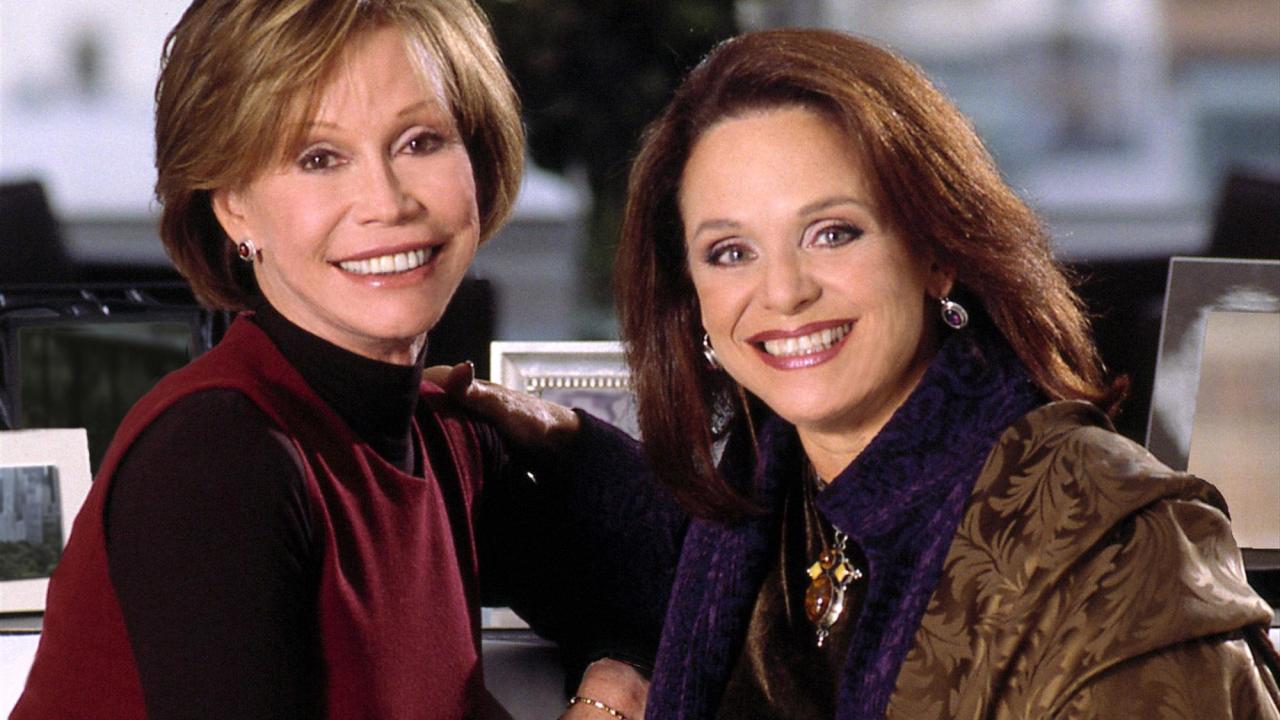
Mary and Valerie did reunite in a 2000 TV movie called MARY AND RHODA. Even if you should be able to find it, I suggest bypassing it. It's a poor piece of apocrypha that would end your MTM journey on a sour note.
Knowing next to nothing about Cloris I'd guessed she must have been a "name" even at this time. Either that or she had a very good agent.
Both, I suspect. I don't think Cloris was exactly a star in 1970; Mary was far more famous, but Cloris would have been very recognizable to American TV viewers going back to the dawn of television. Her fame grew significantly in the 70s, aided a lot by her appearances on MTM. Should you want to expand your post-MTM documentary viewing, here's a good one on Cloris.
Cloris was not a subtle actress, but WONDER WOMAN may be the one instance in which she was bad. Her performance there was a major miscalculation on what that show needed. She apparently thought she was appearing in the 1960s BATMAN.I knew Cloris only from her turn in The New, Original Wonder Woman where these affectations were present in spades.
Last edited:
- Awards
- 21
Yes, Valerie's post-Rhoda career ended up being a big disappointment. Just as she was finding renewed success with her self-titled sitcom, she was fired and quasi-blacklisted. She remained steadily employed for the rest of her career, but never again found any sustained success.
Yes, that was a seemingly vile situation. Harper had a clause in her contract that allowed her to negotiate a raise a year or two into the series. But Lorimar had been taken over by cheapy Telepictures and they tried to deny her that raise. (I'm sure there were other details).
It got nasty. But what was most notable was that after Harper won her suit over VALERIE, the brass had their publicists spin the story in the press -- largely successfully -- to make it sound like she lost.
Mary and Valerie did reunite in a 2000 TV movie called MARY AND RHODA. Even if you should be able to find it, I suggest bypassing it. It's a poor piece of apocrypha that would end your MTM journey on a sour note.
Another strange situation. ABC wanted a MARY & RHODA in the late-'90s and they actually shot several episodes. Mary, whose sitcoms standards are fairly high, thought the episodes were acceptable, but ABC wanted every episode to be as good as the best of THE MARY TYLER MOORE SHOW.
So they re-worked the project and started over with the MARY & RHODA movie. It was wrong-headed and wasn't good, but it did fairly well in the ratings and ABC was again up for a Moore-Harper series, but Mary was so disgusted with the byzantine development process they'd undergone with the network that she pulled away from it (although Valerie was still up for it).
Last edited:
- Awards
- 44
Just as she was finding renewed success with her self-titled sitcom, she was fired and quasi-blacklisted.
Harper had a clause in her contract that allowed her to negotiate a raise a year or two into the series. But Lorimar had been taken over by cheapy Telepictures and they tried to deny her that raise.
Back when this happened I remember being very curious about what had happened. In my youthful naïveté I thought it highly unusual for there to be anything but joy behind the scenes of a sitcom so this seemed particularly brutal.
With there being no search engines and me being in Britain where Valerie aired in the afternoons and went mostly under the radar of media gossip, I struggled to find out very much. There may have been a titbit in a paper here and there, but I think my main clue that something was wrong was a line in another sitcom when Sophia referenced Valerie's ousting on The Golden Girls.
It seems she got a very raw deal. I had no idea she had won her legal suit, but that must have been bittersweet when her character was dead and buried.
Mary and Valerie did reunite in a 2000 TV movie called MARY AND RHODA. Even if you should be able to find it, I suggest bypassing it. It's a poor piece of apocrypha that would end your MTM journey on a sour note.
I appreciate the warning and will trust your judgement on this one.
Should you want to expand your post-MTM documentary viewing, here's a good one on Cloris.
Thanks. I'll keep it on the back burner for later (but must confess I think I may struggle with that narration).
WONDER WOMAN may be the one instance in which she was bad. Her performance there was a major miscalculation on what that show needed. She apparently thought she was appearing in the 1960s BATMAN.
Yes, that's always been my impression as well. It's understandable considering hers was the very first episode, but also a little surprising that the intended tone wasn't transmitted either through script or direction.


- Awards
- 8
MTM's show had such a great supporting cast
Ted Knight (my favorite. The original choice for the role was Jack Cassidy.
I think Ted Knight was a better choice)
Ed Asner
Gavin McLeod
Valerie Harper
Chloris Leachman
John Amos
Betty White
Henry Winkler made a pre-Fonzie appearance
MTM was great as Laura Petrie, and she managed to surpass it as Mary Richards.
Ted Knight (my favorite. The original choice for the role was Jack Cassidy.
I think Ted Knight was a better choice)
Ed Asner
Gavin McLeod
Valerie Harper
Chloris Leachman
John Amos
Betty White
Henry Winkler made a pre-Fonzie appearance
MTM was great as Laura Petrie, and she managed to surpass it as Mary Richards.
- Awards
- 9
Ted Knight (my favorite. The original choice for the role was Jack Cassidy.
I think Ted Knight was a better choice)
True. Cassidy played a similar part in the single season sitcom HE & SHE (1967-68). I've never seen it, but from what I've read about it it seems to have been a failed attempt at what MTM later succeeded at -- continuing the spirit of THE DICK VAN DYKE SHOW. Cassidy was offered the role of Ted, but turned it down as being repetitious. When he turned up in the first season of MTM as Ted's brother, he proved why Knight was the better choice; he was funny enough playing dumb and egotistical, but had none of Knight's vulnerability that made Ted endearing.