Puzzles and Paradoxes

Hawkman

Telly Talk Dream Maker
LV
0
 
Awards
7
THE PARADOXICAL QUESTION

1 Markosian's Paradox ( paper author- Yunji Ellen Shi of the LSE)

In the paper The Paradox of the Question, Ned Markosian told the following story: during an international conference of leading philosophers, an angel miraculously appeared. The angel claimed to be the messenger from God and granted philosophers with an opportunity to ask one question and he would then answer it truthfully. Philosophers immediately started discussing what they should ask – they wanted to ask the best question to ask. Finally they agreed on the proposal from one young logician:

(Q1)1: What is the ordered pair whose first member is the question that would be the best one for us to ask you, and whose second member is the answer to that question?
(Markosian, 1997)
This indeed seems to be a very good question, for, by asking (Q1), we can ask the best question indirectly and receive its answer, without violating the angel’s rule to ask only one question. So, when the angel appeared again, philosophers presented (Q1) to the angel. The angel replied:

(A1) It is the ordered pair whose first member is the question you just asked me, and whose second member is this answer I am giving you.
Ibid., 96.
Then the angel disappeared, leaving philosophers in frustration. The philosophers asked a seemingly very good question but received an answer which is totally useless. Markosian asked: What went wrong? This is the original paradox of the question. I shall call it Markosian’s paradox, following Wasserman and Whitcomb’s terms of use (Wasserman & Whitcomb, 2011).


2. However, Markosian’s Paradox was shown to be ill-formulated by Theodore Sider (Sider, 1997). Sider showed that the angel is a cheater – on the one hand, (A1) is not a correct answer to (Q1). Because if it is, then (Q1) is indeed the best question to ask. And, as (A1) does not provide any useful information, (Q1) is a question whose answer is useless. A question with a useless answer can hardly be regarded as a good question. Then we arrive at a contradiction. Hence (A1) cannot be a correct answer to (Q1) – the angel did not answer the philosophers truthfully. On the other hand, (Q1) is not the best question to ask. For if it is, the answer to (Q1), whatever it may be, must take the form, "That Question, This Answer."

Answer( A) = ((Q1), A)
which is a useless answer. Hence (Q1) cannot be the best question. Thus, the philosophers in the conference have taken up the wrong belief that (Q1) is the best question to ask due to lack of the above reasoning. And they rely on the imposter angel to give them an answer. As a result, they end up with Markosian’s Paradox. Therefore, Markosian’s Paradox is not truly a paradox – the scenario is not properly-designed, for in fact the angel does not tell the truth at all and the philosophers have not actually come up with the best question to ask. In other words, the Markosian’s Paradox is ill-formulated, and we were led to the paradoxical situation because of our lack of crucial reasoning which can reveal the ill design of the situation.

If the answer given by the angel is wrong, what would the true answer to (Q1) be like? Let’s denote the best question, which is shown to be different from (Q1), by Q. Let’s also denote the answer to Q by Y. A truth-telling angel’s reply to (Q1) will be in the form

(A2): A = (Q, Y)
For example, Q may denote the question that what is the solution to the problem of world hunger and Y in turn denotes the solution to world hunger. However, Sider argues that (A2) generates further paradox. Since the answer (A2) to (Q1) contains both the information that Q is the best question to ask and the information in Y, which is more than the information that Y contains, which is what you get by asking Q , asking (Q1) is better than asking Q. Further, as Q is the best question by stipulation, (Q1) cannot be a better question than Q, so (Q1) must be as good as Q. This means that there does not exist the unique best question to ask. Instead, there are some best questions to ask, which Q and (Q1) are two of. Hence, we should replace (Q1) which asks for the best question to ask and its answer by

(Q2): What is the ordered pair whose first member is one of the best questions to ask, and whose second member is the answer to that question?
Let’s consider whether (Q2) is one of the best questions to ask. Suppose it is, then one of the possible answers to (Q2), denote this answer by Z, takes the form Z=((Q2), Z), which is a useless answer, therefore (Q2) cannot be a good question, let alone one of the best questions. We arrive at a contradiction. Suppose (Q2) is not one of the best questions to ask, then the answer to (Q2) will take the form of (Q*, Y) where Q* is different from (Q2). By the same reasoning as above in red, (Q2) must be as good as Q*, then (Q2) is indeed one of the best questions, which leads us again to a contradiction. (Q2) must either be or not be one of the best questions to ask, but both cases end with a contradiction. Sider claimed that now we are confronted with the genuine paradox of the question. I shall call this paradox Sider’s paradox
 

Hawkman

Telly Talk Dream Maker
LV
0
 
Awards
7
3. Two Attempts to Solve Sider’s Paradox
In this section I will evaluate two attempts to solve Sider’s paradoxes. The first solution questions the existence of best questions to ask and the second solution suggests that every question can be answered in a useless way.

3.1 There are no best questions to ask?
A closer look at Sider’s paradox should reveal us an important assumption Sider presupposes in his paradox: that there are some best questions to ask. One could raise an objection to this assumption that there may not exist the best questions – it may be the case that for any question, there is a better question to ask – and hence solve the paradox. Sider has considered this objection and responds that we can come up with another scenario where the angel requires philosophers to ask only one question which can be stated in English within 15 seconds. In this scenario there are only finitely many possible questions eligible, the objection does not hold anymore but the paradox still endures (Sider, 1997).

A more radical further objection can be raised against this assumption that Sider presupposes is that questions are not comparable with respect to goodness. Let’s denote the relation that x is a better question than y by xRy. It is worth noting that for the assumption to hold it is sufficient for the relation R to be a partial order on the set of questions which can be stated in English within 15 seconds. That means, we do not require the best questions to be better than any questions else, we just require that no questions are better than any one of best questions. Using these notations, this radical further objection argues that for any two questions, they are incomparable with respect to the relation R. Namely, we are not able to claim one is better than the other. This radical objection is motivated by the fact that people cannot always arrive at an all-agreed answer to a question on whether question A is better than question B, which is originated by that there lacks a definition for the notion of on question being better than another. So, it is conceivable that there may not exist such a relation of one question being better than another.

Nevertheless, the problem of lacking a precise definition of the notion is not as fatal as the objectors think. The relation of one question being better than another is a vague predicate, as predicates ‘observable’ and ‘moral’, which we may not be able to give a clear definition but are totally entitled to use, as long as there are clear cases and counter-cases (van Fraassen 1980, 16). For example, it would be ridiculous to say that we should doubt whether any two actions are morally comparable for there is no definition for being moral. And we are fully entitled to use the notion of being moral in any reasoning because we know some clear cases and counter-cases of being moral. The same applies to our notion of one question being better than another – we should not hasten to reject the notion based on its lack of definition, for there are cases which we clearly know that one question is better than another.

Consider the following two questions:

(Q3): What is the solution to the problem of world hunger?
(Q4): What is the ordered pair whose first member is the solution to the problem of world hunger and second member is the solution to the climate change?
(Q4) is a better question than (Q3) as its answer provides with one more piece of information. Some people may be still unsatisfied with the above example and further argue that the reason why we prefer (Q4) to (Q3) assumes that there are answers to (Q3) and (Q4) which may not be the case. To avoid this unsatisfaction, we can replace the question of world hunger and the climate change by some other questions for which clearly there exits at least one answer, for example, the first question of 2019 real analysis exam at LSE.


3.2 Every question can be answered in an unhelpful way?
Wasserman and Whitcomb propose another attempt to solve Sider’s paradox from a different angle (Wasserman Whitcomb, 2011). They claim that every question can be truthfully answered in unhelpful ways. For example, suppose we ask the angel:

(Q5): Who is the author of Huckleberry Finn?
The angel can respond truthfully with the answer:

(A3): My favorite author.
If the angel’s favorite author is Mark Twain. Or

If he introduces "A” as proper name for Mark Twain. Or

(A5): The author of Huckleberry Finn.
(A3) - (A5) do not provide us with useful information we want – they are useless answers. Nevertheless, Wasserman and Whitcomb argue that they are all true answers. Following their lines of thought, Sider’s first horn of his paradox that (Q5) cannot be one of the best questions to ask due to its risk to have useless answer does not hold, as every question runs the risk to have useless answer (Wasserman Whitcomb, 2011).

In my opinion, Wasserman and Whitcomb’s claim that every question can be truthfully answered in unhelpful ways is not cogent. For one thing, (A3) and (A4) are not truthful answers unless they are accompanied with the assumptions that the angel’s favorite author is Mark Twain and that ‘A1’ is a proper name for Mark Twain. And when we extend (A3) and (A4) to include their assumptions, they are no longer useless answers. Thus, (A3) and (A4) are truthful answers to (Q3) only when they are not useless.

For another, (A5) can hardly be regarded as an answer to (Q5). (A5) is essentially a tautology stating that the author of Huckleberry Finn is the author of Huckleberry Finn. There are other tautological answers such as that

(A6): The answer of the question you asked is the answer of the question you asked.
Nevertheless, when a question is asked, it can hardly be the case that the inquirer will accept such a tautology as an answer. I believe most people will respond to such answers saying: “you didn’t answer my question!” Tautological answers do not provide any information to the inquirers. Wasserman and Whitcomb go on to insist that not every question is asked to gain information, for example, teachers ask students question to test their understanding while they already know the answers. However, I believe that answers like (A5) and (A6) are more “dangerous" than not providing new information to the inquirer and thus they cannot be accepted as legitimate answers in general.
If (A5) is a legitimate answer to (Q5), then there is no reason to resist the claim that (A6) is a legitimate answer to all questions, which implies any question can be answered by any one person truthfully. This is a counterintuitive, if not ridiculous, claim. It is impossible for one person to be able to answer all questions truthfully – after all, one cannot know everything. One may further object that knowing the answer is not necessarily required for truthfully answering a question, for one could accidentally answer a question truthfully by guessing. But accidentally answering a question truthfully is different from our situation here. As in our case, the statement that one can answer all questions truthfully is a tautological truth given our definition of answers which embraces (A5) and (A6). While it is possible that one can in principle answer all the questions truthfully, in an accidental way, the probability of its happening is so low that it is negligible. Even if we leave the above argument aside, the implication that one is able to answer all questions truthfully is by itself ridiculous and far more paradoxical than Sider’s paradox! Therefore Wasserman and Whitcomb’s solution is not successful.
4 Conclusion
In conclusion, the original paradox of question, i.e. Markosian’s Paradox is ill-formulated, and the real paradoxical situation embedded is Sider’s Paradox. Moreover, two suggested solutions to Sider’s Paradox, one rejects that there exist some best questions to ask and the other claims that every question can be answered in a truthful but unhelpful way, are not successful.


Here's a breakdown of the paradox:
  1. 1. The Setup:
    Imagine an angel appears to a group of philosophers and offers to answer one question truthfully.

  2. 2. The Question:
    The philosophers devise the following question: "What is the ordered pair (x, y) where x is the best question to ask the angel and y is the answer to that question?"

  3. 3. The Paradox:
    If the angel answers truthfully, it must reveal the ordered pair where the first element is the question they just asked (and the answer is the angel's response). But if the question is "best", then the answer must be the best possible answer, which would be something other than what the angel is saying. The answer is true but unhelpful, or unhelpful yet still true. This leads to a contradiction, or at least a highly unsatisfactory outcome.
Why it's a paradox:
The paradox lies in the attempt to define the "best" question within a situation where the answer to that question reveals its own imperfection. It highlights the inherent limitations of language and logic when dealing with self-referential statements or questions.

Key Points:
  • The paradox is not easily solved by simply saying there is no "best" question, as the question itself can be reformulated to avoid that specific objection.

  • The core issue is the tension between the desire for a truthful and helpful answer and the self-referential nature of the question, which can undermine the very conditions of a straightforward answer.

  • The paradox emphasizes the difficulty of defining "best" or "optimal" within a self-referential framework.
 
Last edited:

Hawkman

Telly Talk Dream Maker
LV
0
 
Awards
7
The Grue Problem

grue emerald

Nelson Goodman invented this problem, which he called “the new riddle of induction.”
Colours may be defined and even perceived differently by different cultures. Many cultures do not distinguish between blue and green the way English speakers do. The Himba people of northern Namibia have one word, burou, for vivid blues or greens. The word zoozu includes black and some dark greens and blues, while dumbu includes beige, yellow and some light greens. Thus, an English speaker may say that all emeralds are green, while a Himba-speaking person might say that all emeralds are burou.
Grue and Bleen
Now consider a speaker of Gruebleen, a strange language with a special definition for certain colours. The word grue applies to things that are green before midnight on Dec. 31, 2049, and blue thereafter. The word bleen applies to things that are blue before that same moment, and green thereafter. Thus, a Gruebleen speaker, speaking before the year 2050, would say that all emeralds are grue.
Now ask all three people to make a prediction of what colour an emerald will be in the year 2050. The English speaker will say that it will still be green, the Himba speaker will say that it will still be burou, and the Gruebleen speaker will say that it will still be grue. But “grue in the year 2050” means blue!

Grue and bleen seem like unnecessarily complicated concepts to us, but the Gruebleen speaker views our terms the same way. To explain what “green” means, we would have to say that it refers to something that is grue until midnight on Dec. 31, 2049, but then changes to bleen.

The Zero Hour
What makes the terms grue and bleen artificial is the time element they include. A child could be taught that grass is grue and the sky is bleen, but they would not have a full understanding of those terms until the predicted change was explained.

The paradox illustrates the larger problem of induction. Even saying, “all emeralds are green” is problematic, because we have not observed all emeralds. True, the ones we have seen are all green, and that is why we feel safe enough using inductive reasoning to conclude that they are all green. But by doing so, we are in a sense predicting the future, suggesting that emeralds of another colour will never be found.

The Gruebleen language sheds light on this problem. A Gruebleen speaker would say that every emerald ever found is grue, so it is a fairly safe conclusion that all emeralds are grue. She understands that English speakers have a strange prediction, that in 2050 all grue things will change colour to bleen, but she is doubtful.

The only way to find out is to wait for New Year’s Eve, 2049 . If at midnight we see green things suddenly change to blue, we’ll realize that the Gruebleen speakers were right. Our Gruebleen-speaking friend will hold up a blue emerald and say, “See? It was grue all along.” If the change does not occur, we will be the ones saying it was green all along. However, no matter what happens, the Himba speaker will be correct in saying that the emerald stayed burou the whole time.
 

Hawkman

Telly Talk Dream Maker
LV
0
 
Awards
7

Hempel’s Ravens Paradox​

The philosopher Carl G. Hempel, in his 1965 essay “Studies in the Logic of Confirmation,” brought to light a central paradox in the scientific method as it is commonly understood.

The problem is with inductive reasoning, and Hempel’s example was as follows: Suppose you see a raven, and you note that it is black. “Hmm,” you say, “that raven was black.” Sometime later you notice a couple more ravens, and they also are black. “What a coincidence,” you remark, “those ravens are black too.” Time goes by and you see many more ravens. And it happens that all the ravens you see are black. “This is beyond coincidence,” you might reasonably think, and with the instincts of a good and observant scientist you form a hypothesis: All ravens are black.

raven1.jpg

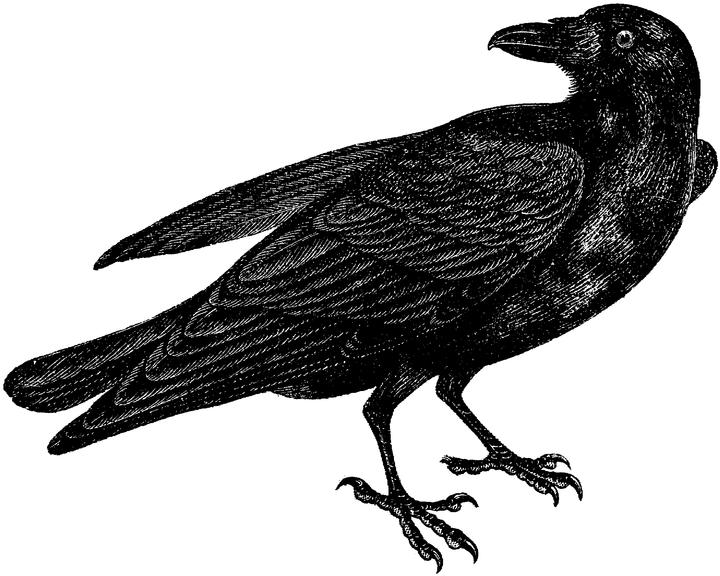
Black Raven
This is a deliberately simplistic example, but it lays bare what the first step in the scientific method, commonly understood, really amounts to: one makes observations, and forms an inductive hypothesis. The next step, of course, is experimentation to confirm or refute the hypothesis—and it is here that the trouble occurs. In a case like this, experimentation amounts to observing as many ravens as possible, and confirming that they are all black. Now it is impossible, even in principle, to observe every raven, for many no longer exist, many do not yet exist, and it is conceivable that there are creatures one would also wish to call ravens that exist in inaccessible places, such as other planets. There are always limits to an experimental apparatus, even if the apparatus is just a matter of observing as many ravens as possible to check their color. Nonetheless, we feel justified in saying that each new observation of a black raven tends to confirm the hypothesis, and in time, if no green or blue or otherwise non-black ravens are observed, our hypothesis will eventually come to have the status of a natural law.

But is this logical? Note that, logically put, our hypothesis “all ravens are black” has the form of a conditional, that is, a statement of the form “if A then B.” In short, we are saying that if a given object is a raven, then that object is black. According to the laws of logic, a conditional is equivalent to its contrapositive. That is, a statement of the form “if A then B” is equivalent to the statement “if not B then not A.” For example, the statement “if I live in Denver then I live in Colorado” is logically equivalent to the statement “if I do not live in Colorado then I do not live in Denver.” This rule of logic is incontrovertible.

blue_shirt.png

Non-Black Non-Raven
Our hypothesis “all ravens are black” therefore has the equivalent form “all non-black things are non-ravens,” or more precisely, “if an object isn't black then it is not a raven.” Consequently, if every sighting of a black raven confirms our hypothesis, then every sighting of a non-black non-raven equally confirms our hypothesis.

I look at my shirt. It's blue. And it is not a raven. Confirmation! My hypothesis that all ravens are black is strengthened! My coffee cup is red. More confirmation. The grass is green, the sky is blue, my computer is gray, my dog is white—all confirming the hypothesis “all ravens are black.”

Silly, isn't it? (Isn't it?) But by the laws of logic, if I accept inductive hypotheses and confirmation by experiment, then every observation except one that refutes my hypothesis—confirms it. Even if it is totally irrelevant.

Addendum​

Very well, you might say, but maybe every sighting of a non-black non-raven really does confirm, even if only to an infinitessimal degree, the hypothesis that all ravens are black. After all, if we could, somehow, check every non-black object in the universe, and if none of them were ravens, our statement that all ravens are black would be proved.

Just so. Maybe my blue shirt does reinforce, even if only to some tiny degree, the hypothesis that all ravens are black. But if so, then it must also reinforce—to the same degree—a completely contradictory statement, namely, the hypothesis that all ravens are white. After all, my shirt is a non-white non-raven….

Resolving Hempel’s Raven Paradox​

Fred Leavitt reveals how the whiteness of swans proves the blackness of ravens.​

Many scientific theories and laws are of the form “All A is B.” Two examples are “Water at sea level boils at 100 degrees centigrade” and “Schizophrenia is associated with an excess of dopamine in the limbic system.” But philosopher and logician Carl Hempel pointed out a seeming paradox (Hempel, 1945). As virtually all logicians agree, the propositions “All ravens are black” and “All nonblack things are nonravens” are equivalent. To test the former, a scientist would look for ravens and check their colour. A black raven would provide supporting evidence. To test the latter, the scientist would look for nonblack things and check to see if they are nonravens. A white handkerchief would provide supporting evidence.

But if a white handkerchief supports the proposition that all nonblack things are nonravens; and if “All nonblack things are nonravens” is equivalent to “All ravens are black;” a white handkerchief would appear to support the proposition that all ravens are black. The paradox has two aspects: first, that a white handkerchief should be as informative as a black raven; second, that a white handkerchief should have any bearing at all on the proposition “All ravens are black” (or green or red). The paradox seems to have important implications for testing scientific theories.

What follows is my resolution.

There are two propositions (P1 and P2) and two pieces of evidence (E1 and E2).

P1: All ravens are black.
P2: All nonblack things are nonravens.
E1: This raven is black.
E2: This white thing is not a raven.

P1 and P2 are logically equivalent, i.e., any evidence that supports P1 supports P2 to the same extent. But E1 and E2 are not equivalent. E1 provides much stronger support for both propositions. To see why this is so, consider an aviary in which there are exactly two ravens among 100 birds.

P3: All ravens in the aviary are black.
P4: All nonblack birds in the aviary are nonravens.
E3: This raven is black.
E4: This white bird is not a raven.

E3 represents 50% of the evidence needed to prove P3. Less obviously but equally true, it represents 50% of the evidence needed to prove P4. (If the only other raven is found to be black, P4 must be true.)

By checking all 98 nonblack birds and verifying that they are not ravens, an investigator could prove P3. The proof would apply just as convincingly to P4. But a single nonblack nonraven would be less useful than a single black raven, because the former would represent 1/98th of the necessary evidence and the latter 50%.

E1 and E3 are more significant than E2 and E4 because they account for a greater proportion of the total number of cases under consideration. Nevertheless, E2 to a trivial extent and E4 to a much greater extent, account for something – a nonblack nonraven eliminates one potential falsifier of the proposition “All ravens are black.”

© Prof. F. Leavitt 1997
 
Last edited:
Top