


I never noticed that before, but you are spot on. I’m sure that wouldn’t have happened had Chrissy stayed. The decision to make Terri so different from Chrissy upset the chemistry between the three leads - it was never the same.Also, I noticed that Janet became all spastic and ditzy once Chrissy left the show. And the thing was that Joyce Dewitt's comic ability was her facial expresions at the craziness around her, and her sarcastic ribbing of Jack. All gone in the later seasons.

You are using an out of date browser. It may not display this or other websites correctly.
You should upgrade or use an alternative browser.
You should upgrade or use an alternative browser.




- Awards
- 11
For those possibly interested, THE ROPERS is available for free on Tubi. I've watched the first episode, and I may or may not watch the rest of them.

Tubi also hosts THREE'S A CROWD. I haven't watched any of those yet.

John Ritter's other sitcom, HEARTS AFIRE, is on Amazon Prime.

- Awards
- 11
I watched this made-for-TV docudrama (if you want to call it that) this morning. I've seen it before, just like I've watched the ones about CHARLIE'S ANGELS and MORK & MINDY and many, many other shows.
We've talked about it constantly in this thread, but Suzanne Somers overstated her importance to THREE'S COMPANY. She was the celebrity of the bunch, the magazine cover girl, but literally any and everyone is replaceable. Had she not let the "next Farrah Fawcett" tag go to her head, she might've gotten a raise and rode the show its whole eight seasons. She wouldn't have been gray listed in Hollywood, either.
The producers at ABC were willing to negotiate a higher salary with Somers, but she and her agent-hubby Alan Hamel asked for far too much of an increase in her per-episode pay. And then ABC decided to make an example out of her, or so the story goes, because Farrah, Loni Anderson, Penny Marshall, and Cindy Williams had all held out for more money at one time or another.
THREE'S COMPANY stayed a Top 10 show without Somers, even though it slipped from #2 to #8 (and lost 4% of its audience) between 1980 and 1981. How much was this due to Somers' leaving? You tell me. Once Priscilla Barnes joined the cast for season six, the show finished at #4 in 1982 and placed #6 in 1983. Did this have anything to do with Priscilla? Again, you tell me.
I know the chemistry between the "three's company" wasn't the same unless it was Ritter, DeWitt, and Somers, and Norman Fell was arguably the best foil to their zaniness.
This made-for-TV movie focuses a good deal on how the events effected Joyce DeWitt, which isn't surprising since she co-produced it.
I totally doubt the accuracy of events, but this was a fun watch.
I know Somers' syndicated sitcom SHE'S THE SHERIFF is considered one of the worst TV shows ever, but I found it interesting today to learn that Jenilee Harrison (her replacement on THREE'S COMPANY) guest starred on the show in 1988.
We've talked about it constantly in this thread, but Suzanne Somers overstated her importance to THREE'S COMPANY. She was the celebrity of the bunch, the magazine cover girl, but literally any and everyone is replaceable. Had she not let the "next Farrah Fawcett" tag go to her head, she might've gotten a raise and rode the show its whole eight seasons. She wouldn't have been gray listed in Hollywood, either.
The producers at ABC were willing to negotiate a higher salary with Somers, but she and her agent-hubby Alan Hamel asked for far too much of an increase in her per-episode pay. And then ABC decided to make an example out of her, or so the story goes, because Farrah, Loni Anderson, Penny Marshall, and Cindy Williams had all held out for more money at one time or another.
THREE'S COMPANY stayed a Top 10 show without Somers, even though it slipped from #2 to #8 (and lost 4% of its audience) between 1980 and 1981. How much was this due to Somers' leaving? You tell me. Once Priscilla Barnes joined the cast for season six, the show finished at #4 in 1982 and placed #6 in 1983. Did this have anything to do with Priscilla? Again, you tell me.
I know the chemistry between the "three's company" wasn't the same unless it was Ritter, DeWitt, and Somers, and Norman Fell was arguably the best foil to their zaniness.
This made-for-TV movie focuses a good deal on how the events effected Joyce DeWitt, which isn't surprising since she co-produced it.
I totally doubt the accuracy of events, but this was a fun watch.
I know Somers' syndicated sitcom SHE'S THE SHERIFF is considered one of the worst TV shows ever, but I found it interesting today to learn that Jenilee Harrison (her replacement on THREE'S COMPANY) guest starred on the show in 1988.


- Awards
- 21
THREE'S COMPANY stayed a Top 10 show without Somers, even though it slipped from #2 to #8 (and lost 4% of its audience) between 1980 and 1981. How much was this due to Somers' leaving? You tell me. Once Priscilla Barnes joined the cast for season six, the show finished at #4 in 1982 and placed #6 in 1983. Did this have anything to do with Priscilla? Again, you tell me.
Well, Priscilla Barnes was funnier. Somers just stood -- or shook -- around mugging the camera and looking dumb and very, very blonde.
- Awards
- 11
I haven't watched any of Priscilla's episodes in a really long time, but I remember preferring Suzanne on the show. But that doesn't mean Priscilla wasn't funnier. She probably was a better actress than either Suzanne or Jenilee (but no brainer there).Well, Priscilla Barnes was funnier. Somers just stood -- or shook -- around mugging the camera and looking dumb and very, very blonde.
Last edited:



- Awards
- 11
That's my memory from when I watched the show a lot. The original trio of John/Joyce/Suzanne had the best on-screen chemistry, Jenilee was mere Suzanne-filler for scripts they didn't want or couldn't afford to disregard for Season 5, and Priscilla was the long-term replacement that brought a stability back to the core trio.The show lost something without Somers. Neither Jennilee nor Priscilla had the charisma that Somers had.... nor the chemistry with Ritter/Dewitt.
- Awards
- 17
Ironically Don Knots was in the same episode. If I’m recalling this correctly though, Jenilee and Don were in the same scene but with no interaction. Jenilee and Suzanne did not share a scene together from what I remember.I know Somers' syndicated sitcom SHE'S THE SHERIFF is considered one of the worst TV shows ever, but I found it interesting today to learn that Jenilee Harrison (her replacement on THREE'S COMPANY) guest starred on the show in 1988.
Last edited:

- Awards
- 8
I preferred seasons 1-2-3 when Ritter, Somers and DeWitt were the trio with Norman Fell and Audra Lindley.I watched this made-for-TV docudrama (if you want to call it that) this morning. I've seen it before, just like I've watched the ones about CHARLIE'S ANGELS and MORK & MINDY and many, many other shows.
We've talked about it constantly in this thread, but Suzanne Somers overstated her importance to THREE'S COMPANY. She was the celebrity of the bunch, the magazine cover girl, but literally any and everyone is replaceable. Had she not let the "next Farrah Fawcett" tag go to her head, she might've gotten a raise and rode the show its whole eight seasons. She wouldn't have been gray listed in Hollywood, either.
The producers at ABC were willing to negotiate a higher salary with Somers, but she and her agent-hubby Alan Hamel asked for far too much of an increase in her per-episode pay. And then ABC decided to make an example out of her, or so the story goes, because Farrah, Loni Anderson, Penny Marshall, and Cindy Williams had all held out for more money at one time or another.
THREE'S COMPANY stayed a Top 10 show without Somers, even though it slipped from #2 to #8 (and lost 4% of its audience) between 1980 and 1981. How much was this due to Somers' leaving? You tell me. Once Priscilla Barnes joined the cast for season six, the show finished at #4 in 1982 and placed #6 in 1983. Did this have anything to do with Priscilla? Again, you tell me.
I know the chemistry between the "three's company" wasn't the same unless it was Ritter, DeWitt, and Somers, and Norman Fell was arguably the best foil to their zaniness.
This made-for-TV movie focuses a good deal on how the events effected Joyce DeWitt, which isn't surprising since she co-produced it.
I totally doubt the accuracy of events, but this was a fun watch.
Norman Fell was the perfect staightman IMHO. He was such a superb, versatile actor with a long list of credits.
Don Knotts is a terrific actor as well, all due respect to him,
but I thought Norman Fell was a better presence on the show.
I never thought Priscilla Barnes was funny.
She seemed to be more of a "Straight man" and Joyce DeWitt became a bit more overtly comic
while Don Knotts comic presence also allowed Priscilla Barnes to be more balanced.
Ratings Wise, there was not a large drop in season 6 and 7, as you indicate, but it was a different
show without Suzanne Somers - One that was not as funny, not as good, and not as charismatic IMHO
An overlooked part of this discussion is that Richard Kline,
who became a regular cast member starting in season 4,
added a lot to the show.
He was an excellent supporting character in his scenes with John Ritter, as well as other cast members
Basically, I think Threes Company sustained strong ratings post Suzanne Somers
more because of Richard Kline's increased role and Don Knotts rather than the addition of Priscilla Barnes
The six episode first season was quite entertaining.As this thread would certainly encourage, yours truly has gotten a renewed interest in Three's Company here recently. Because of this, I decided to re-watch the first season of the show that I've had on DVD for some time, but that I haven't watched in a couple of years.
Episodic Overview
Three's Company came onto the airways on March 15, 1977. Its first episode, "A Man About the House", is perhaps one of the best pilot episodes I've seen for a TV series in a long time. (Keep in mind, however, it's been a while since I've started watching a new series, and this itself wasn't technically new, but it some ways it kind of reads that way in my mind.) As we know, the episode follows this plot: roommates Janet (Joyce DeWitt) and Chrissy (Suzanne Somers) awaken one morning after having a going away party for their fellow roommate Eleanor. Once they go into their bathroom, they find a man, by the name of Jack (John Ritter), asleep in their bathtub. To make a long story short, the two girls take a liking to Jack, and they decide to ask him to move in with them. The girls' landlords, however, Stanley (Norman Fell) and Helen Roper (Audra Lindley), aren't keen to the idea of two young women living with a man. Although the trio assures them the arrangement is strictly a platonic one, the landlords don't permit it until Janet sprinkles a fib that Jack is gay.
Thus starts one of the signature farcical comedies the television screen as ever known.
There are only five more episodes in this single disc set. Three's Company was a late-starting mid-season replacement (it's actually like an end-season replacement really), so there was only six episodes scheduled. In "And Mother Makes Four", the second episode, Jack is forced to hide the fact that he's living with Janet and Chrissy from Chrissy's mother, who turns out to be a preacher's wife. All is well, however, when it's learned at the end that Mr. Roper's told Chrissy's mother of Jack, and that nothing was indecent because Jack is said to be gay. (In this episode, Mrs. Roper learns of Jack's heterosexuality, but keeps it secret from her husband.) The next episode, "Roper's Niece", has Jack masquerading as a date for Roper's niece, an arrangement Roper only okays because he thinks Jack is gay, and therefore he won't make a pass at his attractive niece. (Do you see a recurring theme? A common tactic early on is Jack's faking homosexual tendencies.)
In "No Children, No Dogs" (Season 1, Episode 4), the trio of roommates have to head a cute puppy from their landlords given to them by Jack's womanizing car salesman buddy Larry (Richard Kline). Mr. Roper forbids them to keep the pup, but Chrissy devises a plan where the little dog is left on the Ropers' doorstep, and Mrs. Roper passes it off as an anniversary present from her husband. Jack's true masculinity, not a false one, is called into question in the next episode entitled "Jack the Giant Killer". A rude bar patron makes unwanted advances towards Janet and Chrissy, but Jack seemingly cowers from any confrontation. In the end, Janet again bails him out with a fake Vietnam war hero charade. In the season finale, "It's Only Money", the trio believes their apartment to be a victim of local robbery. Their rent money has disappeared, and they worry about how to explain their inability to pay for it to the Ropers. At he conclusion, Mr. Roper says that he took the money from their apartment while he was their fixing their doorbell.
Show Popularity & Overall Thoughts
After watching this abbreviated pilot season, I found myself particularly thrilled at the outcome. While the video quality wasn't necessarily the best (especially not on my 55" HD-TV), the shows themselves were very good. The writing here is more sedate than anything I've seen the show offer in the following seasons. The physical comedy isn't as broad, but that slapstick humor comes to full form in Season Two.
Three's Company was an immediate hit back in 1977, with its first episode finishing at #28 in the weekly ratings. Within a week or two, the show was placing in the Nielsen Top Ten, where it would stay until its final season started in 1983. The critical reviews, however, were nothing less of horrific. The series was critiqued for its plot, humor, acting, and not surprisingly, for being immoral and corrupting America's youth. Religious leaders and organizations took stances against the show, but ABC stood by their baby, feeding it to the top of the Nielsen's.
Overall, I can say that I really enjoyed this first season. I can understand how fans waited --- perhaps impatiently --- for the second season to come out a decade or so ago because this pilot year is show brief. The writing, from a fan's point of logic, is well done, as are the performances themselves.
Buy it. Watch it. I don't think you'll be disappointed.
I was glad to see an entire season on tv after that.
Personally, I always preferred the original cast.
Norman Fell was the best straight man to the trio IMHO
Don Knotts was certainly great and iconic, though
The show was never as good after Suzanne Somers left, IMHO
I think that Richard Kline's Larry character was an underrated strength of the show post Suzanne Somers.
He worked well with John Ritter and Joyce DeWitt
- Awards
- 11
Love or hate how she demanded more money, the show was never the same with Suzanne Somers.The show was never as good after Suzanne Somers left, IMHO
He was a very good straight man for the original trio.Norman Fell was the best straight man to the trio IMHO
I was totally psyched when I saw that THREE'S COMPANY was streaming on Peacock. But then quickly disappointed to see that the episode copies were syndicated cuts probably stripped from TV Land or Nick at Nite.
- Awards
- 8
I saw a recent interview with Patrick Duffy, in which he spoke well of Suzanne Somers.
I don't think he mentioned his other TV wife.
I don't think he mentioned his other TV wife.
- Awards
- 11


- Awards
- 9
March 15th was the 49th anniversary of THREE'S COMPANY debut. I watched a couple first season episodes this week; the show started out much breezier, far less frantic, than it evolved into.
I said this, in the ALICE thread:
It's even worse than I recall. Chrissy Snow was such a cute, likeable character at first. Pretty and sweet; naive and innocent but certainly not dumb, in fact it's mentioned in the second episode that her parents expected her to be the best in school. And somehow the character devolved into being borderline brain-damaged and vaguely grotesque.
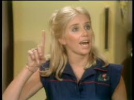
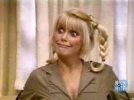
It's the worst instance of Flanderization that I've seen.

I said this, in the ALICE thread:
Chrissy Snow started out as an appealing character but, like most dumb sitcom characters, she evolved to be so stupid as to seem like a mental defective. Plus the way Suzanne began to play the character -- the dead-eyed stare, the weird snorting laugh, the knock knees, the odd hairstyles that looked like a polyester wig -- was very off putting.
It's even worse than I recall. Chrissy Snow was such a cute, likeable character at first. Pretty and sweet; naive and innocent but certainly not dumb, in fact it's mentioned in the second episode that her parents expected her to be the best in school. And somehow the character devolved into being borderline brain-damaged and vaguely grotesque.
It's the worst instance of Flanderization that I've seen.


- Awards
- 44
I watched a couple first season episodes this week; the show started out much breezier, far less frantic, than it evolved into.
Most of the first season episodes appear to be adaptions of the original Cooke/Mortimer storylines, so I'd guess this might be a significant factor.
While I've never watched Three's Company, I have viewed a couple of videos directly comparing early episodes. Most of the original Man About The House script made it across intact. At that point, the US writers' main role seemed to be changing a word, phrase or name here and there and softening a couple of risqué or coarse lines to make it more identifiable for the different audience.
Here's one comparing In Praise Of Older Men/Chrissy's Date:
MATH was never art, but the series and its characters did remain endearing and watchable to the end (and - to a degree - beyond, including the spinoffs).
- Awards
- 9
Here's one comparing In Praise Of Older Men/Chrissy's Date
Interesting. I knew THREE'S COMPANY was based on a British sitcom, but didn't know the scripts were such direct translations. Lots of '70s American sitcoms were pilfered from the UK, but I thought they were just borrowed premises. Now I wonder how many scripts ALL IN THE FAMILY or SANFORD & SON were direct copies.
Funniest thing about the comparison video: except for baby-faced John Ritter, all of the men in that video looked SO OLD. When the British guy made a joke about 30 being old I thought, "come on man, you look 50". And then the 30 year old showed up looking even older. In the US version, the "40" year old (Dick Sargent, an actor I've never liked) showed up, my reaction was "damn, he looks 60".
Last edited:
- Awards
- 44
I knew THREE'S COMPANY was based on a British sitcom, but didn't know the scripts were such direct translations.
Yes. I've watched some of the first episode of Three's Company and it's the same story.
Now I wonder how many scripts ALL IN THE FAMILY or SANFORD & SON were direct copies.
I don't know for sure but would guess that AITF would have needed more input from native writers. There were a number of social, political and topical references in Till Death Do Us Part which may have lost something in translation. The coarseness of the language would again probably have needed to be toned down. The only episodes I've seen were the two Maude episodes so I don't have much to go on. Watching them, as I did, immediately after the British series, AITF felt broader, glossier and safer, but I know that one proper episode doesn't give me much to go on (and I'm also aware it tackled some heavy topics during its run).
I've never watched either Steptoe or Sanford (I do have Steptoe lined up to watch on DVD), but I would have thought Galton & Simpson's writing would adapt fairly easily. Based on episode credits - and a comment under the comparison video I posted - most of Sanford's first season is based on Steptoe scripts. Whether it's as literal as the Three's Company adaptions, who knows.
When the British guy made a joke about 30 being old I thought, "come on man, you look 50". And then the 30 year old showed up looking even older.
Incredibly, both actors were under 30 at the time.
Norman Eshley (Chrissy's date) appeared in the series in a couple of different roles and would go on to play the Ropers' snooty neighbour, Jeffrey Fourmile (adapted as Jeffrey P. Brooks III) in the spinoff.
- Awards
- 9
Incredibly, both actors were under 30 at the time.
It's the hairstyles for sure. Also that generation tended to be smoking boozers but I see that actor lived to 81, so perhaps not him.
Going off very brief clips is perhaps not fair, but I admit to preferring the American version. That might just be familiarity -- maybe even a tad bit of nationalism --but I didn't find the British actors especially appealing. They seemed like the kind of people one would meet at a local bar (pub), whereas the Americans seem like the kind one would hope to meet at a local bar.
- Awards
- 44
It's the hairstyles for sure.
Yes. It's surprising how ageing (or aging) a hairdo can be and how different someone can look when just that is changed.

I admit to preferring the American version. That might just be familiarity -- maybe even a tad bit of nationalism --but I didn't find the British actors especially appealing. They seemed like the kind of people one would meet at a local bar (pub), whereas the Americans seem like the kind one would hope to meet at a local bar.
And I think that underlines the reason for the series being remade for the American market rather than simply imported.
I suppose my takeaway from the comparison is akin to yours but in reverse (and possibly for similar reasons). It's interesting to see how very different the intonation of the same line can be, though, and how much impact it can have on the feel of a series.
On a related note, this video may be of interest. It's an American perspective on the difference between American and British comedy and why remakes often change in tone while being adapted:
- Awards
- 9
And I think that underlines the reason for the series being remade for the American market rather than simply imported.
That but also the number of episodes. Although the first season of THREE'S COMPANY is only 6 episodes, the rest were 22 to 28. No season of MATH was more than 7 episodes. Americans would have been very unaccustomed to such short seasons.
Probably also the reason the first season of THREE'S COMPANY so closely matches MATH, the writers didn't have to fully invent new scripts.
this video may be of interest
I didn't have to click past the title, "Americans Don't Get British Humo(u)r", before I already agreed. I always feel a bit guilty to admit it, but British humor seldom lands with me. From Benny Hill and Monty Python onward, I just don't get it. ABFAB is the only British comedy I watched and even then I probably missed 20% of the references and jokes.
I feel the same about Canada's famed SCTV too, so I might just be comedically provincial.