Bette Davis vs. Joan Crawford

Who do you prefer?

  • Bette Davis

    Votes: 18 51.4%
  • Joan Crawford

    Votes: 4 11.4%
  • Both

    Votes: 11 31.4%
  • Neither

    Votes: 2 5.7%

  • Total voters
    35

ginnyfan

Telly Talk Active Member
Well, it's the eternal question of what really happened between Joan and Christina and I guess we'll never know the real truth. Did Joan really beat her up with wire hangers? Did she really try to choke her?? Or was she just a too strict, mentally abusive parent? Quite a difference between these things and we can and probably will continue speculating for years to come.

But, what I think makes the legend and fandom of Crawford continue, through the decades and soon a century, is her dedication, hard work and survival. Always a consummate professional, Joan was on time, knew her lines, practiced her scenes and was ready to go! This does not mean she was easy to work with, especially for directors and some co-stars, but the crews loved and respected her. Being able to adjust to Hollywood everchanging trends, Joan sailed through decades and different Hollywood structures, always give it her all.
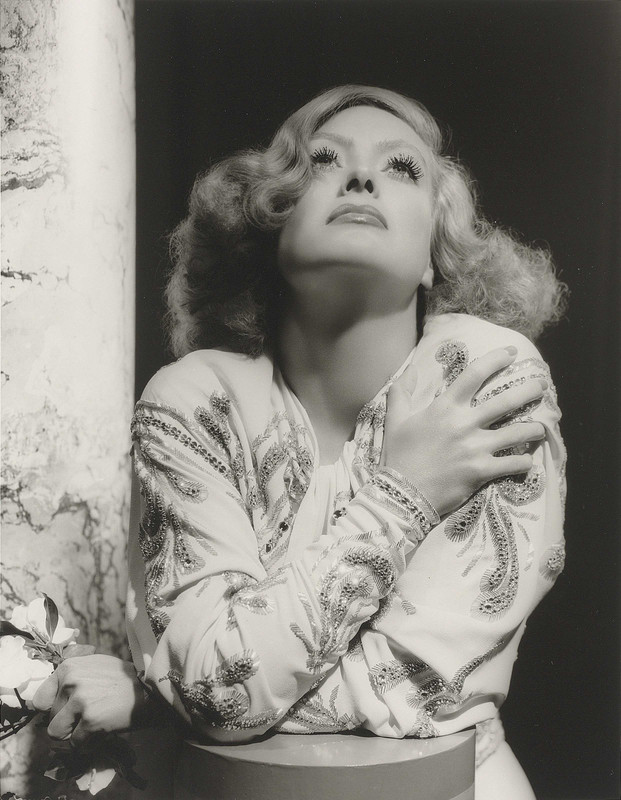
 
"She was crafted as meticulously and as fervently as any sculpture by any great artist. Picasso could not have made her any better. She was an engine of sex and glamour and industry. Crafted by ambition and revenge and the need to survive. Art has vengeance at its soul, which would make her one of the most soulful among us. We're wrong to scoff at what she did with what she had." - Marlon Brando on Joan Crawford #FolliesOfGod

1634236286509.png
 
From Follies of God

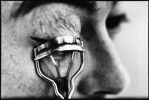
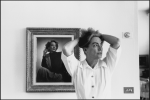
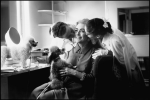
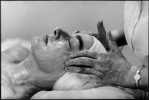
“Weekends we would spend at her house in Bel-Air photographing. Those would be her days for having her nails done, her hair coloured, her legs waxed, her eyebrows dyed; all of which she wanted me to record on film, to show her devotion to her public. In the mornings she would come down the stairs slowly, pause midway at the niche in the stairwell where the spotlighted Oscar she had won for Mildred Pierce was housed, genuflect and continue to the bottom. Only then could the day’s work begin."--Eve Arnold on the series of photographs she made with Joan Crawford in 1959.

1634236360167.png

1634236384195.png

1634236402537.png

1634236423754.png

1634236452808.png
 

Crimson

Telly Talk Star
"She was crafted as meticulously and as fervently as any sculpture by any great artist. Picasso could not have made her any better. She was an engine of sex and glamour and industry. Crafted by ambition and revenge and the need to survive. Art has vengeance at its soul, which would make her one of the most soulful among us. We're wrong to scoff at what she did with what she had." - Marlon Brando on Joan Crawford

I wasn't aware Brando had good things to say about Joan. Legend has it he turned down AUTUMN LEAVES, with a snarky reply that he wasn't looking to make a "mother-son" picture.

(If true, he may have been because he had awkward experiences with Tallulah and Vivien, and didn't want to work with another older, neurotic actress.)
 

Snarky Oracle!

Telly Talk Supreme
Bette... Joan.... Brando..... All Sun in Aries/Scorpio Rising.

I wasn't aware Brando had good things to say about Joan. Legend has it he turned down AUTUMN LEAVES, with a snarky reply that he wasn't looking to make a "mother-son" picture.

Well, "good things" by one measure. He's underscoring her avarice in his praise.
 
From Follies of God

Regrets are bullshit. I always feel compelled to invite people to come out of their wounds and get back to work and back to living. My primary education grew out of what others might call regrets, and I wouldn't give up that knowledge for anything in the world."--Bette Davis/Interview with James Grissom/1984

1635442159506.png
 
and lastly

The conversation veered toward warning signs:
"You know you're really in for a rout when they open with how much they love and appreciate you. 'Oh, you are so loved by us all, Bette,' they begin, and you really know you're in for a battle. They are almost always preparing you for a swindle of some sort, a loosening of standards. You have to not care at all what people think of you, not notice if they love or like you. What you have to care most about is the work and the quality of the work. The work is what satisfies, not the transient love of a crew or a cast member. They'll open with the love and they'll close with a lawsuit. The love is theirs, I assure you, and the lawsuit will be mine."--Bette Davis/Interview with James Grissom/1984/Photograph of Davis by Douglas Kirkland, from 1981/

1635442293842.png
 

Crimson

Telly Talk Star
Davis wasn't much of a singer, that's for sure. And I don't mean she didn't have a good voice, which isn't the same thing. Good singing is the same as acting -- conveying the meaning and emotions of the song; one doesn't need a multi-octave range to do that. Davis seemed to sing every song with the same strident talk-singy style regardless of what she was singing. Good thing she didn't approach her acting that way, or she would have stunk.
 

ClassyCo

Telly Talk Warrior
I respect Crawford most for her longevity. Unlike almost any other movie star before or after, she knew precisely how to change with the times and stay relevant to the ever-changing movie-going audience.

In the late 1920s, she was the ultimate jazz baby, starring in such hits like THE TAXI DANCER (1927) and OUR DANCING DAUGHTERS (1928); at the dawn of the talkies she found her niche in rags-to-riches "women's pictures" like LAUGHING SINNERS (1931) and SADIE MCKEE (1934); and by the late 1930s she had morphed into a clotheshorse because of movies like THE BRIDE WORE RED (1937) and MANNEQUIN (1938), before she was infamously proclaimed "box office poison" by independent theater owners. (MGM could counteract that bit of slander, however, by boasting that Crawford had received more than 900,000 fan letters that year.)

Crawford's decision to make THE WOMEN (1939) was one of the wisest of her career. Although she was second fiddle to Norma Shearer in terms of screen time, she stole the show as the adulterous Crystal Allen, therefore unleashing her inner vixen that basically fueled the remainder of her career. It effectively reversed her fortunes at MGM, albeit temporarily, as she was ousted by the studio by 1943. Her move to Warner Brothers that same year opened the door to Crawford's most successful period of her long career. Thanks to the Oscar-winning success of MILDRED PIERCE (1945), she transitioned in a sophisticated, strait-laced professional in a series of first-rate melodramas. Her on-screen image received a noirish upgrade, although she retained the image of being both physically and emotionally desirable to her male co-stars. This image was showcased in films like HUMORESQUE (1946) and POSSESSED (1947), and was later slightly revamped to be grittier in dustier movies like FLAMINGO ROAD (1949) and THE DAMNDED DON'T CRY (1950).

Her career slid into another decline after she left Warner Brothers in 1952, although her Oscar-nominated performance in SUDDEN FEAR again reversed her fortunes. Throughout the rest of the decade, she starred in several melodramas (basically updated renditions of the "women's picture" sub-genre), like QUEEN BEE (1955) and AUTUMN LEAVES (1956). And then WHAT EVER HAPPENED TO BABY JANE? (1962) reinvented her yet again as the star of B-movie horror films.

Crawford shifted effortlessly (or at least she tried to) through each period of her life. She knew what the public wanted from her, and she fought her hardest to be that for them. For instance, she knew audiences wanted to see her and Bette Davis appear together, and she spent years trying to find them the perfect duo-star vehicle. (One wonders whether Crawford would've been game for starring in CAGED in 1950, a women in prison film that Warner Brothers wanted to make with Crawford and Davis in the leads.)

1635963896102.png

Joan Crawford was indeed the ultimate movie star. I seriously doubt anyone (before, during, or since) has cared quite as much about her fans and how to please them.​
 
from Follies of God

"I don't believe in dreams or dreaming. I have to say this because over and over again you keep quoting people who had a dream or who dream of a particular outcome. This is ludicrous: It really is. To dream is to be without reason; to dream is to not be awake and in control. You might as well announce to the world that you've engaged a couple of fairies--you know, the ones in the forests with the wings--to get you a job or to teach you to speak well or to inspire you. This is ludicrous. I suppose it is okay, as a child, to dream or to hope, but those desires grow up and become goals and tasks. I don't dream of being a good actress: I work damned hard and all the time to be a good actress. I don't dream or hope that I get a good cast or director with whom I can work: I scream and demand and push and pull until they are a good cast or a good director. Or the best they can be. We're talking goals and tasks here, not hopes and dreams. I have to stop you from this absurdity--your own and that of those you quote--or there will never be any progress. Go get what you want; go do what you want. Leave the dreams aside."--Bette Davis/Interview with James Grissom/1984 (Photo by Herb Snitzer)

1636134497461.png
 
Top