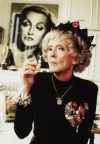
Bette Davis vs. Joan Crawford

Who do you prefer?

  • Bette Davis

    Votes: 18 51.4%
  • Joan Crawford

    Votes: 4 11.4%
  • Both

    Votes: 11 31.4%
  • Neither

    Votes: 2 5.7%

  • Total voters
    35

Barbara Fan

Admin
LV
16
 
Awards
39
from Follies of God

“I fought like hell because this is not my job, my career: This is my life. Work has been the great love and focus of most of my life. Even being a mother is work. Being a friend. The desire for ease strikes me as evil, really. A dereliction of duty. Do things right or find help to make sure it’s done right.”—Bette Davis/Interview with Bette Davis. #FolliesOfGod

1630230597212.png
 

darkshadows38

Telly Talk Star
LV
1
 
Awards
7
i watched (2005) or was it (2006) i forget which Stardust Narrated by Susan Sarandon. it's funny how these documentary's each of them they go year by year pretty much when it Bette's days in the 30'sa and damn near in the 40's as well but once she Leaves Warner Bros in (1949) they skim over her years and pick only certain films does anyone seem to notice that? Bette Davis did some movies overseas like they didn't talk about The Nanny (1965) which isn't among my favorites of hers nor did it talk about her horror films like Burnt Offerings (1976) nope it named one film in this documentary that she did in the 70's and that's it she did a lot of acting in the 70's. didn't mention that the fact that she did a couple episodes of Perry Mason in the early 60's either.

that's the thing about some of these documentary's i hate they talk about the good roles but what about the bad ones? a good example is Rick Rubin off topic i guess he did a documentary with Paul McCartney recently and i haven't seen it cause i don't have Hulu but what it's about from what Rubin said it's not about the beatles or his solo career. it's about him as a Bass Player and that nobody seemed to want to anything like that. in fact Rubin was told that he was given one day by McCartney's people cause that's all Paul pretty much wanted to do but than Paul Enjoyed it so much that they at the end of the first day Paul asked can we do this again tomorrow? Rubin was like shit yeah.

my point is if you are going to do a documentary about a star like Crawford or Davis talk about the bad ones as well. i'm curious what the stars that were in it have to say about this, we know about Trog (1970) really cause that's Crawford's last film but i'm curious what she thought of Montana Moon (1930) which is among her worst.
it still pisses me off that there used to be a site that got taken down for whatever reason i think the owner prolly lost interest to take a guess or they i dunno couldn't afford it anymore? but it had quotes from Crawford about each of her films and it was great. no doubt for some of her films she was right on the money & Davis too on some of her lesser work.
 

Snarky Oracle!

Telly Talk Supreme
LV
7
 
Awards
19
One of Bette's assistants said her mother, Ruthie, pressured her to get the abortions, not her husbands. Publicly, Bette blamed her father and her husbands for the failed marriages, but privately, she feared she ran all the men off just as her mother did.; she says nice things about her second husband because she may have killed him -- by accident, sorta. But every diva needs a murder.

A 1980 interview with Mike Wallace for 60 MINUTES -- and Joan Blondell makes a cameo!:


Barbara Fan

Admin
LV
16
 
Awards
39
From Follies of God - (its a wonderful site)

Must we hate Joan Crawford? The question sounds a little odd. Must we think about Joan Crawford at all? That’s perhaps a little more like it. Crawford the always posing, eternally hardworking star, with her affairs and marriages and triumphs and miseries and comebacks, inspires both exasperation and wonder. Her ferocious will to succeed seems a grim version of the life force itself. Few men go weak in the knees dreaming about her, as they might with Lana Turner or Rita Hayworth; nor is she the kind of woman men could imagine bantering with blissfully as a lover, as they might with Katharine Hepburn or Barbara Stanwyck. She’s the date who raises your blood pressure, not your libido. She was always a bigger hit with women than with men, but, at this point, young women eager to emulate her drive and success may shudder. The ravenous smile, the scything broad shoulders, the burdensome distress, the important walk and complicated hair—she’s too insistent, too laborious and heavily armed, and also too vulnerable. She lacked lyricism and ease, except, perhaps, when flirting onscreen with Clark Gable, her offscreen lover and friend, with whom she made eight movies. She almost always tried too hard—it was Crawford who reportedly uttered the grammatically ambitious sentence “Whom is fooling whom?”—and she demanded that you capitulate to her vision of herself. Many people dismissed her as crazy.
Her epitaph is a gloating monstrosity. The lighting in “Mommie Dearest” is overbright, the sets astonishingly ugly. (Crawford may have lacked taste, but I doubt that her decorators were inept; a noir heroine needs some shadows.) As far over the top as you remember Faye Dunaway, she’s that much farther over it on second viewing. Squatting on her haunches and roaring, her face covered in cold cream, she’s a samurai in Kabuki drag, beating Christina with the famous hanger and then with a can of Old Dutch cleanser. As she rides her voice higher and higher, she goes after innocent rosebushes in the garden with castrating shears, and savagely axes a tree. Of course, it’s all intended to be farce. But farce about what? The movie chronicles one power struggle after another between mother and child, so the joke gets buried in sordid emotional and physical violence. “Mommie Dearest” was an act of posthumous assassination. The movie discharged the assorted resentments that not only Christina but some of the audience had built up in its long assent to Crawford’s presumptions and demands, and to her stardom itself. For Dunaway, however, it was more like a murder-suicide pact than like a simple crime. She has since appeared in many movies and TV shows, but “Mommie Dearest” finished her career as a star. It’s as if Crawford’s convoluted aggressive and self-defeating force had carried Dunaway down with it. When the movie is over, you can only whisper, like a pious mourner longing for relief, “Peace, Joan, peace.”
David Denby in The New Yorker, January 3, 2011.
Escape Artist


newyorker.com
Escape Artist
The case for Joan Crawford.
 

Barbara Fan

Admin
LV
16
 
Awards
39
From Follies of God x

"I don't want to be a stand-by actress, like Faye Dunaway. One is not a star if one is not sought after, written for, demanded. Miss Dunaway has never been anyone's first choice: she has been cast primarily because Jane Fonda has not been available. She is an accidental star, and I don't want to be that: If I thought I was such a thing, I would find some other line of work."--Bette Davis/Interview with James Grissom #FolliesOfGod (Photo of Davis and Dunaway on the set of THE DISAPPEARANCE OF AIMEE, 1976.)

1633811743613.png
 

darkshadows38

Telly Talk Star
LV
1
 
Awards
7
i really doubt that Bette Davis stunk like that and if she did she prolly did it on purpose much like that Rat in that scene wasn't a fake one and that laughter was real she just used her characters laugh if my memory is right. i was just thinking i wonder who has more bad movies Joan or Bette? or is it a tie?
 

ClassyCo

Telly Talk Warrior
Top Poster Of Month
LV
5
 
Awards
11
One of Bette's assistants said her mother, Ruthie, pressured her to get the abortions, not her husbands. Publicly, Bette blamed her father and her husbands for the failed marriages, but privately, she feared she ran all the men off just as her mother did.; she says nice things about her second husband because she may have killed him -- by accident, sorta. But every diva needs a murder.

A 1980 interview with Mike Wallace for 60 MINUTES -- and Joan Blondell makes a cameo!:

This is definitely one of Bette's better interviews. She seems more like a genuine human here than in any other interview I've seen of hers thus far. Her voice seems more relaxed and real here as well, and as if she is genuinely enjoys discusses her life and career.​
 

darkshadows38

Telly Talk Star
LV
1
 
Awards
7
yes her mother a big control over her, if you watch Stardust it's said that when she wrote her 1st bio in i want to say ( 1961 or (1962) and her mother died she took all the stuff she said that was mean out of and praised her. i have both her bios i dunno if she later did put it back in though. i do think she did kind of kill her 2nd husband but for those. i didn't she throw something and it hit him in the head? than he fell down the stairs i don't think that was her fault. than he was hit again in the head a few weeks later i think? i don't think she killed him per say but her hitting him in the head while pissed at him wasn't helpful either.

i do think her mother had a lot to do with why she got divorced. part of the reason was they didn't find it easy to be her husband or rather Mr. Bette Davis to quote Her.
part of it was i think was her father's fault for leaving her so young. and though she later said she was glad that he left that had to have left a mark on her that made her made her think that's what all guys were like. even if she didn't realize it
 

Crimson

Telly Talk Enthusiast
LV
1
 
Awards
8
I don't know what Bette's hygiene was like (lol), but I would think any body odor on that production was related to Bette being in character. Baby Jane was the closest Bette got to "Method acting"; she said something to the effect of caking on the makeup because she saw Jane as just applying more makeup on top of the old. I would bet, then, that her wardrobe wasn't regularly laundered in order to keep it as raggedy as possible.
 

Crimson

Telly Talk Enthusiast
LV
1
 
Awards
8
For Dunaway, however, it was more like a murder-suicide pact than like a simple crime. She has since appeared in many movies and TV shows, but “Mommie Dearest” finished her career as a star.

Murder-suicide, what an apt description. Dunaway is my favorite actress of her generation, but she deserved the career damage caused by MOMMIE DEAREST. Aside from the exactness of her impersonation, the performance is character assassination; the damage hitting Dunaway just as hard was karmic.

The review the quote came from is better than the book being reviewed. I am generally in favor of Crawford's image as a star and actress being rehabilitated (I don't care about her reputation as a person), but Donald Spoto's book went too far down the path of apologism. He's defensive of Crawford without nuance, and entirely dismissive of Christina's claims.
 

darkshadows38

Telly Talk Star
LV
1
 
Awards
7
i love the film Mommy Dearest (1981) i always have i dunno why it's so hated. Dunaway acted like that cause that's how Crawford was i think.
the only reason she was cast at all was cause Crawford herself said that if anyone was to play her it was gonna be Dunaway. she was i think pretty good in the film and it's i think really underrated. i do think some of the stuff in the film was clearly made up for drama but i do think that Christine Crawford wasn't lying about it. now Bette Davis's daughter yes i do think she was lying. she admitted she did it for the money, at last with Christine's case her mom knew about the book and she didn't like it she i think read it. & they made up before she died from what i've read.

she wasn't in the will because it was written before they made up i think i read? with Davis's daughter she had no clue about that book
 

Jimmy Todd

Telly Talk Mega Star
LV
5
 
Awards
11
From what I understand Christina's book was written after Joan had died. Apparently, even Better thought that was a low class dodge, writing such a book when Joan couldn't defend herself.
Mommie Dearest, and Faye Dunaway, have their moments, but imho the film relies too much on sensationalism, as opposed to presenting a more nuanced picture of the actress. Joan may not have been a barrel of laughs, but it seems she was possibly also an abused child, as well as an alcoholic. That doesn't excuse anything, but it's part of the whole picture.
Several people have come out to say they only had positive experiences with Joan, such as Anne Blythe and Joan's two other adopted girls. I also read that Christina and Christopher were very difficult children to raise. Again, that doesn't excuse any form of child abuse, but it's part of the whole story. The film never delved into the complexities of a woman who still fascinates the public some 40 years after her death.
Still, the film is a hoot, albeit a dark one, considering the subject matter.
 

Crimson

Telly Talk Enthusiast
LV
1
 
Awards
8
. I also read that Christina and Christopher were very difficult children to raise. Again, that doesn't excuse any form of child abuse, but it's part of the whole story.

To me, the oddest thing about the film is that it's not even sympathetic towards Christina. Maybe that's what the filmmakers thought was "nuance", but when my reaction to a movie about child abuse is the urge to punch the little girl in the face, something has gone amiss.
 
Top