Forgotten Faces of Hollywood's Golden Era

ClassyCo

Telly Talk Warrior
LV
5
 
Awards
11
The Golden Age of Hollywood is typically gathered in the years ranging from the early 1930s to the early 1960s, albeit roughly. Some people's opinion on the "Golden Age" (or "Golden Era" as in the thread's title) might certainly vary, but I'm not wanting to get in a heehaw debate about that here.

As you can clearly tell from this thread's title, I want to discuss the once-famous actors and actresses that were legends in their day, but aren't on the tip of noses in modern society. And, of course, I know most classical actors and actresses aren't too well-known among average citizens today, but some aren't even recognizable to film buffs.

Who's, what I'm calling here, a Forgotten Face of yesteryear that doesn't garner much attention in our forums and studies today?
 
Last edited:

ClassyCo

Telly Talk Warrior
LV
5
 
Awards
11
Here's one:

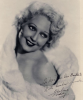
Constance Bennett (the older sister of Joan) was, according to one book, second only to Garbo in box office popularity polls in the early 1930s. She was married to the wealthy Henry de La Falaise (former husband of Gloria Swanson), and starred in a string of tearjerkers at the hark of talkies: Common Clay (1930) and What Price Hollywood? (1932). She was the undisputed Queen of RKO Studios before Katharine Hepburn (and later) Ginger Rogers took over that title, and was briefly known as Hollywood's highest-paid performer. Eventually, she found a niche for her husky-voiced persona in a string of feathery, yet sophisticated comedies, such as Topper (1937) and Merrily We Live (1938). Later, she sidelined her movie career for a healthy stint as a real estate agent.

I've always had a soft spot for Constance Bennett, and have ever since I purchased what I believe to be an authentically signed portrait of her from an estate some years ago.


upload_2018-9-21_18-7-58.png
 
Last edited:

ClassyCo

Telly Talk Warrior
LV
5
 
Awards
11
Another:

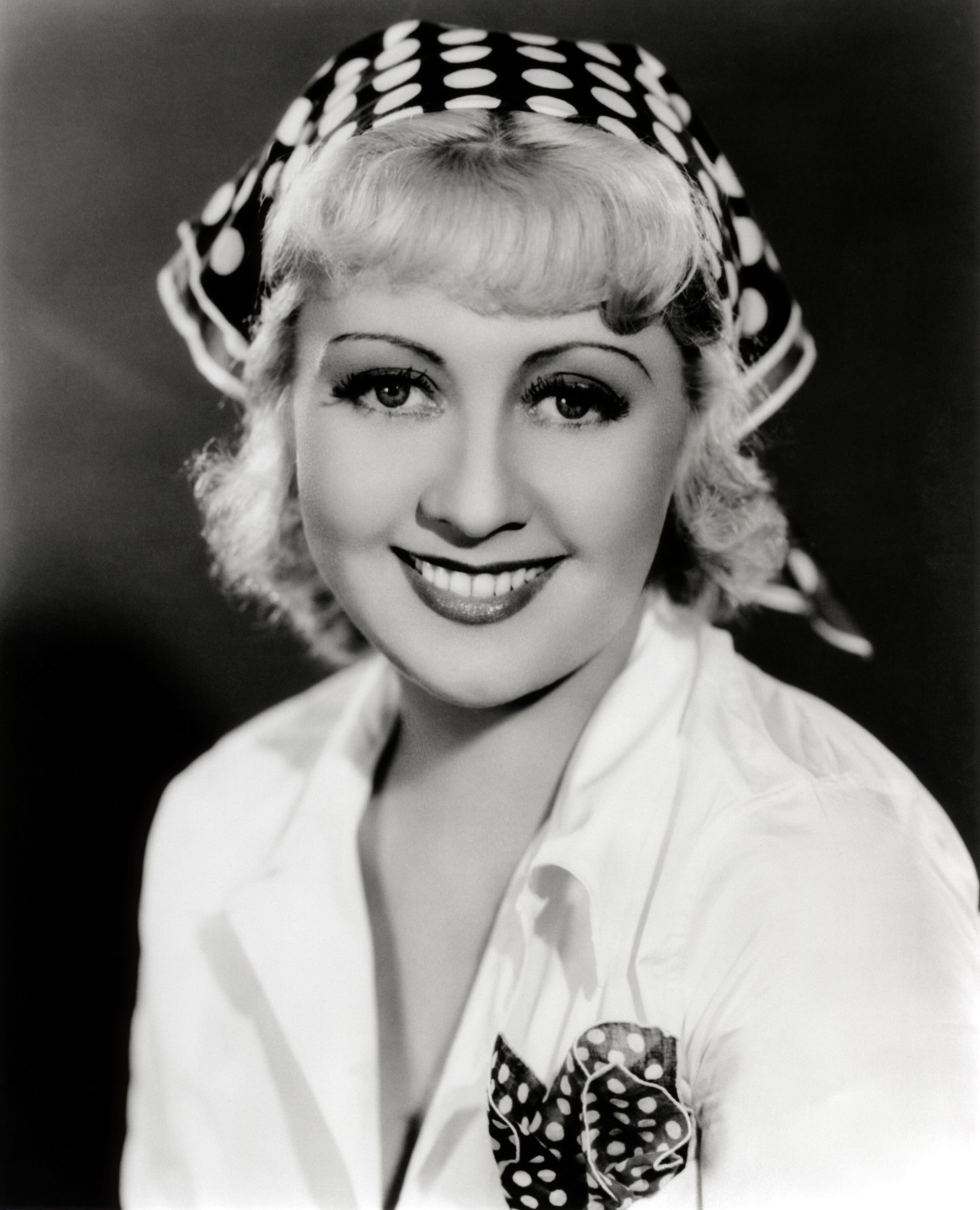
Thelma Todd, lauded as a great beauty and fine comedienne, is perhaps best-known today for her mysterious death back in 1935, when she was just 29. She acted primarily in slapstick comedies, making a name for herself, acting opposite famous faces in Monkey Business (1931), Horse Feathers (1932) (with the Marx Brothers), and Speak Easily (1932; with Buster Keaton and Jimmy Durante). Her long-term affair with filmmaker Roland West resulted in her attempted rebranding as "Alison Loyd" for Corsair (1931), which was a box office dud. Producer Hal Roach paired her up with ZaSu Pitts in seventeen comedy shorts between 1931 and 1933, resulting in the emergence of female Laurel and Hardy-type outings. Her death in 1935 still leaves questions of murder, suicide, and accidental as causes to her demise.

I became interested in Todd following my viewing of the 1991 made-for-TV biopic I have on DVD that stars Loni Anderson as Todd.

upload_2018-9-21_18-25-41.png
 

Emelee

Telly Talk Warrior
LV
6
 
Awards
16
Ann Blyth

59ddca019c728__annex-blyth-ann-01.jpg


On loan to Warner Brothers, Blyth was cast as Veda Pierce, the scheming, ungrateful daughter of Joan Crawford in the 1945 film Mildred Pierce. Her dramatic portrayal won her outstanding reviews, and she received a nomination for an Academy Award for Best Supporting Actress. Blyth was only 16 when she made the Michael Curtiz film.

After Mildred Pierce, Blyth sustained a broken back while tobogganing in Snow Valley, and was not able to fully capitalize on the film's success, although she was still able to make a few movies. She played the part of Regina Hubbard in Another Part of the Forest (a 1948 prequel to The Little Foxes), and achieved success playing a mermaid in Mr. Peabody and the Mermaid. Her other films include: Our Very Own (with Farley Granger), The Great Caruso (with Mario Lanza), One Minute to Zero(with Robert Mitchum), The World in His Arms (with Gregory Peck), Rose Marie, The Student Prince, Kismet, The Buster Keaton Story, and her final film role, The Helen Morgan Story (with Paul Newman).

From the late 1950s into the 1970s, Blyth worked in musical theater and summer stock, starring in the shows The King and I, The Sound of Music, and Show Boat.
 

Angela Channing

Telly Talk Veteran
LV
19
 
Awards
52
Paul Muni never gets the attention her deserved. One of the greatest Hollywood actor ever but rarely talked about these days. He is the only actor ever to be nominated for a Best Actor In A Leading Role Academy Award for his first film (Valiant - 1929) and his last film (The Last Angry Man - 1959). He was nominated for the award 7 times in total, winning once for The Story of Louis Pasteur (1936). He was the only actor ever to be billed above Bette Davis in a film in which she also starred (Juarez - 1939).

In my opinion, his best film and best performance was in I Am A Fugitive From A Chain Gang (1932)

paul-muni-3.jpg
 

ginnyfan

Telly Talk Active Member
LV
0
 
Awards
6
I always wondered about Ann Blyth. After such an impressive debut, playing an iconic movie villain, she kind of disappeared. I only saw her in some MGM 50s movies, playing bland romantic interests to musical stars and swashbucklers. Seems like she did not get typecast as a villain, based on Veda, but in this case that might have been the problem. Would have been better if she got more similar, meaty roles.

Sad to hear about the injury that derailed her.
 

Angela Channing

Telly Talk Veteran
LV
19
 
Awards
52
Maybe not a forgotten star but Irene Dunn never gets the recognition these days that she deserves. When there are any programmes on Hollywood's golden age they always feature names such as Bette Davis, Lauren Becall, Barbara Stanwyck and Joan Crawford but Irene Dunne never seems to get a mention. When she died in 1990, I remember she got a small paragraph buried away on an inside page of the newspaper I read that day which in no way reflected her stature as one of the greats of Hollywood.

She made her first film in 1930 (Leathernecking) and her final film in 1952 (It Grows On Trees). Her most famous roles were as Anna Leonowens in Anna and The King of Siam (1946) and starring as "Mama" in the 1948 film I Remember Mama in which Barbara Bel Geddes had a supporting role.

She was nominated for 5 Oscars but never won and is widely considered to be one of the greatest actresses never to have won the award.

dunne2.jpg
 

ClassyCo

Telly Talk Warrior
LV
5
 
Awards
11
Maybe not a forgotten star but Irene Dunn never gets the recognition these days that she deserves. When there are any programmes on Hollywood's golden age they always feature names such as Bette Davis, Lauren Becall, Barbara Stanwyck and Joan Crawford but Irene Dunne never seems to get a mention. When she died in 1990, I remember she got a small paragraph buried away on an inside page of the newspaper I read that day which in no way reflected her stature as one of the greats of Hollywood.

She made her first film in 1930 (Leathernecking) and her final film in 1952 (It Grows On Trees). Her most famous roles were as Anna Leonowens in Anna and The King of Siam (1946) and starring as "Mama" in the 1948 film I Remember Mama in which Barbara Bel Geddes had a supporting role.

She was nominated for 5 Oscars but never won and is widely considered to be one of the greatest actresses never to have won the award.

dunne2.jpg
I have a book called Leading Ladies that says Irene Dunne is generally regarded as unfashionable today. That's always baffled me. I just don't really understand how she could be thought of as such, but I guess it's because she didn't have the "grand" roles that Davis, Stanwyck, and Crawford had. But even that theory is shaky, considering Norma Shearer had those kinds of romantic roles, but her imprint on modern society is slight, too.

I've always enjoyed Irene Dunne in the movies I've seen her in, particularly My Favorite Wife and Penny Serenade. She's quite beautiful, and always lovely. She's a real delight in her pictures, and I hate that I haven't more on them in my collection. Maybe that needs to be rectified.

2V0B_Uph6knvHBtMiA7MJEEKLazJcuwp3GhCfteDvxbZr6b1a2_iWF57Mqr1Eg_WWFxX-nEdTcyS_uPdc1wTPIfPjUA1gPTpB3lW
 

ClassyCo

Telly Talk Warrior
LV
5
 
Awards
11
Another actresses that rarely gets any significant baring in our discussions is Norma Shearer. She was a major star from the mid-1920s well into the late 1930s, juggling a decade-long-stint of mega popularity, starring in a host of commercially successful films, sometimes under the guidance of her husband, film producer Irving Thalberg.

She won the Academy Award for The Divorcee in 1930, and played in several other then-controversial films, such as A Free Soul (1930). Her on-screen persona gradually matured and got grander, as she would play in such films as The Barretts of Wimpole Street (1934) and Romeo & Juliet (1936). She lit up the screen with Clark Gable in Idiot's Delight (1939), and got involved in some off-screen fireworks with Joan Crawford and Rosalind Russell in The Women (1939).

Her career slowly declined when Irving Thalberg, the head production man at MGM, passed away in late 1936. Still, she was a major star, and she carried the unofficial title of the First Lady of MGM for close to a decade. It's unfair to her and her body of work that we don't mention her more than we do.

Vfxq4afEMQ_Kpj1_eKVR9NkUTO5ymdr6Aff_jFaKoH2Bn39Tkn3MKomKLeDZy3HJPySHKZyrrTwU1T2hHkILzQIecAv8MgRuZdFB87k
 

ClassyCo

Telly Talk Warrior
LV
5
 
Awards
11
Ann Harding (1902─1981), who was touted as RKO's answer to Norma Shearer, starred in a string of popular women's pictures during the 1930s. She was one of the first popular leading ladies to make a splash as sound films were becoming popular in the late 1920s and early 1930s, and she earned an Academy Award nomination for her role in Holiday (1931).

Although RKO could not regularly afford to dish out the budgets for Harding's films as MGM had done for Shearer, she did make her imprint on American audiences during the Great Depression. She often appeared alongside well-known marquee names, such as Myrna Loy, Robert Montgomery, William Powell, Robert Young, and Gary Cooper. She also had a string of popular successes in the movies, namely The Animal Kingdom (1932) and When Ladies Meet (1933).

Harding was known for her striking features, most notably her waist-length blonde hair. She eventually became stereotyped in the role of a long-suffering, self-sacrificing young woman, which led to the decline in her public popularity. Following the lukewarm reception of her late-1930s films, she married conductor Werner Janssen in 1937, and she gradually shifted her life away from the limelight. She would occasionally return to acting, notably in such successes as Eyes in the Night (1942) and The Man in the Gray Flannel Suit (1956), the latter which turned out to be one of her final film performances. She acted exclusively on television thereafter, before ultimately retiring from the profession for good in 1965.


Ann_Harding_1930.jpg
 

ClassyCo

Telly Talk Warrior
LV
5
 
Awards
11
Helen Twelvetrees (1908─1958) was from an influential family in Brooklyn. Her professional surname was acquired from her first husband, Clark Twelvetrees, who she married when she was nineteen (they were married from 1927 to 1931).

She was briefly signed with Fox Film Corporation in the late 1920s, where she made just three films before being released. She soon found employment at Pathé, which was soon absorbed by RKO. During her earlier days at RKO, she occupied her time in the shadow of Constance Bennett and Ann Harding, starring in mostly lackluster women-aimed melodramas, like the 1931 film A Woman of Experience. Twelvetrees was often miscast in her films, and she eventually tired of RKO mis-managing her career. Once Katharine Hepburn was signed to RKO in 1932, she decided to leave the studio and began a freelance career. Her freelance career was also not too successful, and she soon retired from show business in 1939.

She committed suicide in 1958 with an overdose of prescription sedatives.


Helen_Twelvetrees_arrives_from_Hollywood_to_make_the_film_The_Thoroughbred_in_Sydney%2C_2_December_1935_-_silver_gelatin_photoprint_by_Harry_Freeman_%287785505968%29.jpg
 

ClassyCo

Telly Talk Warrior
LV
5
 
Awards
11
Ruth Chatterton (1892─1961) found work as an actress on stage, film, and television in a career lasting over forty years. She later became quite well-known for her novelist and aviation accomplishments. She was one of the only few female aviators working successfully in the United States during the 1930s.

She made her Broadway debut in 1911, but she found her first great stage success in 1919 with Daddy Long Legs. At the age of thirty-six, she made her first feature film which was called Sins of the Fathers (1928). Its success brought her to the attention of Paramount Pictures, who signed her to a contract, and cast her in her first sound film entitled The Doctor's Secret (1929). Chatterton made a smooth transition from silents to talkies, drawing on her stage experience as a training ground for how to conduct her voice for the sound equipment.

Chatterton moved to MGM in 1929, where she would star in Madame X. Her performance was acclaimed, and she was nominated for an Academy Award (she lost to Mary Pickford). In the early 1930s, she was reportedly right behind actresses Greta Garbo, Norma Shearer, and Constance Bennett in terms on box office popularity, although the quality of her film output was generally considered mediocre. She eventually ditched MGM and Paramount for Warner Brothers sometime around 1932. It was said that Chatterton's addition to Warner Brothers brought an "infusion of class".

One of Chatterton's more popular films was the 1933 pre-code comedy called Female, which she played a no-nonsense, strait-laced professional at a time when many women in films were not permitted to do so. Her last film for Warner Brothers was the poorly received melodrama Journal of a Crime in 1934, after-which her career stalled. She then starred opposite Walter Huston in Dodsworth (1936) for Samuel Goldwyn, giving a performance that many of her peers deemed Oscar-worthy. She made on two more films in England before her film career permanently ended in 1938.

She died from a cerebral hemorrhage in 1961, aged sixty-eight.

I remember reading through my large Great Movie Actresses book, and always stopping on Ruth Chatterton. There was always something that sparked about her, and I always want to dig into her career. Bette Davis, who supported her in the 1932 film The Rich Are Always with Us, later recalled how the cameramen employed a "special" lighting for Chatterton, apparently to disguise her age. She was approaching forty at the time. In this realm, I've always thought of Ruth Chatterton and Mae West in the same mindset; they were both born in the early 1890s, but yet remained fairly consistent with keeping their age ambiguous for several years.

ruth-chatterton-vintage-actress-john-springfield.jpg
 

ClassyCo

Telly Talk Warrior
LV
5
 
Awards
11
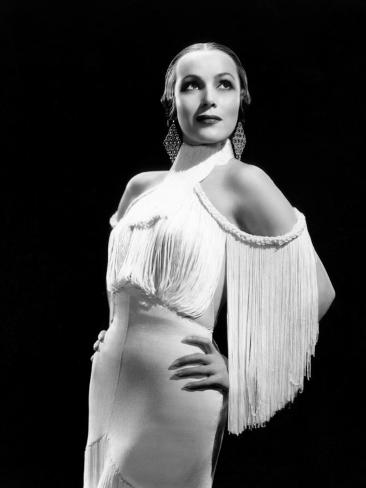
Dolores del Rio (1904─1983) was Hollywood's first Mexican film star. To many contemporary critics, she was viewed as the female equivalent of 1920s heart-throb Rudolph Valentino, and she was often characterized generically as a "female Latin lover". She came from a family of wealthy farmers and bankers in Victoria de Durango, Mexico, where she spent the majority of her youth.

Del Rio met American filmmaker Edwin Carewe in 1925, who championed her desires of movie stardom. She would make her film debut in Joanna (1925), and was quickly fore-fronted as one of the rising young stars in Hollywood. She was voted one of the WAMPAS Baby Stars in 1926, along with Joan Crawford, Mary Astor, Janet Gaynor, and Fay Wray. She was soon ushered into films like The Loves of Carmen (1927) and Ramona (1928), which were hits. In late 1928, she was invited to be a part of a radio telecast, as were Mary Pickford, Douglas Fairbanks, Charlie Chaplin, Gloria Swanson, and John Barrymore among others, for The Dodge Brothers Hour to prove that their speaking voices would make the transition to the sound films that were sweeping American cinema.

She met Cedric Gibbons, an influential art director for MGM, in 1930. He helped secure her an exclusive contract with RKO, where she would star in Girl of the Rio (1931). Producer David O. Selznick telephoned filmmaker King Vidor about making a film centered on a love story in the South Seas, that would star del Rio and Joel McCrea, and would be punctuated by del Rio jumping into a volcano at the end. The resulting film was Bird of Paradise (1932), which drew controversy for its on-screen nudity, but was a popular audience success. She was then recruited to headline Flying Down to Rio (1933), a global success, that introduced the partnership of Fred Astaire and Ginger Rogers to audiences.

She was hired by Jack Warner in 1934 to make two films for Warner Brothers. She first starred in the Busby Berkeley musical comedy Wonder Bar (1934), co-starring Al Jolson, and then played the title role in Madame Du Barry (1934). The latter film generated a certain amount of controversy, primarily around the decision of the producers to shift the story into a sex farce with del Rio as the sultry centerpiece. The next year she starred in I Live for Love and In Caliente (both 1935), both which enjoyed only minor box office success. Del Rio was eventually released from her Warner Brothers contract in 1936.

Over the next few years, she moved frequently among the movie studios, especially Universal and Fox, appearing in a handful of different pictures, all of which were critical and financial failures. Cedric Gibbons, despite his position at MGM, was not able to secure del Rio any significant employment at his studio, where the leading ladies were Norma Shearer, Greta Garbo, Joan Crawford, Myrna Loy, Luise Rainier, and Jean Harlow. While the executives at MGM were quick to praise del Rio for her beauty, they felt that Latina women had no place in their stories. After years of suffering poor scripts and indifferent box office returns for her pictures, del Rio's public popularity steadily declined. She was now far more prominent for being a clotheshorse in fashion advertisements, while her film career seemed increasingly irrelevant to Hollywood. She was placed on a list entitled "box office poison" in 1938, sharing the distinction with the likes of Garbo, Crawford, Katharine Hepburn, Edward Arnold, John Barrymore, Marlene Dietrich, and Mae West among others. The list was submitted by independent theater owner Harry Brandt, and was intended to explain that while these stars earned substantial salaries, their films were not financially successful in theaters.

Cedric Gibbons would secure a leading role for Dolores in the film The Man from Dakota (1940), but it was mainly crafted as a star vehicle for Wallace Beery. That same year, she became friends with influential filmmaker Orson Welles. He eventually cast her opposite Joseph Cotten in the film Journey Into Fear in 1942, but their rapidly deteriorating relationship resulted in the majority of her role being reduced. From 1943 to 1959, del Rio worked almost exclusively in Mexican films, appearing in a string of successful pictures, many achieving considerable critical and financial accolades. She returned to Hollywood in 1960 to co-star as Elvis Presley's mother in the western Flaming Star. She continued to work fairly consistently until the late 1970s, when she last appeared briefly in the Anthony Quinn film The Children of Sanchez (1978).

Dolores del Rio died of liver failure at age seventy-eight in 1983.


in-caliente-dolores-del-rio-1935.jpg
 

ClassyCo

Telly Talk Warrior
LV
5
 
Awards
11
June Haver (1926─2005) spent the entirety of her career as a contract star for 20th Century-Fox. Her twelve-year-career was predominantly filled starring in a string of those glittery, WWII-era Technicolor musicals, always playing the starry, blue-eyed blonde.

She was signed to Fox in 1943 with a starting salary of $3,500 a week. She made her film debut with a bit part in The Gang's All Here (1943), after-which she was quickly given a supporting role in Home in Indiana (1944). Before filming on the latter was even completed, she was ushered into the 1944 production of Irish Eyes Are Smiling, as a replacement for the suddenly ill Alice Faye. The film was a popular success, and the studio decided to spend more time grooming her for her own pictures. The following year, she and Betty Grable starred as sisters in The Dolly Sisters, which was easily one of Fox's highest-grossing movies of 1945. She later commented fondly on her working experience with Grable, who she found to be nice and warming. She also often spoke of Grable in high regard as a mother. She was the headliner for the hit musical Three Little Girls in Blue (1946), and by 1947, her star-power was strong enough that a role was orchestrated specifically for her in I Wonder Who's Kissing Her Now. Perhaps one of her best-known performances came as Broadway star Marilyn Miller in the 1949 musical biography entitled Look for the Silver Lining.

Haver spent the majority of her career at Fox in the shadow of Alice Faye and Betty Grable, the studio's foremost movie musical queens. She was assigned to replace Faye in what became her first star vehicle, and she was regularly marketed in press releases as "The Pocket Grable", owing to her small stature and resemblance to the popular star. In hindsight, while Haver's pictures may not be as fondly remembered as her contemporaries, she always performed in first-rate, brightly lit, optimistic musical comedies that all generated substantial profits for their studio. She was quite popular on her own merits, and by the mid-to-late 1940s, she was the only name used to carry most of her films.

Her career did being to slide as the 1940s drew to a close, partly because of the American public's decreasing interest in the type of picture she had grown to perfect. She did find reasonable success in The Daughter of Rosie O'Grady (1950), but that type of squeaky-clean-musical-comedy was slowly outgrowing its welcome with audiences. The American audience were ever-changing their prototype for the ideal picture, and they were now edging toward a more realistic movie experience. Haver's first and only black-and-white film was the 1951 comedy Love Nest, which featured newcomer Marilyn Monroe in a supporting role.

Haver stunned filmdom when she announced her desire to retire in 1952 and join a convent as a nun. She stayed at the Sisters of Charity of Leavenworth for around nine months, before exiting because of "poor health". She then briefly returned to Fox to stand-in for Betty Grable in the 1953 musical comedy The Girl Next Door, which ended up being her final film. She retired from show business thereafter.

Haver married actor Fred MacMurray in 1954, whom she had starred with in Where Do We Go from Here? (1945). The couple would eventually adopt two daughters together, and enjoyed a healthy relationship in-and-out of the limelight, before MacMurray passed in 1991. Haver died of respiratory failure on Independence Day 2005 at the age of seventy-nine. She was laid to rest by MacMurray at Holy Cross Cemetery in Culver City, California.


740full-june-haver.jpg
 
Last edited:

Crimson

Telly Talk Enthusiast
LV
2
 
Awards
9
Dolores del Rio (1904─1983) was Hollywood's first Mexican film star.

I've never seen any of her films, but Marlene Dietrich thought she was the most beautiful woman in Hollywood in the 30s; and Dietrich was a harsh judge of beauty, since she dismissed Claudette Colbert as "ugly".
 

ClassyCo

Telly Talk Warrior
LV
5
 
Awards
11
I've never seen any of her films, but Marlene Dietrich thought she was the most beautiful woman in Hollywood in the 30s; and Dietrich was a harsh judge of beauty, since she dismissed Claudette Colbert as "ugly".
Dolores del Rio was ravishingly beautiful in her prime, and she aged exceptionally well. I've only seen pieces of her pictures, like In Caliente and I Live for Love, and I've got Flying Down to Rio in the Astaire-Rogers collection I bought months ago. She was so beautiful, in fact, that her career was completely absorbed by her looks. What ever contributions she could have possibly made to her pictures were underappreciated because she was beautiful. Her acting was credible enough, I guess, especially for the period, but being Latina exiled her from obtaining any true greatness as an actress during her heyday.

I mean, just look at her. She's breathtaking. The embodiment of old Hollywood glamour, but typical of the era for being mismanaged, under-used, and catergorized as a clotheshorse.


Crimson

Telly Talk Enthusiast
LV
2
 
Awards
9
Linda Darnell

Funny you would post Linda today. I was literally pecking away at a write-up for her in this thread, but it's a rainy day and I took a nap rather than finishing.

I think Linda was one of the better of the 40s pin-up girls, but much less remembered today than many of her contemporaries -- Lana, Rita, Ava, Jane, etc. To my eyes, Linda looks like an amalgam of Vivien Leigh, Jane Russell and Dorothy Lamour which makes her seem emblematic of the era. Linda's acting was often reminiscent of Lana's -- both prone to that hoity-toity huffiness passing for fieriness -- but I think Linda was a smidge better.

Her career -- at least in the 40s -- was robust. A few heroine parts (THE MARK OF ZORRO, BLOOD & SAND) opposite Tyrone Power; a couple of great floosie roles (HANGOVER SQUARE, FALLEN ANGEL); and a classic western (MY DARLING CLEMENTINE). It was her misfortune that what should have been her greatest role -- FOREVER AMBER, touted as the next GWTW -- fizzled. She rebounded with two excellent performances in excellent films (Sturges' UNFAITHFULLY YOURS and Mankiewicz's A LETTER TO THREE WIVES). And then her career collapsed.

There seemed to be no discernible reason for this. She didn't have any huge box office flops or a string of bad notices; she wasn't black listed or the subject of a career ending scandal. Hollywood just ... lost interest. I once read the opinion that just at the point Darnell was capable of playing interesting characters, she stopped being offered them. (And it's amazing how many actresses that description could apply to.) She herself later lamented that while she knew her career wouldn't last forever, she hadn't expected to be washed up at 30.

MV5BY2VjMTk3MjYtODFlYS00YjdjLWIyOGItYTU2NThiMTE4ODQzXkEyXkFqcGdeQXVyNjc2OTM5MTU@._V1_.jpg

Overall, I'm very partial to the 20th Century Fox stars of the 40s -- Linda, Tyrone Power, Gene Tierney, Laird Cregar -- and their films.
 
Last edited:

ClassyCo

Telly Talk Warrior
LV
5
 
Awards
11
Funny you would post Linda today. I was literally pecking away at a write-up for her in this thread, but it's a rainy day and I took a nap rather than finishing.

I think Linda was one of the better of the 40s pin-up girls, but much less remembered today than many of her contemporaries -- Lana, Rita, Ava, Jane, etc. To my eyes, Linda looks like an amalgam of Vivien Leigh, Jane Russell and Dorothy Lamour which her seem emblematic of the era. Linda's acting was often reminiscent of Lana's -- both prone to that hoity-toity huffiness passing for fieriness -- but I think Linda was a smidge better.

Her career -- at least in the 40s -- was robust. A few heroine parts (THE MARK OF ZORRO, BLOOD & SAND) opposite Tyrone Power; a couple of great floosie roles (HANGOVER SQUARE, FALLEN ANGEL); and a classic western (MY DARLING CLEMENTINE). It was her misfortune that what should have been her greatest role -- FOREVER AMBER, touted as the next GWTW -- fizzled. She rebounded with two excellent performances in excellent films (Sturges' UNFAITHFULLY YOURS and Mankiewicz's A LETTER TO THREE WIVES). And then her career collapsed.

There seemed to be no discernible reason for this. She didn't have any huge box office flops or a string of bad notices; she wasn't black listed or the subject of a career ending scandal. Hollywood just ... lost interest. I once read the opinion that just at the point Darnell was capable of playing interesting characters, she stopped being offered them. (And it's amazing how many actresses that description could apply to.) She herself later lamented that while she knew her career wouldn't last forever, she hadn't expected to be washed up at 30.

View attachment 21572

Overall, I'm very partial to the 20th Century Fox stars of the 40s -- Linda, Tyrone Power, Gene Tierney, Laird Cregar -- and their films.
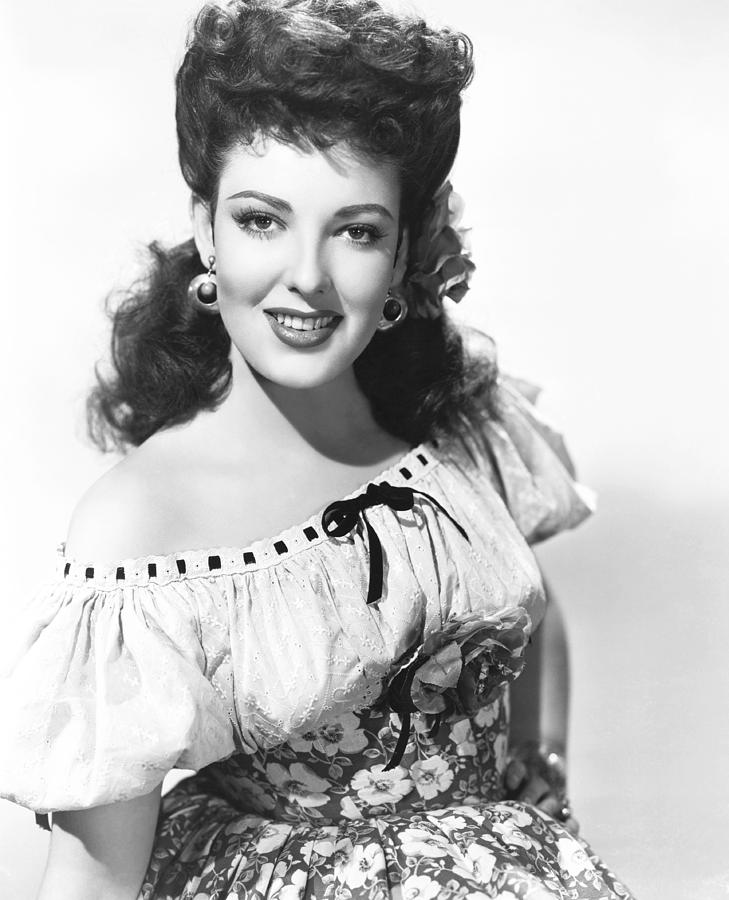
Linda Darnell was a terribly beautiful woman in her heyday. Dark hair, eyes, lips. It all mixed together perfectly, and she photographed exceptionally well in black-and-white and in Technicolor.

She was a star in her first movie, Elsa Maxwell's Hotel for Women, which was immediately followed by the romantic comedy Day-Time Wife, co-starring the handsome Tyrone Power. Her earliest days at 20th Century-Fox were spent playing second fiddle to Tyrone Power in a host of big-budget sword-and-sandal pictures like The Mark of Zorro and Blood and Sand. Her quick climb to the top was even the inspiration for the movie Star Dust, which had been written specifically as a vehicle for her. She was quite popular in those early WWII years, and she appeared in a lot of big pictures, but rarely as the central star.

Well, I do know that Darryl F. Zanuck, the head honcho at Fox, was furious when Linda married Pev Marley, a man twenty-four-years her senior, in 1943. He felt it would ruin her spotless reputation on-screen as a fresh-faced girl-next-door. When the reaction from her fan-base appeared sympathetic, Zanuck apparently recanted his initial decision of terminating her contract, but he kept her under his thumb by cast her in a string of minor roles, such as the Virgin Mary in The Song of Bernadette and an Indian maiden in Buffalo Bill. She was hastily loaned to United Artists for the 1944 drama Summer Storm, co-starring George Sanders, in which she played a played sultry Russian temptress. It introduced a "new Linda Darnell" to the public, a woman now more mature and obviously sexy.

The film noir Fallen Angel was originally scripted as a dramatic vehicle for musical comedy star Alice Faye, but Zanuck ultimately retooled the project as a showcase for Darnell. Alice Faye was understandably upset that Zanuck had cut the majority of her scenes, although she remained steadfast that she was not angry at Darnell, later commenting that she was a very talented and beautiful young lady. The success of the picture marked a turning point in Darnell's career at Fox, where she was gradually gaining momentum as a bankable and credible lead actress. She had top roles in Hangover Square and Centennial Summer, but also turned up in a relatively minor and scantily-clad role in Anna and the King of Siam. She starred with Henry Fonda in the now-iconic western comedy called My Darling Clementine.

Her work was steadily improving in the later 1940s, and she was now representing a new face in Fox's roster of stars. She bet out hundreds of actresses for the coveted title role in Forever Amber, a lavish movie adaptation of the popular novel, that was touted as the successor to Gone with the Wind. She reluctantly dyed her hair blonde for the role, and worked on her role extensively with an acting coach. Because of censorship of the period, however, many of the film's more "sensational" scenes were eventually axed from the released product, leaving Darnell angry that some of her best work in the picture was left laying on the cutting room floor. The film was popular with the public, but received indifferent critical reviews who compared it unfavorably to the novel upon which it was based.

The movies Unfaithfully Yours and A Letter to Three Wives probably the peak of her craft as a screen, while she supposedly regarded No Way Out as her finest performance. What's weird is just what you said: right at the moment when she was at the edge of achieving true greatness, Hollywood and her studio turned their backs on her. She spent a decade in-and-out of good and bad movies, and now that she had finally matured in her profession, they work she deserved was no longer available to her. She desperately wanted roles in Pinky and All About Eve (or so I remember reading somewhere once), but it was apparently out of the question. Fox wanted Jeanne Crain and Anne Baxter, so that's who they used. The remainder of her Fox contract was used for mediocre B-movies, usually as a loan out to other studios. Her career was basically sabotaged by a studio that tossed their stars aside like unwanted old tissues (which was fairly typical of the era). Darnell was apparently humiliated at being asked to screen test for a role in The Wayward Bus in 1956, although the role eventually went to a much younger Joan Collins.

She didn't make any more movies until she was brought back for Black Spurs, a low-budget western in the mid-sixties, which was released two months after her death in April 1965 in a house fire. She was forty-one.

1401595444_3.png
 

Crimson

Telly Talk Enthusiast
LV
2
 
Awards
9
I'll add Claire Trevor to this list; she had a 50-year career, shifting between leading and supporting roles, and won an Academy Award among a few nominations. Truth is, I've only ever seen two of her films, yet they both rank among my favorite performances: KEY LARGO (easily one of my favorite movies) and THE VELVET TOUCH (an obscure but very good noir drama); both from 1948. Based on these two performances, she seemed rare among actors in her ability to perform in a way I might describe as "full throttled" yet without crossing over into being hammy or overwrought. I always mean to explore more of her films, but have never gotten around to it.


f04114aad11bbd673400fdadf8938d9c.jpg kl5.jpg unnamed.jpg
 
Top