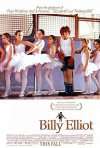
What was the last film you watched?

Willie Oleson

Telly Talk Schemer
LV
9
 
Awards
27
Billy's relationship with Kes is incredible to watch - particularly the scenes where Kes flies with him in the field
The film being as bleak as it is, those scenes almost look disproportionately ethereal. Like looking at a snapshot and hear the music.
It was well worth the wait.
Have you seen MELODY (1971)? It's such a lovely film, I think you'll like it.
 

Mel O'Drama

Admin
LV
16
 
Awards
44
Your description reminded me of Our Day Out, Willy Russell's school-themed BBC film/play from eight years later, which I only recently discovered on YouTube and is really good.

The name is very familiar. I don't think I've seen it, but I have a sneaking feeling we may have briefly touched upon it when I was at school, probably either in Drama or English Literature class.

Already the Liverpudlians escaping to Wales factor has reminded me of One Summer.

I'll aim to watch it sooner rather than later, as I know these things are apt to vanish at will.


The film being as bleak as it is, those scenes almost look disproportionately ethereal. Like looking at a snapshot and hear the music.

Oh, this has reminded me of something I forgot to mention about Kes, and that's how judiciously the music was used. It felt like there were a few scenes early on where the imagery was warm and lovely (Billy walking in fields or woodland, I'm thinking) and it was accompanied by this whimsical 1970s flutey music that made it feel almost like Wind In The Willows. It kind of played against the tone of the film, but I found it hopeful.

Later in the film, when Billy was giving his talk in the classroom about training Kes, it suddenly dawned on me that there was no music, and there hadn't been for a while. It's exactly the kind of scene that in a lesser film would have been underscored with poignant music, but the lack of it was what made the scene achieve its full potential. I don't think there was any more music until the closing scenes. Or if there was, I was too immersed in the story to notice.


Have you seen MELODY (1971)? It's such a lovely film, I think you'll like it.

This is a new one to me. It is on Prime, but seems they'd want me to pay for it, so I'll keep an eye out for that changing as these things tend to rotate.


Thanks, both, for the recommendations.
 

Mel O'Drama

Admin
LV
16
 
Awards
44
Our Day Out, Willy Russell's school-themed BBC film/play

I watched this one last night and you're right - it was great.

I can definitely see a number of similarities with Kes. The wild, sometimes dysfunctional children connecting with a world that's separate to their own and growing from it. The pupil/teacher relationship and the teachers who range from authoritarian to compassionate. The visual representation of a run down environment that's (hopefully) no longer there, and the contrast between this and greener places (I was particularly struck by the scenery out of the coach windows as they left Liverpool, with expanses of grey concrete looking as though it had been bombed out).

Elizabeth Estensen is the only one of the cast I could have named without thought, but most of the adult faces were very familiar and, as it turned out, I've seen them in many different things (from Billy Elliot to Brookside to One Summer... funny how everything seems to link neatly up). It's nice to see Alun Armstrong is still actively working.

The street furniture was wonderful. All those colourful cars, including Mr Briggs's Triumph 2.5 and Mrs Kay's Renault 5. And the abundance of polyester clothing. Wonderful.

I was mildly bothered that the characters kept referring to "Conway" Castle instead of Conwy, and it was even misspelt on the coach window sign. But then I put it down to Willy Russell's attention to detail since it's possibly a common mispronunciation.

All told, a lovely way to spend an hour and ten minutes. And it wasn't familiar, so I must have been going down the wrong path thinking I'd studied this one. I may need some more Play For Today in my life.


Also, the final destination of Petra Taylor in Brookside.

Oh yes - of course.
 

Seaviewer

Telly Talk Warrior
LV
9
 
Awards
20
Turbo (2013)
A snail enters the Indianapolis 500 motor race.
Hits all the expected underdog tropes. A little reminiscent of The Love Bug. The Dreamworks/Pixar style of animation has always bothered me a bit. Not quite cartoon, not quite live-action and no differentiation between human and non-human characters. It just seems a bit creepy.
 

Mel O'Drama

Admin
LV
16
 
Awards
44
Affliction (1997)

iu

Before watching, I hadn't realised who Paul Schrader was. Even if I had, I've seen little-to-nothing of his work so it may not have meant that much anyway (I am, of course, aware of Taxi Driver, Raging Bull, American Gigolo, The Mosquito Coast and The Last Temptation Of Christ, but have yet to watch any of them). I was drawn into this by the strong cast, the mention of an Oscar win, the fact it's free on Prime and the intriguing title.

The darkness in this film is both figurative and literal. Exterior scenes feature snowy locations, and this should brighten it up. Instead it captures a gloom so effectively that I found myself repeatedly trying to refocus my vision to make out more detail. Woodland scenes, it has to be said, look amazingly dreamlike, with crisp white snow and spindly bare trees through which characters move.

The story is one that's felt rather than followed. My concentration wasn't the sharpest yesterday (this was watched as a Sunday matinée) and for a good deal of the time I didn't fully understand what was going on. There's a sense of joining an ongoing rural soap opera with a sense of history, and relationships that become clear as things go along.

Last month I watched Winter's Bone, which depicted a harsh and brutal small town America. This film is similar in tone and theme. Along with the sense of isolation comes a set of values that feels very dog eat dog (or perhaps "dog shoot, skin and eat dog"). There's an undercurrent of violence which explodes to the surface every once in a while. And yet each character, in their own way, is as broken and vulnerable as they are ugly and bitter.

There's nothing here that's cheerful and little that's hopeful, and this redeems the film. A saccharine Hollywood ending would have made it feel entirely pointless (as it does most films). To say more about that ending would be to give too much away, but it might just be reason enough to rewatch the film, even though once was probably enough. I'd rather spend the time watching another PS -directed film.
 

Willie Oleson

Telly Talk Schemer
LV
9
 
Awards
27
Austenland (2013)

1769852922980.png

The title and thumbnail reveals enough to understand what kind of film this is, and although I'm not a big Pride And Prejudice fan I was curious to see how they'd tackle this particular branch of fandom.
Pride & Prejudice fanatic Jane Hayes played by Keri Russell spends all her savings on a Jane Austen Experience that takes place in an English Jane Austen theme park of sorts.
Upon arrival she meets another American participant played by Jennifer Coolidge, the stereotypically loud an brazen American bull in a china shop.
Georgia King plays the third and somewhat unhinged candidate, and Jane Seymour as the haughty leader of the JA Experience. It's been a while since I've watched Jane Seymour in film or TV so this may have been an additional selling point for me.
Now with all the cliché romcom characters ticked off, let's Pride & Roll.

When the film started I didn't even know how old it was; the release dates on Prime are not always accurate but Netflix doesn't show it at all.
The bland Sony Picture Classics logo - which isn't a logo at all - made me guess it was from the late 1990s or early 2000s, especially since the role of Jane Hayes has "Sandra Bullock" or "Renée Zellweger" written all over it.
If AUSTENLAND had been a Sandra Bullock vehicle then I'm sure it would have been bigger, more outlandish and possibly more memorable - but not necessarily funnier.
it may sound like a strange compliment but I think there's a neutral or understated charm about actress Keri Russell, and this worked very well for her role in THE AMERICANS since she had to perform in various disguises. She'd be a good choice for a female version of The Day Of The Jackal.

The satire in AUSTENLAND could have been spunkier and the humour could have been funnier. However, there's a difference between not-too-funny and teethgrindingly UNfunny (as I've seen it in many comedies, including MISS CONGENIALITY).
The humour in AUSTENLAND is in the smaller details that can be easily overlooked.
I laughed every time someone said "make haste!"
The story makes fun of Jane Austen fans but there's also a sense of appreciation. And then it also becomes a Jane Austen story.
Pretty much like that other fandom film, GALAXY QUEST, it has its cake and eat it - even if the Sci-Fi spoof is obviously superior to this film.

The romantic conclusion in this film is without the obligatory fanfare but somehow it's usually this type of restraint that gets me misty-eyed.
In a stereotypically American fashion, the rich participant (Coolidge) ends up buying the park and turns it into a bright and pink McAustenland.
AUSTENLAND may not be a game changer but I think it's a charming film that left a very pleasant aftertaste.
I was surprised to learn that it's from 2013 because it definitely looks like a 1990s time capsule.
 

Mel O'Drama

Admin
LV
16
 
Awards
44
Sing Street (2016)

iu

A completely on-the-spot decision. I was working through Prime looking at films leaving soon to narrow down my choices. After much scrolling and lack of inspiration Sing Street was very near the bottom of the page. I'll admit to a cautious glance at Wikipedia. In general I'm not a fan of the musical genre and was hoping to get some reassurance that it wasn't too twee or cloying. That reassurance came from the two names I recognised in the credits: Queer As Folk's Aiden Gillen and Maria Doyle-Kennedy from The Commitments.

Maria in particular gave me hope that this might be along the same musical lines as The Commitments and while Sing Street doesn't have quite a much attitude there were enough of its elements to satisfy. Indeed, the musical plot element - with the group forming from scratch and gradually becoming more proficient after studying lots of music videos - was very similar (there is an argument to be made for it also having elements of other 2010s musical projects such as Glee, but fortunately not glaringly so). Looking at reviews today I've seen some comparisons to La La Land in YT comment (generally saying Sing Street is far better), but I'll never know. Mark Kermode also compares it to School Of Rock and Bandslam (neither of which I've seen).

Maria didn't sing a note considering which is a bit of a waste considering what a great voice she has (she and Aiden play the parents of the film's protagonist). Still, it's nice to see her here. Most of the vocals come from Ferdia Walsh-Peelo who would then have been 15 or 16, supported by Mark McKenna. When I heard Ferdia - in character as Conor - sing Take On Me a cappella I thought we were in trouble. I should have known it was there for the journey but I like that the film surprised me when I realised (spoiler) he actually has a voice. Incidentally, the film is a clear demonstration of the difference production can make. Many of the vocals appear to be live, and they're good enough, but then it occasionally cuts to a studio version of the same song and it sparkles even more.

Being set in the mid-Eighties, and there are plenty of treats here in the form of the music that inspires the characters as well as pop culture references of the time. Back To The Future inspires a music video made by the fictitious band and we see the real-life music videos for Spandau Ballet's Gold and Duran Duran's Rio.


The film even delivers a montage as we see Conor and Eamon spend time spinning records and discovering lots of then-current tracks. Brief, overlapping snippets are heard and it becomes a fun little game of Name That Tune (which I found surprisingly difficult hearing fragments of them).

There's a great running gag where Conor's inspirations keep changing and we see him rock up at school with a series of dramatically different styles inspired by artists such as Robert Smith of The Cure. It's also worth noting that U2's Bono and The Edge were involved in production, though didn't appear to write the songs (not that I spotted, anyway). The original tracks are great and flow really well with the MTV pop hits. I really like that each of the tracks is meant to be kind of inspired by certain songs or artists and that similarity can be heard immediately. Most of them felt instantly familiar - a mark of a top notch pop song - and Riddle Of The Model in particular had me convinced it was a cover.

Happily, it's not a pure musical. Characters don't break into song at the drop of a hat. The songs still progress the story, though, since they're written by the protagonist as a way of expressing himself. When they're sung, truths are revealed to those who listen, so it has the best of both worlds. Really, though, the semi-autobiographical story is the most important part of the film and that works well. I'm sure anyone who was at school in the Eighties will recognise that element here as surely as they will relate to Grange Hill of the era. The school I went to was a pretty good one, and thankfully not an abusive Catholic school like the one in this film, but it was also diverse and there were rougher kids and bullies and some strict teachers. I can see some of those in this film. Incidentally, the film appears to be shot at the real Synge Street school in Dublin, and there's an acknowledgement at the end of the credits that times have changed and it is a very different school in 2016 from what it was in 1985.

The whole cast is great. Most of them are in their teens and early twenties but each character feels fully developed and almost jaded but all with a great dose of humour (a couple of the much younger supporting actors are hilarious).

Dublin and its surrounding area is nicely filmed, with the appropriately grey-brown inner city palette being interrupted by colourful visits to the picturesque coastal town.

The ending takes a little suspension of disbelief, but is so hopeful and open-ended that I'll take it. I already find myself wondering what happened next.

This is a little gem (only slightly imperfect) that I think could take repeated views.


Willie Oleson

Telly Talk Schemer
LV
9
 
Awards
27
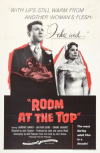
Room At The Top (1958)

1769941481435.png

Ah, those salacious, attention-grabbing movie posters.
The idea of male ambition on film is not quite as novel as the poster suggests, but things have changed after the war, and rebuilding Europe created aspirations for go-getters like Joe Lampton.
Since the war is mentioned only once, and also because Joe runs away from the bombed-out ruins rather than rebuilding it, I think it hardly qualifies as a social commentary.
There's also a lot of class envy, but seeing how easy it is for Joe to enter the room at the top it never becomes a challenge or a motivated narrative.

Joe's lover Alice mentions that "there's always been somebody to take care of our Joe". There is an interesting concept about a man who's being loved too much, resulting in a life without conflict which then becomes the conflict itself.
Unfortunately, this film is not a great character study at all. It looks like Hollywood meets Kitchen Sink, and it's a train wreck I couldn't look away from.
Joe Lampton is so transparent that it kinda looks as if the characters explain their respective story arcs to each other.
It's a lazy and overwrought melodrama, and while the actors are making the most of it - and sometimes succeed when they're not burdened with the stiffly written dialogue - none of it is Academy Awards material.

Even with the late 1940s sensibilities in mind, the fact that Alice once posed nude for a painter should not escalate in such an extreme way.
Actually, I assumed that the break-up was planned and that Joe used Alice's "past" as an excuse to fake an hysterical reaction.
But, no, apparently it's the real deal.
Joe's psychotic behaviour ends right where it begins so they're also nothing doing with that.
If the film is meant to be intentional caricature then the joke is on me, of course.

Bizarrely, the film explodes magnificently in the last 10 or 15 minutes, it really looks as if it's made by different people. Or an alternative DVD 4K UHD bonus ending.
The supporting actors are entertaining unless they get too much screen time, and I think this is the first time I heard "the family way" used in dialogue (so I guess it wasn't all bad). I have The Family Way in my watchlist, perhaps it was a cosmic hint?
 

James from London

International Treasure
LV
6
 
Awards
18
I have The Family Way in my watchlist
Oh, I love the music from The Family Way.

This is one of the loveliest things Paul McCartney's ever written - just a little something he casually tossed off the same year as writing 'Here There & Everywhere', 'Eleanor Rigby', 'For No One', 'Got to Get You In My Life' ... :


James from London

International Treasure
LV
6
 
Awards
18
I remember really liking The Family Way, but it's many years since I've seen it and my official opinion of it has long since expired. (Plus I also loved Room at the Top so what do I know?)
 

Willie Oleson

Telly Talk Schemer
LV
9
 
Awards
27
Happily, it's not a pure musical. Characters don't break into song at the drop of a hat.
I've watched (a little bit) of that type of musical a few days ago. It was the German film Linie 1 based on a real musical (a big cult hit in Germany, although I couldn't see what made it so quintessential German) and that means that every scene is pure fantasy.
It's subtitled but that's also part of the problem: subtitles for song lyrics doesn't work. I see the word "metro" and hear the word "U-bahn".

Yesterday I received an email from netflix saying: you have not finished the complete streaming yet, Mr. Oleson!. And, Mr. Oleson!, we think, Mr. Oleson!, that it will be in your best interest to do so a.s.a.p., Mr. Oleson!
 

Mel O'Drama

Admin
LV
16
 
Awards
44
This is one of the loveliest things Paul McCartney's ever written

That's really sweet.

And after I finished playing it, 2M5 came on autoplay (presumably the next track). It's so upbeat it made me jump out of my skin. And it's so very 1966 I can easily envisage Batman swinging a cape and doing the Batusi to it.


Yesterday I received an email from netflix saying: you have not finished the complete streaming yet, Mr. Oleson!. And, Mr. Oleson!, we think, Mr. Oleson!, that it will be in your best interest to do so a.s.a.p., Mr. Oleson!

Probably best it came in writing. Put that to music and it would be a very lethal ear worm.
 

James from London

International Treasure
LV
6
 
Awards
18
2M5 came on autoplay (presumably the next track). It's so upbeat it made me jump out of my skin. And it's so very 1966 I can easily envisage Batman swinging a cape and doing the Batusi to it.

I'm listening to it now and yes, it's very swinging and groovy, yet there's also a underlying melancholy that makes me strangely nostalgic for a 1966 I even never knew ...
 

Willie Oleson

Telly Talk Schemer
LV
9
 
Awards
27
The Family Way (1966)

1769979474534.png

And so a good thing came from Room At The Top after all. And without Laurence Harvey's spoken reference, the title of this film would have gone over my head.
It's not important but it's true.
The premise of the film - like the original play, I suppose - is very much a comedy, but for the most part it plays out like a straight drama lightly sprinkled with humour and quirk. In other words, it's not a Carry On Married farce.

Because of housing problems, newlyweds Jenny and Arthur are going to live with Arthur's parents and spend their wedding night in Arthur's bedroom.
There's a lot of social expectation about that wedding night which looks a bit medieval to me. Those people literally stood around the bed of the married couple to witness the religious blessing. Thankfully that doesn't happen in this film but the awkwardness is still very much there.
Jenny and Arthur look like a young Eurovision couple (or half of AB/BA) rather than typically British people.
Even more noticeable are the warm and eye-popping colours which looks rather unusual for this genre film made in UK, but a different film poster mentions a "Technicolor Warner Bros. release" so I guess that explains it.

The plot-driven part is that Jenny and Arthur fail to consummate their marriage, but at the heart of it is a strained father/son relationship with a little twist thrown in.
This is very noticeable during an arm wrestling contest between father and son: Arthur is about to win but when he sees his father's tormented facial expressions he decides to fake defeat.
Later, Arthur's mother Lucy berates her husband Ezra for humiliating their son on his wedding day unaware of the fact that Arthur intentionally maintained his father's self-esteem.
Nevertheless, it was Ezra's inconsiderate behaviour that put them in that situation in the first place.
He's the kind of character who always puts his foot in it, followed by Lucy's sarcastic and quotable comments.

Jenny's parents are also far from perfect, and at some point in the story it even foreshadows a bit of Bouquet Of Barbed Wire.
As the story progresses, the emphasis is on the public reaction to Jenny and Arthur's mysterious marital issue, and it kinda looks as if they're watching the couple in a Big Brother TV show.
In a bizarre algorithm sort of way it feels as if the whole world conspires against Arthur: from an unsolicited birth-control catalogue to an overwhelmingly public display of marriage-sex marketing.
The last part of the story is the only part that deals with the drama in a head-on way and a bit of self-awareness threatens to creep in. But since it's also about a certain plot-realisation it stays on the right side of melodrama. I imagine that the closing scene is exactly the same as the one from the stage play.

Not many actors that I recognised, which doesn't mean I had not seen them in any film before this one.
Barry Foster is the household name because he's been in so many films and TV series, and I had previously watched a young Murray Head in Sunday Bloody Sunday.
A marriage guidance counsellor is played by Ruth Trouncer but for a brief moment I thought it was Stephanie Beacham.

Great stuff, I think I'm going to buy the DVD.
 

Seaviewer

Telly Talk Warrior
LV
9
 
Awards
20
A Talent For Loving (1969)
Producer Walter Shenson reportedly offered this to The Beatles as their third film but it's difficult to see how they would have fit into it.
It's a parody of a western with Richard Widmark and Topol as rivals and Cesar Romero again over the top, but there's no four member team so presumably the Beatles would have played character roles far removed from their established personas.
As well as the Beatles themselves, director Dick Lester is a no-show, but the music is by Ken Thorne, and John Bluthal appears as the antagonist's sidekick, so there's a little family resemblance.
Lester did make a version of The Three Musketeers for which the Beatles had also apparently been considered, a better choice in my opinion, but not to be.
 

Mel O'Drama

Admin
LV
16
 
Awards
44
Edie (2017)

iu

This film had completely gone under my radar until a couple of days ago, so I thought I would strike while the iron is not.

Mostly I know Sheila for being herself as a regular in the radio panel game Just A Minute, sparring with good friend Kenneth Williams and holding her own with the competitive men. She's one of my favourite players and I would argue the best female player. I dare say I saw her in a Give Us A Clue or two as well. And of course she is well known to most as John Thaw's wife.

Until a few years ago about the only acting roles in which I'd seen her were a cough and a spit as the gloriously named Senna Pod in Carry On Cleo, and the character analogous with Bea Arthur's Dorothy in Brighton Belles, the ill-advised adaption of The Golden Girls. Oh, and possibly a few clips of her in EastEnders. Not so long back I watched her in Buster playing Julie Walters' mother and thought she was one of the best things about the film.

Edie really is a wonderful vehicle for Sheila. She is in practically every scene and is note-perfect. Early on in the film, the character experiences loss. It's the kind of experience that would give a lesser actress free range to emote, but Sheila holds on to this character very tightly and understands that it's all about what goes on inside.

Edie herself is curt and cold and grouchy. She is unpleasant to people - even those who offer her kindness at great inconvenience. Really, though, she is living behind very thick walls that have protected her for most of her life. To be anything other than how she is would be a big thing to ask. Early in the film she has a terrific scene with her daughter where she realises her daughter has read her diary and tells her the words were meant for herself alone. The diary was her friend because she was lonely and had nobody to talk to. I was reminded of that scene in Housewife, 49 where Nella Last shares similar sentiments with her husband about her own diary entries ("I had nobody to talk to. There was only you", or words to that effect). Edie goes on to matter of factly admit that she didn't love her husband, but she stayed with him which has to count for something (we later learn that he had a life-changing stroke the day after she stood up to him, leaving her to care for him for the next thirty years). She goes on to add that she did her duty by raising her children, which naturally goes down like a lead balloon with her daughter who isn't seen again.

Really, this is one of those quest films that British cinema does so well, where a character goes on a mission to fulfil a promise or meet a need or because this is their last hurrah. Or any combination of these. The Last Bus springs to mind, but I've watched many films that could fit this sub-genre, even The Salt Path which I watched last week. Edie's comes from an old photograph with her later father's writing on the back, and a suggestion that they climb Suilven.

Every quest needs a sherpa, and Edie's comes in the form of Jonny, a local who initially takes pity on her after he and his wife bowl Edie over in their rush at the railway station. Handily, he also works at the local camping shop where - despite Edie and Jonny's intolerance of one another - a colleague claims Jonny is a proficient mountaineer who will give Edie the relevant equipment and training... for a price.

The unlikely friendship that forms from a gradual thaw, while not unpredictable, is very lovely. Kevin Guthrie plays him perfectly, with Jonny framed as someone kind, noble and quietly heroic. There's something very romantic about that image, despite the always-platonic relationship. If were climbing a ridiculously steep and isolated mountain on my own, completely inexperienced and in a storm, I'd want Jonny to give me his phone and call every once in a while to make sure I was OK. This made it quite a shock this morning, when looking up the film's cast, to see Wikipedia's description of him and to read what had happened since the film. His cancellation, while understandable, feels like a loss since he turned in a really lovely performance here. I'm glad the film was on Prime because the BBC apparently took his shows off iPlayer after the furore.

There's also something very 'naked' about Sheila's performance. I think of her as someone who is very elegant and poised, but there's no sense of vanity here at all. One feels she's not worried about keylights or angles or whether a costume is complimentary. She's just exposed, which gives the film an incredible subjectivity.

It possibly goes without saying that the scenery is stunning.

The film's tagline, "It's never too late" is spoken in the film, and there's a wonderful scene from Sheila that encapsulates it when Edie, begging to go on with the mission, talks frankly about living with regret and emotionally implores "Don't let it happen to you". It feels she is speaking to the viewer. And perhaps she is.
 

Willie Oleson

Telly Talk Schemer
LV
9
 
Awards
27
Wallace & Gromit: Vengeance Most Fowl (2024)

1770079023963.png

There's nothing in this film I hadn't seen before but sometimes it's the familiarity that makes for a pleasant experience, and there's a lot of spot-the-tropes going on.
I'm not a big fan of the "crazy inventions" slapstick, and the beginning of Wallace & Gromit looked like Chitty Chitty Bang Bang on steroids.
But there's also words and language woven into the plot-driven humour, and this is something I usually enjoy - even if it is as on the nose as reporter Onya Doorstep or Cutting Hedge Technology.
The evil gnomes are rebooted with real boots, it's very silly but someone had to come up with the idea.
Someone has a surprise coming!
It's totally predictable and it's still very funny.
The characters are fabulous especially CI Mackintosh and Feathers McGraw who'd do great in 1960s Gotham City (and there's also that ceremonial public display of a most-wanted diamond which would attract villains like the Joker and Cat Woman).

The stop-motion animation proved to be a challenge, but that's a personal physical problem and not a fault of the art itself.
It was a fun and neat & tidy film.
 

Mel O'Drama

Admin
LV
16
 
Awards
44
But there's also words and language woven into the plot-driven humour, and this is something I usually enjoy - even if it is as on the nose as reporter Onya Doorstep or Cutting Hedge Technology.


I enjoyed this element as well:

The in-jokes and visual gags are present and gave me many a little chortle. Gromit reads a book (A Bone Of One's Own, if memory serves) by Virginia Woof, and - in a gag that wouldn't work with subtitles - an announcer hands us over to a newscaster named "Anton Dec", moments before we see his name on screen.


The stop-motion animation proved to be a challenge, but that's a personal physical problem and not a fault of the art itself.

Yes. It's very distinct and could take some getting used to. I'm a big fan of the style, as I gushed after watching the film:

it's the clay that's the star, which is why the show is well and truly stolen by two familiar non-speaking characters: Feathers McGraw and Gromit. Both are a testament to the skill of Aardman's animators, with Gromit in particular so wonderfully expressive (it's all in the eyes, eyebrows and ears) it's easy to forget he doesn't speak a word.


My key challenge with it at the time was that in a number of ways it didn't feel as old-fashioned as the others:

The instalment's Achilles' heel for me is its modernity. The world of Wallace & Gromit has always felt as though it was set in the mid-Twentieth century. Nick Park has alluded to 1950s Wigan, and it's also been likened to vintage Beanotown.

I feel that if watching the series back-to-back, this one would leap out as being "the one with mid-Twenties sensibilities" rather than a timeless period piece. And since timelessness is this series' main appeal, that's a shame. It's made in collaboration with Netflix, so perhaps this film has suffered from American studio interference.
 
Top