What was the last film you watched?

Snarky Oracle!

Telly Talk Supreme
LV
7
 
Awards
20
I just watched Peter Bogdanovich's directorial debut, TARGETS (1968). It's a thinly-disguised portrait of Charles Whitman, the 1966 Texas Tower Shooter (horoscopically identical to Jodie Arias, for those keeping score). Some random guy arbitrarily kills his family (one of his early victims is his daddy, DALLAS' Uncle Harry McSween) and then embarks on a series of pointless massacres of highway commuters and, later, a drive-in theatre full of sitting ducks. (I even recognize the sniper's gun shop, and the highway running beside it, from '70s cop shows).

Juxtaposed with this is the story of an aging horror actor, logically-cast with Boris Karloff -- only one year after THE GRINCH and one year before his own death -- a self-described "relic" who craves retirement and bemoans the fact that his films' scariness can no longer compete with the horrors going on in real life.

This was somehow the cinematic result of low-budget impresario, Roger Corman, possessing excess footage of Karloff in THE TERROR (1963) and Karloff owing Corman two days' work. Corman gives Bogdanovich the cash to shoot his own footage from his own story, and is then instructed to blend the two. Miraculously, Bogdanovich (it takes a Leo) makes it work. (Although Peter's ex-wife and co-writer, Polly Platt, later made some unsportsmanlike comments about the existence of Karloff's part of the narrative, asserting that she did indeed view him as "a relic" and didn't want him in the picture). Sam Fuller ghost re-wrote the script.

Filmed in late-1967, the third-quarter-of-the-'60s starkness is organic and resonant. There's even zero music score. And TARGETS eventually got rather good reviews... But because MLK and RFK were assassinated in Spring of 1968, before the movie could be released, it cratered at the box office, the audience not in the mood to suffer the dystopian worldview the picture was serving up when comparable imagery was popping up nightly on the TV news in their living rooms.

One assumes it would be hard to make TARGETS today, because the reality of American mass shootings has now far-surpassed the most cynical celluloid fiction... Some say there's a sixty-year cycle. Maybe it's time for a sequel, one where a celebrated spree-shooter glumly puts aside his outdated firearms because some scamp, younger and newer, is setting off tactical nuclear weapons around the country.

What struck me as amazing was that I'd never even heard of this film before a few days ago!

unnamed.jpg
 
Last edited:

Soaplover

Telly Talk Fan
LV
0
 
Awards
3
I just watched Love Actually (2003), and it made me realize how much I enjoy the ensemble format with various ongoing stories that are connected to one another due to either a professional connection, friendship connection, family connection, or just happen to be in the same place at the same time.

The Laura Linney segment is the saddest segment because she and her crush are both pure souls that aren't selfish and put others before themselves... It's why the Alan Rickman and Emma Thompson characters both separately try to get the two together.. .and their unselfishness is the reason they ultimately don't stay together.
 

Mel O'Drama

Admin
LV
16
 
Awards
44
Home Alone (1990) / Home Alone2: Lost In New York (1992)

iu
iu


Little did I imagine that the Christmas Day telly offerings would be so poor that a highlight would be an oft-repeated film almost three and a half decades old. Much less that I would end up breaking a couple of key own rules on film viewing etiquette and end up enjoying myself in the process.

The first rule: never begin watching a film franchise with a sequel, the reasons for which are probably obvious to anyone who doesn't enjoy spoilers. The second rule: avoid watching films on outlets with commercial breaks. Any film purist will tell you this is crucial to enjoy a truly immersive experience. But there was bugger all else on TV, so when Home Alone 2: Lost In New York came on the air and we had a house guest who seemed keen (also never having seen it), I was a bit stuck.

I've avoided the Home Alone films ever since they came out. Not exactly actively so, but I've just never felt minded to watch. Precocious kids are among my least-favourite things on the planet, which must be a significant factor. Still, with the opening credits rolling as I was resigning myself to watching at least a bit of it, there was some hope. Tim Curry's name loomed large. And there was Brenda Fricker.

The direction of the film was quite striking and, as I watched, I found myself deciding that some of these visuals and scenes would be hitting the same notes as the original film. Until I watched the first film the following evening, I didn't realise quite how many were reprised. Indeed, the second film probably feels like a remake as much as a sequel. Or at least it would have done had I watched them in chronological order.

In the end, I've decided I watched the films in the correct order. Had I watched the sequel after the original I may have got too hung up on its lack of originality and its karaoke reprises of lines, motifs and set pieces from the first. Instead, I enjoyed it on its own merits and grew to really love its tone. Particularly in the second half when the cartoony violence ensued and I realised it's simply a WB animation made real. Like the Road Runner, the antagonists were subjected to life-changing injuries that would kill anyone several times over. But they get up, shake themselves off in annoyance and go in for more. I was surprised how enjoyable I found this silly, glaring lack of reality.

When it came to watching the original, it came with a sense of déjà vu. But of course I had already had my experience with the sequel so it was too late to ruin my view of that. And I couldn't hold anything against the original since this had come first. Instead I found myself running a kind of experiment to see how much of this film I recognised as having made its way into the sequel. Which is a fairly large percentage. The sequel attempts to broaden the pallet with variations on the theme which I suppose works well. It may lack the home invasion factor, which justified a lot of the violence in the original, but the sequel's justification came instead from the history between Kevin and the two antagonists and the fact that they (understandably) craved revenge.

Anyway, I've probably already gone into too much detail. These are films best enjoyed with the brain disengaged, which makes them perfect for Christmas.


There's talk of watching the third one, which has a completely different cast and crew, but I'm quite resistant. Lines have to be drawn somewhere. Don't they?
 

Willie Oleson

Telly Talk Schemer
LV
9
 
Awards
27
Thief (1981)

1766870293698.png

To be honest I've been avoiding this film because I thought it would be just another heist/robbery flick, but it has a fairly positive reputation so I thought, what the heck.

Apart from the action, which is very good, I also find it an unexpectedly layered character drama.
Frank (James Caan) is not a nice person and he's also not a pleasant person. That air of entitlement works fine when he deals with other crooks but not when he communicates with the people in every-day situations.
Initially this looks like a flaw - who wants to spend two hours with a character like that - but at the same time it could be considered a matter of confidence on the part of the filmmaker.
As the story progresses we get to see what makes Frank tick but they trusted the audience to have the patience to get there.
Regardless of how I feel about a protagonist I'm always rooting for his/her "mission" because the alternative is no mission and therefore no story at all.
Frank never becomes adorable and there's no melodramatic redemption arc, it's just that the baddies who cross his path (murderous, corrupt police and a super-villainous gangster) make him the most likeable character by default.

Tuesday Weld (whom I often confuse with Britt Ekland) makes the very best of her love-interest character and basically most of the characters in the this film have something "real" about them. They're not in it just to get the point across.
There's an interesting scene in which a black doctor informs Frank that his only friend had died, and there's nothing surprising about that information.
The camera lingers on their faces without conveying anything in particular but it looks so unfriendly and uncomfortable, and I always love awkward stuff in films. If you want to know who Frank is, that's the only scene you need to watch.
The film looks old-school gorgeous, many dark scenes without losing any of its gloss or details. It's sort of Blade Runner but with a good plot, oops sorry couldn't resist.

THIEF looks like the template for HBO's criminal anti-hero success formula of the late 90s and 2000s.
The soundtrack is good and on-topic but I also had a personal, sorta subconscious soundtrack playing in my head.
1766870869156.png
The colour palette of this LP cover is rather similar to the film and I kept "hearing" All For Leyna and also James from another album.
 

Mel O'Drama

Admin
LV
16
 
Awards
44
Lines have to be drawn somewhere. Don't they?

Apparently not. In late December all good judgement goes out of the window.


Home Alone 3 (1997)

iu

In fairness, I knew I wasn't going to be watching art and I strongly suspected the standard would be significantly lower than the first two. On both counts I was right.

Firstly, the elephant in the room is the absence of the McCallister family in general and Mackaulay Culkin's Kevin in particular. The continuity is certainly missed ,and the story sticking with a very similar Chicago suburb is more a hindrance than a help since one keeps expecting to see a familiar family member or neighbour, or even to hear a reference to a character from the first two, and it's a disappointment when it doesn't come. The Pruitt Family is acceptable enough but, despite the taunting older siblings (one of whom is the future Black Widow), lacks the edge of the McCallisters. The parents and the film's protagonist are all quite nicey-nice which borders on saccharine at times. Alex - AKA Kevin '97 - is endearing enough, but feels like a generic American sitcom kid down to the requisite glossy pudding bowl haircut. The antagonists are even more generic than the family, with them lacking any real character and blurring into one.

The film's biggest problem is the kind of overkill favoured by so many Hollywood sequels. Instead of two rinky dink burglars, the kid is now dealing with a gang of four hardened international terrorists who have a wealth of spy technology at their disposal (before it gets to the Chicaco-based hijinks, the opening act is almost Bondian). Sadly, raising the stakes so high significantly loses the earlier films' intimate charm and all credibility is gone, even within this zany world.

The traps are much more elaborate and after some genuine fun in the middle act with the crims trying to catch a toy car with a camera attached, the slapstick of the third act descends into noisy, OTT tedium and I found my goodwill diminishing rapidly.

Had I watched this film with some distance between it and the first two, I might have enjoyed it more. Taken on its own merits it has its charms. There's no mistaking it's an inferior product, though, and it exemplifies why less is really more, even when it comes to cartoony antics.
 

Mel O'Drama

Admin
LV
16
 
Awards
44
Winter's Bone (2010)

iu

Of the films on various streaming platforms I'm not sure what drew me to this one, other than curiosity based on ITVX's minimal blurb:
Jennifer Lawrence stars as a fearless teen on the hunt for her missing father in this unflinching thriller set in the bleak Missouri Ozark Mountains.

Their poster also had an image of three figures on a rowing boat at night, with an island looming in the background as one of the figures holds a torch. It looked moody and atmospheric which added to the appeal

Having no expectations and foreknowledge was a big help with this film (I hadn't even heard of it until last night). It drew me in to a world that felt extremely truthful and authentic while at the same time being so outside my realm of experience that it might as well have been set on an alien planet, but for the relationships which were completely identifiable. The lack of gloss is appreciated. It tells that this is an independent film, far removed from Hollywood, because it feels European in its sensibilities. It helps, I'm sure, that it's set in remote Missouri a region depicted here as harsh, unforgiving and occasionally brutal.

It's subtly done, but the film looks wonderful. There's a nostalgic grey-brown hue that evokes the feeling of looking through an album of family photos taken in the 1970s (and, indeed, we do that very thing at one point in the film), which made me feel mysteriously connected to this world.

Each time we go indoors, it's like going to a distant relative's home, a place where you may or may not be welcome, and where shotguns lean against walls within eyesight and where groups of extended family members stare intimidatingly. And this is a place where everyone is related to everyone, and not always happy about it. The mostly unsympathetic people who operate in this world are unpredictable. It feels those who are closest might become violent at any moment, and those who seem threatening might be those who are most needed. And this is reinforced by what's seen on-screen.

Survival feels like the name of the game. Lawrence's character struggles to make ends meet and we see her teaching her kids skills such as shooting and skinning squirrels for food. Such scenes were surprisingly tasteful, showing just enough for us to get the idea. I'm extremely squeamish (phobic, even) when it comes to dead animals on screen, but I found myself watching that skinning scene with a kind of detached fascination. That's what this film did for me.

Even though it had both this didn't feel like watching a plot or story, so much as becoming immersed in this world for a while. It's very prosaic and kitchen sink as we watch these people go about their daily life, almost like British soap opera at its bleakest and most humdrum (think early Brookside). I didn't consider the performances because for the duration I was there, I didn't think of things being scripted or acted. I thought of things as simply being.

To say more than this is to spoil the film. It's not a comfortable watch, but I found it a surprisingly easy one. Compelling and grimly satisfying, this one went by very quickly and is well worth a view.
 

Willie Oleson

Telly Talk Schemer
LV
9
 
Awards
27
Zardoz (1974)

1766931709856.png

Based on images and perhaps a few clips I had already seen, I started watching this film with the wrong expectations.
To me it seemed like an entertainingly atrocious cult film that every self-respecting fan of seventies cinema needed to watch at least once, and for the first 10 or 15 minutes it looked like I was going to get exactly that.
But as the story unfolds from one wondrous and eccentric scene into the next it becomes clear that this is not a piece of half-baked rubbish to laugh at.
I wouldn't go as far as to say that it's deeply profound, but it does tap into the interest in cult-following and alternative ideologies that seems so strongly connected with the late 1960s and 1970s.

Whatever you make of the stories and/or its characters, I think ZARDOZ has a lot to offer.
It's a film with great rhythm, plenty of intensity, it never runs out of steam and not once did I get the impression that the actors don't believe in what they are doing - the kitsch and bizarre goings-on notwithstanding.
The film takes itself seriously enough, but not to the extent that it becomes its own sounding board or critic - and it feels perfectly all right to laugh at whatever moment of ridiculously ceremonial posturing.

Apparently it was made on a relatively low budget but that takes nothing away from its cinematic awesomeness, and once again it proves that a lot can be achieved with camera technique and physical trickery.
It goes without saying that Sean Connery's hairy, in-your-face masculinity and Charlotte Rampling as the cool bitch in white boots are a winning combination.


Logan's Run (1976)

1766932095149.png

Logan's story takes place only 19 years before Sean Connery's adventure - I found that peculiar - and just like the intelligence witches in ZARDOZ they are living in a big bubble that protects them from the post-apocalyptic outside world.
There's even some overlapping in themes: eternal youth (and eternal elderly for those who need to be punished) versus the never-growing-old-policy in Logan's world.
It's a fascist world with soft-core undercurrents and perhaps even with a nod to the Baghwan cult, but Logan's Run looks way too clean, more like school kids on a day off.
Nevertheless, it looks like a lot of effort has been made to create their physical world. One set looks like an abandoned shopping mall dressed up like Epcot Center, and everything glows and bleeps and with buttons for identification. In other words, the disco interpretation of "science" fiction.
A super-naff computer needs to know everything and yet refuses to process any new information. Such a contrast with Proteus in Demon Seed.
Citizens are required to perform a ceremonial suicide shortly before they reach the age of 30, which will increase their chance for "renewal", probably another word for "reincarnation".
And this is all very well filmed but I would expect it to be more sinister and grotesque.
Some citizens have second thoughts and run away and hide in the outskirts of the dome where they cannot be found (?).

Like many sci-fi stories it sets itself up for a much ado about nothing scenario: the realisation that we're not yet ready for the future and that the world as we know it is still the best option for humans. Oceans, trees, cats, what more do you want.
And so it takes a second apocalypse to bring Logan's people back to where they really belong and where they are allowed to grow old.
The most lively characters are played by Richard Jordan and Peter Ustinov but they can't prevent the film from being sluggish and stilted.
It's not a matter of what should or shouldn't be in the film, and on the surface of it I think it mostly succeeds in what it sets out to do (depending on the ambition) but it just doesn't have any swing.
I often found myself mentally pushing the story, dialogue and characters forwards.

Which brings me to the obvious conclusion: this should have been a musical.
 

Willie Oleson

Telly Talk Schemer
LV
9
 
Awards
27
Glass Onion (2022)

1766959125702.png

The whodunit part in this story takes a bit of a backseat and it's more about exploring and exposing the characters.
My heart sank a little when the covid-masks showed up. Thankfully they didn't keep them, and if the script was staged in such way that it would keep the actors apart as much as possible then I didn't notice it.
The comment about wokeness early on in the film actually sounds more dated than the pandemic.

The characters are very colourful and performed in a slightly eccentric way, which usually works very well for this type of lighthearted crime drama.
There are several funny details, like the hourly ♪DONG!♫ sound supposedly "composed by Philip Glass", and also Angela Lansbury playing murder mysteries on Zoom.
It looks very well made and there's not a single moment in it that isn't entertaining, but it lacks a sense of danger and eeriness and therefore it still doesn't quite match the magnificence of the seventies Poirot classics.
But I think I like it better than the first KNIVES OUT.
 

Crimson

Telly Talk Enthusiast
LV
2
 
Awards
9
but it lacks a sense of danger and eeriness and therefore it still doesn't quite match the magnificence of the seventies Poirot classics.

I saw KNIVES OUT in the cinema when it was released; I liked it well enough but never gave it any further thought and had no real interest in the sequels. But the universe decided to give me the flu right before Xmas wrecking my holiday plans; with not much else to do, I watched all three back-to-back.

I liked the first the most, didn't care for the second very much, and mostly enjoyed the third. With all three movies, I knew whodunit within literally seconds of the character appearing on screen. All three movies follow an obvious trope

the most prominent actor is the guilty one. It's so predictable, it feels like it's part of the contract negotiations.
 

Seaviewer

Telly Talk Warrior
LV
9
 
Awards
20
The Karate Kid (2010)
I actually thought I was sitting down to watch the original when I put this on, but I hadn't seen this one before so I stayed with it.
It's an enjoyable enough update but I know I'm not the first to ask why the title wasn't changed to The Kung Fu Kid - especially when the kid in question practically yells at his mother: "It's not karate!!"
 

Mel O'Drama

Admin
LV
16
 
Awards
44
Yesterday's matinee was...

High Crimes (2002)

iu

As I watched, I found myself recognising actors but unable to place how I knew them. Around halfway through the film, I did a quick search on this thread and found I'd actually watched it back in November 2021.

The fact that I couldn't remember it (even after my memory was jogged) is a statement about either the film's forgettable nature or my poor short-to-mid term memory. The fact that I sat through it twice (and kind of enjoyed both) is a statement either about the film's rewatchability or my own low standards.

Anyway, I shan't repeat myself, so I'll just say it was as enjoyable the second time as it appears to have been on the first.
 

Mel O'Drama

Admin
LV
16
 
Awards
44
The evening film was...

June Again (2021)

iu

This has been in my watchlist for many a month, mainly on the basis of the wonderful Noni Hazlehurst's central role, but also a more general appreciation for all things Aussie. I'd also procrastinated on watching it because I feared the vascular dementia theme might be just a little too heavy or depressing. I needn't have worried.

Outside of Noni and Wayne Blair (who, curiously, is not listed on IMDb), I knew none of the cast, which helped me become immersed in the story. All were terrific, and Noni as wonderful as I would expect.

There's a time constraint from the temporary nature of June's lucidity (we're told it will probably be a matter of hours) and the inevitability of her relapse adds a low key suspense and sadness to things, but also serves to make each moment deeply meaningful. June breaking out of the care home is a flight of fancy, but it's sold well and is necessary to give some welcome colour and levity. The times when effects of dementia are shown are done with enough subjectivity to make it unsettling and disorientating. Dementia is a big fear of mine. and to offer hope is outside the remit of this or any film, but this one did at least show us the humanity and offered the chance to laugh and cry along with the characters.

In general terms, this is a beautiful film: lively, funny, touching and full of heart.


Willie Oleson

Telly Talk Schemer
LV
9
 
Awards
27
And so I continued with WAKE UP DEAD MAN

And I don't like it. At all.
It's overlong, overstuffed and extremely far-fetched in terms of plotting.
Instead of a spectacular reveal we get a confession, and I thought she would never stop explaining.
Apart from Josh Brolin as the evil Rasputin-esque preacher I didn't find any of the characters very interesting, and the youtube guy was simply unwatchable.

Benoit Blanc is an atheist and that's fine, but did he have to keep reminding us? His very first scene is a heavy-handed tirade against the Catholic church and it's just so out of place in a genre film like Knives Out. Maybe next time inside a mosque, hm?
This Benoit is a loud, smug, cynical, narcissistic pain in the *ss.
Barf! Trash!
 

Crimson

Telly Talk Enthusiast
LV
2
 
Awards
9
This Benoit is a loud, smug, cynical, narcissistic pain in the *ss.

I was wondering if it was my imagination. I watched two and three on consecutive night and found Craig's performance in the third to be very different. He was on screen for at least a minute and I had no idea it was him; I thought it was Christoph Waltz playing a different character. Craig's accent, demeanor and performance all seemed like a different character compared to the first two.
 

Willie Oleson

Telly Talk Schemer
LV
9
 
Awards
27
I'm usually the last person to clutch my pearls but I found the msterbtion* confession rather crass and desperately attention-grabbing.
It suits the character of the vile monsignor but I think it could have been worded in a more cinematic way.

Besides, pictures or it didn't happen.

*encrypted spelling
 

Willie Oleson

Telly Talk Schemer
LV
9
 
Awards
27
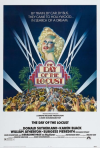
The Day Of The Locust (1975)

1767052863428.png

It's so hidden that, if you type the title in the IMDB search bar, it doesn't even show up.
This story follows a group of characters operating around the fringes of Hollywood stardom, often in a pathetic or ugly way.
While the desire for Hollywood fame is part of the story it never becomes the main theme, in fact it's a bit all over the place and there's very little build-up to the many confrontations.
All the characters are connected one way or another and sometimes it has a mosaic feel to it, like P.T. Anderson's MAGNOLIA.
Speaking of which, LOCUST has an equally sensational climax, and one particular very satisfying death scene. My goodness, what an evil little troll.
But there's also a significant calamity long before that happens and it's yet another reminder of how great old-school filming could be.
A great film that's different enough from the archetypal "Hollywood disillusionment" fare


The Sailor Who Fell From Grace With The Sea (1976)

1767052885453.png

A children's story that is definitely not for children, and it's gorgeous and offbeat in a way that could only happen in the 1970s.
Kris Kristofferson - a name that should only exist in soap operas - looks at his most Kristofferson-esque, and the moment he shows up you know you're going to root for him.
The young actors are very good in their ritualistic story as they're trying to make sense of the adult things that displeases them.
The film's haunting and tragic last scene gives The Wicker Man a run for its money. What a beauty.

To discover these previously unknown gems kinda humbles me. I really don't know everything.
 

Mel O'Drama

Admin
LV
16
 
Awards
44
La Vita È Bella (1997)
a.k.a. Life Is Beautiful

iu

When this came up as I scrolled through Prime its English name looked a little familiar. Then I realised I was thinking of Mike Leigh's Life Is Sweet (which I've also never got round to watching).

As I watched, it felt familiar in other ways. It's beautifully shot and its aesthetics are reminiscent of many traditional genres, from Old Hollywood buddy comedies and Technicolor musicals to more recent period pieces (as contradictory as that sounds). It looks absolutely stunning. The ladies' colourful wardrobe pops against sumptuous backdrops, and none more so than Nicoletta Braschi. In many ways this film feels like an ode to her beauty from her husband (who is also the film's director, writer and lead actor).

After a day easing back into work yesterday, I wasn't sure I wanted to watch a subtitled film, but something told me it would be mostly silent (in the style of Mr. Bean). Something lied to me. It was actually incredibly verbose and I don't mind telling you I was ready for bed by the end.

I was curious to see how the concentration camp aspect would be worked into the film, and even more so as I watched the first half which felt worlds removed from it. I did find the opening act tedious. I've little patience for characters who seem to spend all their time mucking about and making a three act play out of saying hello, and it's even worse with aggressively optimistic people. And this seemed to be the character's raison d'être. Thinking about it, it's similar to howI found James Stewart and his brother really annoying in It's A Wonderful Life, and only really enjoyed the film once things went down the crapper.

Things did feel more balanced once a little of the darkness came in, but the film relies heavily on finding the main character endearing and I'm afraid this didn't happen for me. His continued pretence to his son that everything was all right and that this was a big game was the whole concept of the film, but to me it felt very self-indulgent: as though the character himself could not face reality. This would be understandable, but there's nothing psychologically interesting in how it's presented. He just continues to do silly crap in the camp as he did outside, putting everyone's life at risk. He completely lost me in the scene where he volunteered to translate for the German guard when they arrived at the camp. Despite speaking no German, he "translated" what was said into an extension of his silly game, which spared his son's feelings but left the dozens of other people in their cabin unaware of what was being asked of them. And this was just the first of several transgressions which made me wonder how he wasn't simply shot on the spot.

I don't know what it was about this film. The Sound Of Music could arguably be viewed as trivialising the backdrop of the Second World War. 'Allo 'Allo certainly did that. And yet I greatly enjoy both of those. In this film,, though, the frivolity and rebelliousness frustrated me, and I wanted more harsh reality.

I also felt I was overlooking something that everyone else could see. The film was fine, but Prime had made a big deal of this being a BAFTA winner, and I'd seen that it had accumulated numerous other International awards as well, so perhaps I expected more.
 

Angela Channing

World Cup of Soaps Moderator
LV
19
 
Awards
52
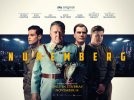
Nuremberg (2025)

nuremberg_ver3.jpg

Wow, just wow! What an incredible film this is. I was prompted to watch this because Michelle Lee was waxing lyrically about Russell Crowe's performance in the film on her We're Knot Done Yet podcast so I thought I would check out what she was so impressed by. Russell Crowe is indeed very good in it. He plays Hermann Goring, second in command in Nazi Germany's leadership at the end of World War II in the months leading up to his trial for war crimes. He plays Goring is not as a cartoonish villain, but a master manipulator: charming, erudite and dangerously narcissistic. However, he's not the only one who puts in an outstanding performance as Remi Malik playing the psychiatrist assigned to Goring, is just as compelling.

It’s impossible to watch this movie without seeing the glaring parallels to Trump’s America. Crowe’s Goring uses the exact same playbook we see on the news every day: the "witch hunt" narrative, the constant whataboutism and that cult of personality that treats every legal consequence as a personal badge of honour. As Remi Malek's character said in the film "Goring only cares about Goring", something which is often said about the current POTUS. It’s a chilling reminder that the rhetoric used to tear a country apart in the 1940s hasn't really changed, it’s just been rebranded and sprayed orange for a 24-hour news cycle.
 
Top