What was the last film you watched?

Snarky Oracle!

Telly Talk Supreme
LV
7
 
Awards
20
Frozen (2010)

iu


This isn't a film I was aware of before last night. I added it to my watchlist along with a few others and opted to watch it simply because it wasn't overlong and didn't look too challenging.

The overall vibe was of a decent TV movie. There's an intimacy and the performances are decent, and much of the film rides on this (it stars Iceman from the X-Men and Emma Brown/Ryland from NuDallas who gets an "And introducing...." credit here). This air also meant my expectations were in check so that I could be pleasantly surprised (well, unpleasantly, really, given some of the scenarios here).

On the surface, the premise is a simple one: three young people are trapped in a chairlift, overlooked and forgotten as the ski resort closes down for the week. The "I can't believe they forgot us" element reminded me very much of Open Water, and I suppose is a key element of a number of such survival films. Plenty of mileage is gained from the incredulity that follows the realisation. Then comes the decision to take risks or freeze to death. And the subjectivity of the direction really sells the underlying horror of such unpleasant choices. Scenes are also long and dialogue-heavy, which adds to the sense of entrapment. Almost as much as for the characters, there's no relief for the audience.

For all its intimacy and perceived simplicity, the situation is an embarrassment of riches when it comes to milking tension, unnerving or creating horrific moments, and no fear or phobia is left unexplored. We're at a great height. In the dark. Freezing. Isolated and far from anyone in an overwhelmingly huge open space (despite its beautiful-on-paper location, there's actually very little to look at in this film. All we see in the grey gloom are trees, snow and other empty chairlifts. It quickly becomes oppressive which works wonderfully to create a sense of claustrophobia). In a rickety chair (in the film's latter stages, much is made out of a bolt working its way loose, which is imagery that's been seen in everything from Seventies disaster movies to the Final Destination series). Later comes the threat of predation and being eaten alive (one specific scene as the chair's occupants scream in horror while trying to avoid seeing and hearing such a thing happening feels lifted almost directly from 2007's Black Water) , and there's also much body horror with graphic detail of frostbite and broken limbs with protruding bones (according to Wikipedia, there were numerous faintings at Sundance, but I'm glad I didn't know this beforehand as it would have oversold the film to me and I might have been mildly disappointed that I remained conscious throughout).

And just in case you're not convinced this film has everything, I ask you: where else can you see Emma Bell sobbing with angst whilst simultaneously peeing onto her chair?

It's not a perfect film. That "made for TV" vibe was never quite shaken (though that's not necessarily a bad thing), and the dialogue is occasionally a little iffy and at times just a little too earnest. It's also (presumably) unintentionally funny at times, such as the moment where there's a guttural, chilling wolf howl echoing round and the girl calls out to her boyfriend to ask if that was him. Still, the sincerity also proves to be an asset and there were moments of reflection or pain that I found genuinely touching. Death actually means something to others in this film, and that's pretty important.​

A lot of people seemed to have a real problem with the film -- do you have any analysis as the why that might be? I'm curious, as I never saw it.
 

Mel O'Drama

Admin
LV
16
 
Awards
44
Shame it's not a musical because Emma Bell can also sing a tune.

With songs from the other Frozen, perhaps? Let It Go could certainly have taken on a new meaning for the pee close-up.


A lot of people seemed to have a real problem with the film -- do you have any analysis as the why that might be? I'm curious, as I never saw it.

The plot is fairly simple and we spend a lot of time with a very small number of characters in dialogue-heavy scenes. It's probably not going to be everyone's cup of tea, and if one has a problem with any of the performers or characters it's probably going to be a dealbreaker since there's no getting away from them.

On a different level, some might find it irksome that
the two guys took all the risks and ended up perishing, while the "final girl" survived having done nothing particularly brave or heroic.

For me, it was no worse than most of its genre, and better than a number of them, but it helped that I had no expectation or pre-knowledge of the film.
 

Willie Oleson

Telly Talk Schemer
LV
9
 
Awards
27
MAY DECEMBER (2023)

1748193402281.png

A rewatch, but not because I had forgotten about the story or characters.
The film masterfully manipulates the viewer's perception, and this sort of mirrors the tabloid background story about an incestuous romance that nevertheless resulted in a lasting marriage, including three children.
What does "wrong" mean when it no longer matters, or is all not what it seems?

Initially, I feel I'm siding with Natalie Portman's character (Elizabeth), the actress who's going to play the controversial wife and mother (Gracie) played by Julianne Moore.
The fact that the family has agreed to see their story being told in a LifeTime biopic movie in the hope to improve their public image creates a somewhat negative starting point for all the characters.
They're definitely not the fame for fame's sake kind of people and that makes Elizabeth look like the intruder who has to walk on eggshells in order to get the job done.

It just so happens that the life of the infamously married couple is rapidly moving towards a state of crossroads.
Without the children around there's no longer a family to protect, and Gracie and Joe are basically back to being "that" couple, except that there's 15+ years missing. And Joe is going to feel it, in a terrific performance by Charles Melton.
Throughout the whole film you can sense his feeling of not-belonging, forever stuck between two generations, and also the lack of confidence to express those feelings because it seemingly doesn't matter anymore.

The layers get peeled off thanks to Elizabeth's relentless character investigation, but this also happens at the expense of her own image.
Elizabeth takes herself very very seriously, and as the story progresses she starts to show a judgmental and patronising attitude and there are even hints of jealousy because Gracie has it all: the hunk and the family - no, two families.
There's something very unpleasant and terrifying about the ambitious actress, and it's done so well that I almost couldn't seperate it from the real actress, Natalie Portman.
Gracie seems to hide her manipulative personality behind an aura of naivety, and during the final interaction between her and Elizabeth it looks like she got the upper hand.
Only to have it retaliated by the biopic movie itself, since it's clearly becoming an attention-grabbing tabloid schlocker.
Elizabeth, current TV star in a Grey's Anatomy kind of show, still believes she's become part of something important.

May December is a psychological, modern-day Grande Dame Guignol mixed with dark comedy dysfunctional family drama, how can you not love it.
The Go-Between film score works fine here, but performed at a lower volume would have been preferable.
The first time I watched this film I had no idea it was partially based on the case of Mary Kay Letourneau, but I'm not sure if it makes any difference.

A lot of people seemed to have a real problem with the film
As in "having a real problem with The Godfather Part III but also Frozen (2010)" ?
 

Seaviewer

Telly Talk Warrior
LV
9
 
Awards
20
Pitch Perfect (2012)
A not-quite gross-out comedy about college a capella groups - what they called choirs in my day. Sort of a film version of Glee.
 

Willie Oleson

Telly Talk Schemer
LV
9
 
Awards
27
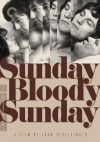
SUNDAY BLOODY SUNDAY (1971)

1748676207354.png

It tells the story of a love triangle between a woman and a homosexual man and their bisexual, younger lover.
It's a rather bleak and uneventful psychological character drama and mostly devoid of humour, but I also found it spellbinding and even somewhat unnerving to watch.
The film's outstanding direction and photography takes a lot of credit for that, and the influence of New Wave cinema is still very much felt in many scenes.

The story of the main characters unravels very slowly and I'm not going to lie, I was aware of its nearly two hours running time.
That love story is generously interspersed with all sorts of vignette-style scenes and characters - sometimes in an abrupt and intrusive way - and it helps preventing the film from becoming stale. You never know what's going to happen next and in that regard there's also a little bit of "Robert Altman" in it, especially in the way certain scenes are set up from unusual angles which seamlessly blends the background with the story's centre stage.

As for the psychological drama, there is some bitter irony in losing what was already a compromise to begin with, although the woman (Glenda Jackson) and the man (Peter Finch) experience it in a different way.
I guess it makes sense that a Jewish homosexual doctor would lower his expecations regarding a perfectly fulfilling lovelife, and the woman had convinced herself to believe in the compromise because she has no idea what to do with her life.
This is somewhat underscored by radio news reports of England's economical crisis (though I think it would be more informative to tell the public when there isn't a crisis going on).

When the young artist (Murray "One Night In Bangkok" Head) makes a big decision for his lovers it forces them to re-evaluate the situation. Interestingly, it's only then when I realised how much emotionally invested I was in this story, and that's also my only gripe with this film: I wish I had been more aware of that when all of it was happening right under my very nose.
On the other hand, that could have made film look spoiler-ish and predictable.

Fans of seventies vintage will be spoilt, there are plenty of "what the hell is that" props, and yet I wouldn't say that the film looks particularly dated.
I guess it doesn't hurt that I've watched the Criterion restored high-definition version.
Here come those tired old tits again
This refers to a scene in wich a "Tanya Turner" type and her husband gatecrash a friends get-together. A domestic argument erupts out of the blue but the other guests seem to be familiar with it, hence the "old tits" reference.
These sort of unexpected or seemingly unrelated events weren't uncommon in seventies dramas (just think of the catfight in Get Carter) and it's really fascinating to watch.
Incidentally, I couldn't figure out what the connection between the main characters and the progressive family-with-kids was. They seem like the most unlikely friends. There's also a black professor or activist typing away his speeches in the family's kitchen, and combined with the scene of pot-smoking toddlers it reminded me that the hippie culture hadn't died out yet.
It's a fabulous time capsule but not the kind of film that's going to entertain everybody.
 

Mel O'Drama

Admin
LV
16
 
Awards
44
Fall (2022)

iu


it looks like the cinematic equivalent of adrenaline-rush fairground rides designed to give you motion sickness and heart palpitations (and I've never been able to do those either).

I bet it's really fun to watch if you're into it, but I got dizzy and had to look away during an aerial sequence in one of the newer Spider-Man films, so I'm not sure how I'd be with an hour and a half of it.

This is still an "I'd love to watch it but fear it would give me nausea" film.

Cut to me watching the film, and simultaneously asking why I would do that to myself.


Honestly, though, I wanted to watch it. I even sought it out. When I watched Frozen last week it's because Fall was still pay per view on Prime (something I always resent doing when I pay for the service anyway). Then, last night, I realised Fall was on iPlayer, ad-free and rent-free. How could I not?


One of the hardest films I've watched in a long time. I wasn't that interested in doing it, but as the story moved on, I found my toes curling and my anxiety levels reaching new highs.


I agree with this 100%. I kept having physical reactions. Not only was my heart racing and my palms sweating, I found my stomach churning occasionally. And the funny thing is, it's not always the shots I would expect to do it. Many of the overhead shots were quite terrifying, but it was all so subjective I felt as though I was there with them, and out of nowhere there would be a wave of anxiety at the realisation of where they were. Even when the height wasn't being shown, I felt sickened just by knowing we might be shown it at any time.


the fearless characters who willingly ignore all the bad signs and take a huge risk in what seems a rather unprofessional climbing activity, not to mention the stunts they perform in order to get more likes for their youtube video.

I thought the best element was the suspense. We know what could happen, and it invariably does, but each time a character suggested something risky, I found myself getting really anxious at the thought of what we were about to be put through.

I lost count of the times I turned my head away and curled towards the back of the sofa, or uttered foul expletives at the screen over the ordeal worsening and the fact that I was now stuck in it... because I needed to find out what would happen.

My main mixed feelings were over the sub-plots. I understand the recovering from trauma angle, which increases the stakes (the fact that the lead character is afraid of climbing after an incident where they watched someone fall to their death is lifted straight from Hitchcock's Vertigo). But the plot with the significance of the tattoo (1-4-3) felt too soapy and risked diluting things. There's already enough drama going on, and I don't feel the film particularly needed this.


I watched this a couple of weeks ago and it's excellent. The 2 lead actors do a great job in creating the drama and tension of the film considering they spend 75% of the film on a small platform. It really is edge of your seat stuff.

When done well, this "mimimalist" kind of survival film is really impressive for continuing to build the stress and ratchet up the anxiety. Half an hour into the film, I began to think that watching them go up the tower might be the most difficult part. But it kept getting worse and worse and worse.


I wouldn't have the courage to watch it in 3-D,

Last night, when things got bad, I kept counting my blessings that I wasn't watching this on a huge IMAX screen in 3D (and in public, to boot).


(and wasn't there any risk of severe sunburn?)

One little detail I noticed last night was the apparent sunburn on the lead character's face as the film went on. But yes, I'm surprised it wasn't much more serious given the location.


I have no idea how the film was made but I'm pretty sure it wasn't filmed "on location", as it were. It must have been a lot work to edit the actors into the special effects, or vice versa.

I was curious about this last night and found this on Wikipedia, citing the source as the "Making Of" on the Blu-ray:
According to director Scott Mann, the filmmakers considered green screen or digital sets, but ultimately opted for the real thing. They decided to build the upper portion of the tower on top of a mountain so that the actors would appear to be thousands of feet in the air, even though in real life they were never more than a hundred feet off the ground.
 

Willie Oleson

Telly Talk Schemer
LV
9
 
Awards
27
Even when the height wasn't being shown, I felt sickened just by knowing we might be shown it at any time.
Funny how that works. Most people who are in good physical condition can climb a ladder without being physically affected by the gravity. When you fall you fall, there's no difference between the bottom and the top of the ladder. Naturally, the height will impact the result of the fall.
It's the visual aspect that makes one aware of the gravity, and the anxiety and insecurity comes from the question "will I be able to resist looking down".
We usually don't do that when we step on a kitchen ladder because we don't need to see our safety confirmed.

I'm having a flashback to a childhood memory of climbing the stairs of a monument in Luxembourg or Belgium (just checked Waterloo on youtube but I don't remember it being that big or isolated from the city) and as kids we practically ran up the steps without thinking about our safety.
We reached the top and then we had to go back (which is why I find it such a pointless activity) but when I started to walk down I suddenly became very aware of the distance between 9 years old me and ground level. It's almost as if those many steps tempted me to voluntarily keel over. Maybe it was a Haunted Stairs (that would happen to me) and I think that's when the fear started.
 
Last edited:

James from London

International Treasure
LV
6
 
Awards
18
I watched this last week while working through my Things to Watch on YouTube Before I Die list.

Victor Mature and Diana Dors star in a downbeat British film noir from 1957 about long distance lorry drivers. The contrast between the two glamorous leads and their gloomy surroundings works really well. They're great and it's great (and the picture quality's great).

 
Last edited:

Willie Oleson

Telly Talk Schemer
LV
9
 
Awards
27
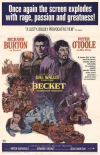
BECKET (1964)

1748796381176.png

A political drama about the friendship between King Henry II and his Lord Chancellor and cofidant Thomas Becket, and because of my personal chronological watching order I've watched it as a prequel to The Lion In Winter.
"Peter O'Toole actually looks younger in Becket. How did they do that, it's amazing!".

Frustrated by the power of the Church and its unwillingness to support his military coups in France, Henry seizes the opportunity when the Archbishop of Canterbury dies.
He appoints Thomas as the new Archbishop despite Thomas' plea not to do it, and then it doesn't take long before the whole scheme backfires.
It's possible that I'm misreading the situation but I wondered if Henry's decision to give Thomas that kind of power was also some kind of test of their friendship.
Most of it seems to be based on compromise: Thomas is embittered by his pragmatic attitude scorned by his fellow Saxons, and Henry in all his mighty Majesty constantly wants to see their friendship being validated.
Had the story taken a more fantastical approach then it wouldn't surprise me if the King himself had orchestrated the religous/political dilemma to test Becket's loyalty.
While Becket's handling of the controversy puts Henry in a difficult situation, especially if the Pope gets involved, it's the realisation that he's no longer Becket's Number One that seems to control Henry's actions. And all of that wouldn't be so difficult if he actually hated his former friend - but he still loves him.

This is very much a performance film and the actors are given great material to work with.
Peter O'Toole is simply magnificent in his larger than life interpretation of the drama king, and the script is riddled with dry humour and brutal insults, like a Shakespeare for dummies like me.
There's nothing in the film that confirms any romantic feelings between the two friends but it certainly doesn't shy away from that very interpretation.
Of course it's possible that a 1964 audience wouldn't even consider it, let alone fantasise about it.
Becket made me think of that other loyalty-to-a-Henry conflict in A Man For All Seasons, but also of DALLAS.
Jock wants his sons to have power and run the company but he doesn't allow them to become creative or opinionated. And he was also very good at insulting his family.
 

Mel O'Drama

Admin
LV
16
 
Awards
44
It's the visual aspect that makes one aware of the gravity, and the anxiety and insecurity comes from the question "will I be able to resist looking down".

Yes. It's akin to many people who describe being at a great height - on a cliff edge or bridge or at the top of a building - and almost feeling some force pulling them over. It's natural to want to see what's beneath us in that situation, but I suppose sometimes we wish we hadn't, and it taps into something primal within us (we all have those dreams of falling, don't we? And that must mean... something).

Newer films are definitely better at capturing this sense for me. Perhaps it's the improved picture quality, where one experiences these moments in high definition. Perhaps it's changing technology. I think a shot taken from a helicopter - as would have been the norm until recent years - can often look almost relaxing and familiar, whereas a drone shot captures angles and images a helicopter never could.


We reached the top and then we had to go back (which is why I find it such a pointless activity) but when I started to walk down I suddenly became very aware of the distance between 9 years old me and ground level. It's almost as if those many steps tempted me to voluntarily keel over. Maybe it was a Haunted Stairs (that would happen to me) and I think that's when the fear started.

How interesting that you can remember a specific moment as the catalyst.

It's a great point about being a kid and kind of oblivious to the safety or the potential danger. For me, I've become affected by heights as I've aged. Even as a younger adult, I was never bothered by them. Even a decade ago I could happily climb the steep narrow stone steps in a tall, rickety old tower in the city I was (then) living and take in the views leaning on the edge of the tiny balcony. Nowadays I'd struggle with that.


Victor Mature and Diana Dors in a downbeat British film noir from 1957 about long distance lorry drivers. The contrast between the two glamorous leads and their gloomy surroundings works really well. They're great and it's great (and the picture quality's great).

That looks up my street. I'll have to add it to my own bucket list. I was surprised at how few names I recognised for a British film made in 1957. I think I can count them on one hand. I'm sure I'd recognise faces, though.
 

James from London

International Treasure
LV
6
 
Awards
18
I was surprised at how few names I recognised for a British film made in 1957. I think I can count them on one hand. I'm sure I'd recognise faces, though.
Apart from the two "names", I don't think I recognised anybody*. And I've no idea how such a huge slab of '50s Hollywood beefcake as Victor Mature wound up in such a (seemingly) low-budget British flick as this. Meanwhile, Diana Dors' film career has always been something of an unexplored mystery to me. All of which kinds of ends up feeding into the intrigue of the film itself.

*Blink and you miss them appearances by Norman Rossington and Sam Kydd aside.
 
Last edited:

Mel O'Drama

Admin
LV
16
 
Awards
44
*Blink and you miss them appearances by Norman Rossington and Sam Kydd aside.

Yes, those are the two other names I recognised, along with Arthur Mullard "as minor role".


Diana Dors' film career has always been something of an unexplored mystery to me.

Same here. I watched one of her later films not so long ago: a sex comedy called Keep It Up Downstairs. It was not great. That's possibly the only DD film I've watched.

My main association of her is from TV in The Two Ronnies' serial The Worm That Turned. This has also reminded me that I'm bit peeved I never bought Queenie's Castle when Network was still alive and kicking.
 

James from London

International Treasure
LV
6
 
Awards
18
I watched one of her later films not so long ago: a sex comedy called Keep It Up Downstairs. It was not great. That's possibly the only DD film I've watched.

I've only ever heard great things about 'Yield to the Night'. That appears to be the definitive Dors classic.
 

Snarky Oracle!

Telly Talk Supreme
LV
7
 
Awards
20
BECKET (1964)

View attachment 56442

A political drama about the friendship between King Henry II and his Lord Chancellor and cofidant Thomas Becket, and because of my personal chronological watching order I've watched it as a prequel to The Lion In Winter.
"Peter O'Toole actually looks younger in Becket. How did they do that, it's amazing!".

Frustrated by the power of the Church and its unwillingness to support his military coups in France, Henry seizes the opportunity when the Archbishop of Canterbury dies.
He appoints Thomas as the new Archbishop despite Thomas' plea not to do it, and then it doesn't take long before the whole scheme backfires.
It's possible that I'm misreading the situation but I wondered if Henry's decision to give Thomas that kind of power was also some kind of test of their friendship.
Most of it seems to be based on compromise: Thomas is embittered by his pragmatic attitude scorned by his fellow Saxons, and Henry in all his mighty Majesty constantly wants to see their friendship being validated.
Had the story taken a more fantastical approach then it wouldn't surprise me if the King himself had orchestrated the religous/political dilemma to test Becket's loyalty.
While Becket's handling of the controversy puts Henry in a difficult situation, especially if the Pope gets involved, it's the realisation that he's no longer Becket's Number One that seems to control Henry's actions. And all of that wouldn't be so difficult if he actually hated his former friend - but he still loves him.

This is very much a performance film and the actors are given great material to work with.
Peter O'Toole is simply magnificent in his larger than life interpretation of the drama king, and the script is riddled with dry humour and brutal insults, like a Shakespeare for dummies like me.
There's nothing in the film that confirms any romantic feelings between the two friends but it certainly doesn't shy away from that very interpretation.
Of course it's possible that a 1964 audience wouldn't even consider it, let alone fantasise about it.
Becket made me think of that other loyalty-to-a-Henry conflict in A Man For All Seasons, but also of DALLAS.
Jock wants his sons to have power and run the company but he doesn't allow them to become creative or opinionated. And he was also very good at insulting his family.

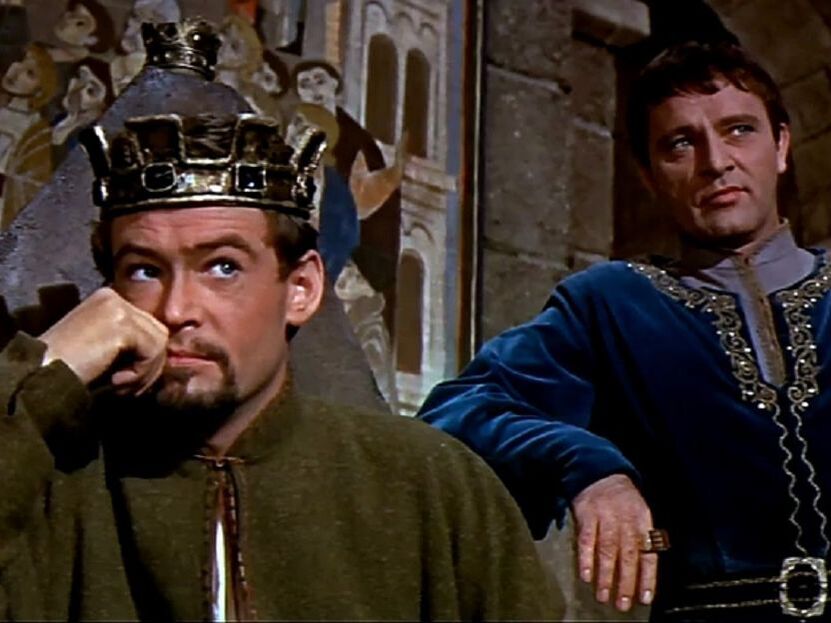
Peter O'Toole, he of the double-phallic name (much like Roddy McDowall), made no boners about the homoerotic undercurrents of BECKET.

I first saw BECKET as a teenager and was, initially, rather bored by it -- and even at that age, I wasn't normally put off by turgid dialogue films, but it totally didn't work for me, this much-ballyhooed picture... Which is notable, because I don't tend to change my tastes or opinions on film terribly much. But BECKET has been different: by my forties, my appreciation for the film has skyrocketed; its cold, Halloweenish hollowness (and I mean that in a good way) is transfixing to me now, a bit like a cinematic seance.

LION IN WINTER has even more operatic repartee, and I've learned both pictures have a rabid pro-and-anti fanbase: some dismiss LION as garish and vulgar "trash" and regard BECKET as noble art... I think that clannish, binary thinking is kind of ridiculous, as both films are brilliant, albeit with an obviously different tone.

becket-still.jpg
 

Willie Oleson

Telly Talk Schemer
LV
9
 
Awards
27
I've only ever heard great things about 'Yield to the Night'.
That film, and her guest appearances in several thriller/horror anthology episodes is the only thing I've seen of DD aka the British answer to MM.
There's also a biopic film on you-know-where, The Blonde Bombshell. I planned to watch it but somehow it hasn't happened yet.
 
Top